





Four Tier Tables
Four tier tables offer tiered shelving for display and storage, bringing compact vertical elegance and practical surface space to any room.
Four Tier Tables
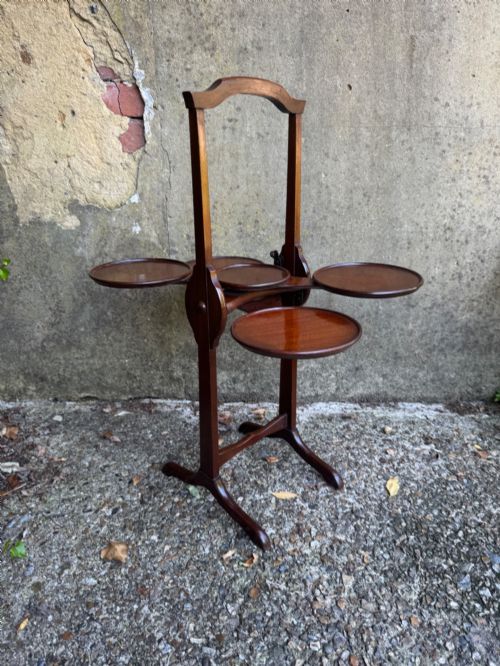
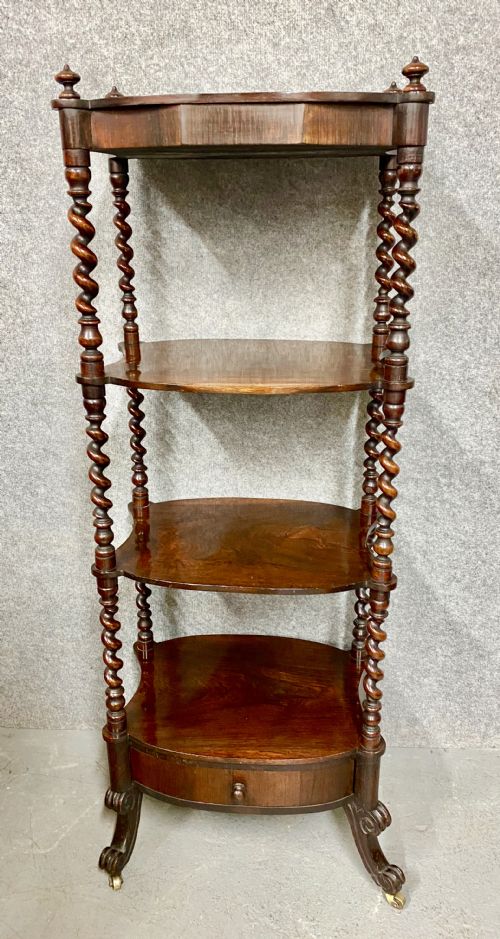
Four tier tables primarily appear as whatnots, etageres, and multi-shelf stands designed to hold books, ornaments, and small objects. These pieces provide graduated shelving while occupying minimal floor space.
The versions most commonly met span the Georgian, Victorian, and Edwardian eras, constructed in forms ranging from revolving bookcases to classic four shelf structures. Such items reflect the 19th-century appetite for organised display in domestic interiors.
Makers utilised rich timbers like mahogany, rosewood, and burr walnut, often pairing them with brass details. The resulting furniture balances structural utility with decorative refinement.
How they were made
Cabinetmakers constructed these pieces using dense hardwoods such as mahogany and rosewood, selected for their stability and grain. These timbers allowed for slender upright supports that could safely carry multiple stacked tiers.
Turned wooden columns or brass rods frequently separate the individual shelves, joining the tiers into a rigid vertical framework. Selected examples incorporate revolving mechanisms or folding designs to enhance day-to-day utility.
Four Tier Tables Retail Price Guide 2026
Typical asking prices for four tier tables among the pieces listed under this phrase on Sellingantiques today, from the lower quarter to the upper quarter. They describe what is for sale here now, not the wider market.
Some Victorian tables revolve quietly on hidden pivots, turning a modest bookshelf into a hypnotic parlour amusement.
What varies in quality
The distinction between standard examples and superior pieces rests on the choice of timber veneer and the precision of the joinery. Figured woods like burr walnut and rosewood indicate a more ambitious commission.
Proportion and restraint in the turning of uprights define the better workshops. Finer pieces maintain structural elegance across all four levels without heavy or clumsy connections.
The Four Tier Tables Glossary
- Whatnot
- A piece of furniture with multiple open shelves designed for displaying ornaments or holding books. These items became popular during the Georgian and Victorian periods.
- Etagere
- A French style of tiered display stand intended for ornaments and knick-knacks. The term describes open shelving units with several levels supported by slender columns.
- Burr walnut
- A prized timber marked by swirling, intricate grain patterns formed at the tree root. Cabinetmakers used veneers of this wood on high-status Victorian furniture.
- Quarteto
- A nested set of four tables designed to slide neatly beneath one another. This form provides flexible surface space in Edwardian and later interiors.
Four Tier Tables: Frequently Asked Questions
What is a four tier table used for?
These pieces function primarily as display stands for decorative objects, books, and small household items across multiple levels.
They allow owners to maximise vertical space in compact rooms while keeping cherished belongings visible and accessible.
How do I identify a Victorian four tier table?
Victorian examples frequently utilise dense timbers such as mahogany or burr walnut, often featuring turned supports and brass elements.
They reflect the period's preference for richly grained woods and tiered display furniture in domestic settings.
Where should I place a four tier table at home?
These items suit corners, alcoves, or flanking spaces where surface area is needed without blocking circulation.
Their open shelving design keeps rooms feeling light while providing practical storage for books and ornaments.
What is the difference between a whatnot and an etagere?
Both terms describe tiered shelving units, though etagere often denotes a French influence with lighter proportions and decorative detailing.
Both forms served the same purpose of displaying prized possessions in 19th-century drawing rooms.