

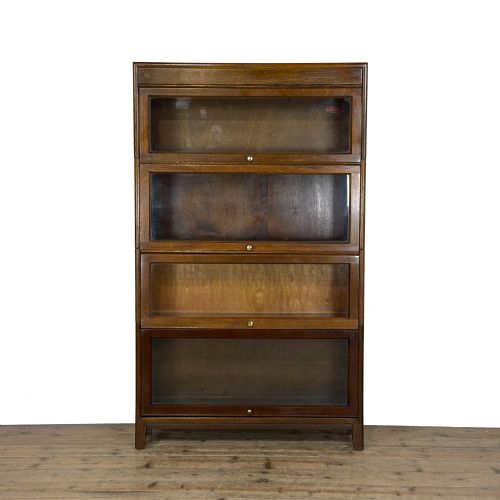
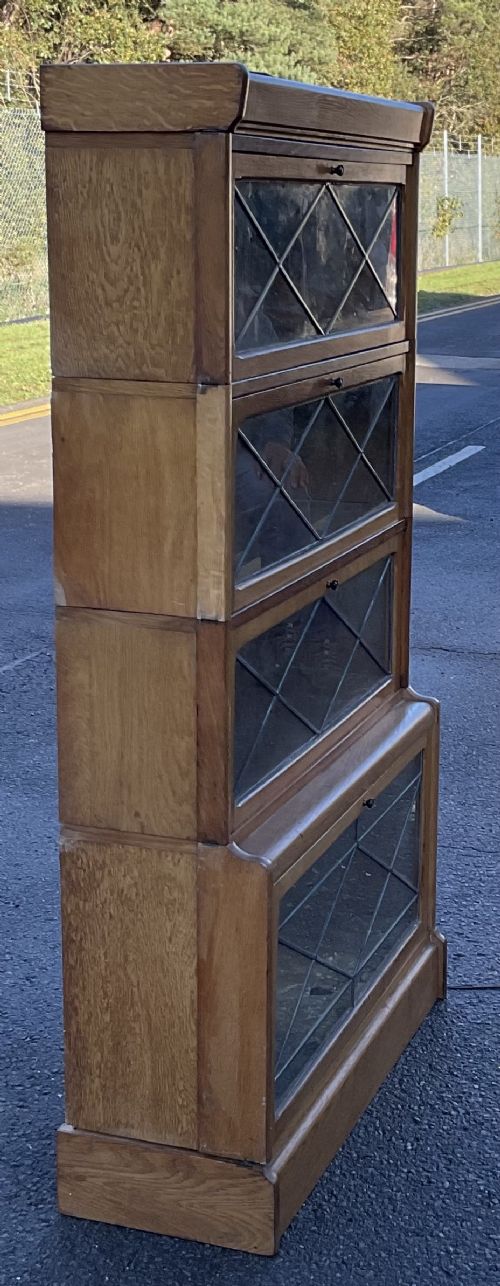
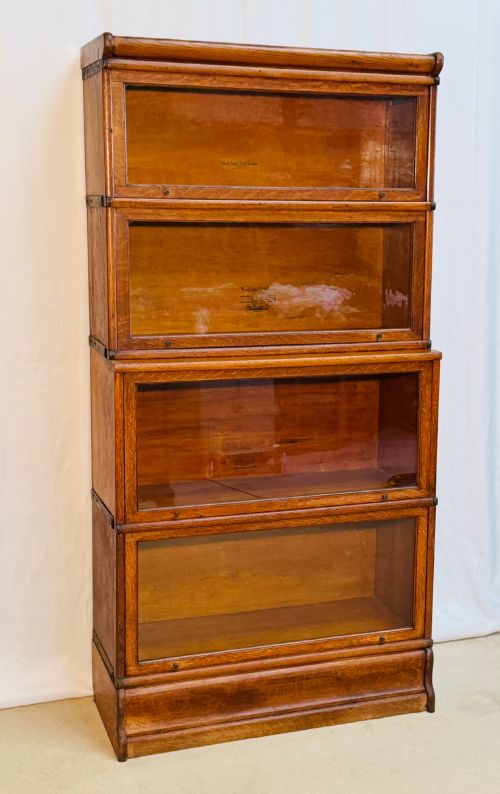
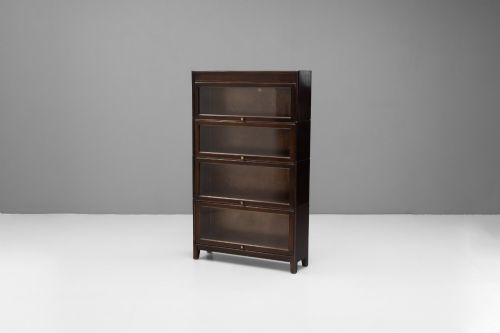




Four Tier Barrister Bookcase
A four tier barrister bookcase offers modular practicality, stacking individual glazed sections neatly to protect your volumes with timeless mechanical charm.
Four Tier Barrister Bookcase
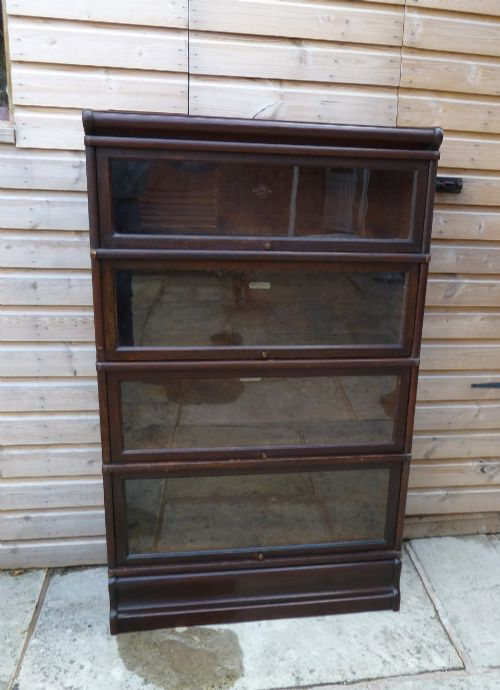
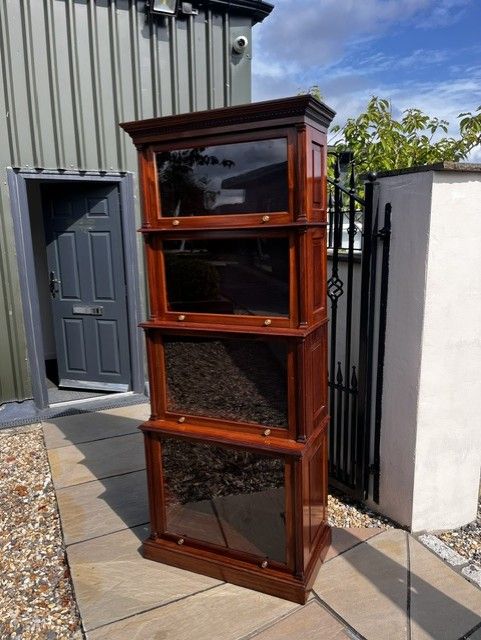
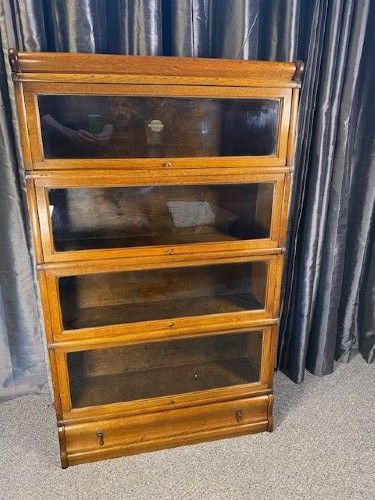
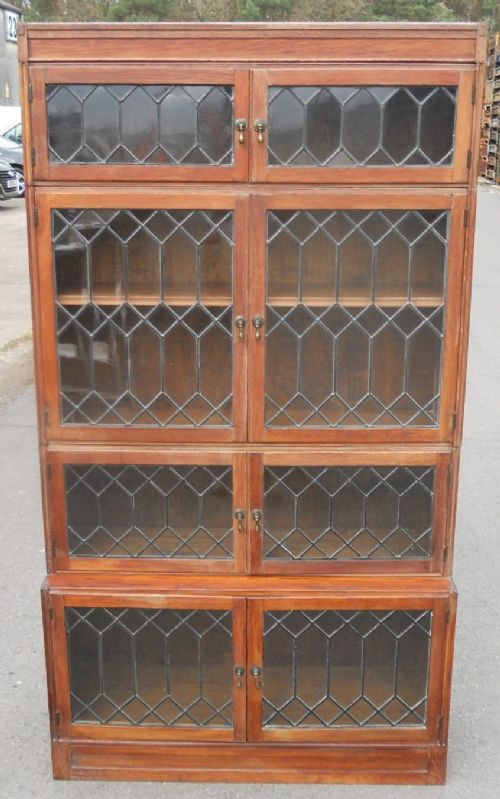
When you search for a four tier barrister bookcase, you are looking at modular stacking furniture designed to house and protect books behind glass panels. These pieces divide into individual modular sections that sit one upon the other, originally engineered for legal offices to keep volumes clean and accessible.
On this page, you are most likely to meet oak and mahogany examples spanning from the Edwardian era into the 1920s. These variations include standard four-section configurations alongside larger and smaller modular variations carrying maker names such as Globe Wernicke, Gunn, and Lebus.
How they were made
These bookcases rely on solid oak and mahogany timbers combined with glass panels and brass or metal hardware to create durable modular units. The timber frames are built to house individual glazed lifting doors that slide smoothly on internal mechanisms.
Makers utilised distinct sectional stacking designs that allow each tier to separate independently from the base and top cornice. This construction method ensured that heavy libraries could be easily moved and reassembled piece by piece.
Four Tier Barrister Bookcase Retail Price Guide 2026
Typical asking prices for four tier barrister bookcase among the pieces listed under this phrase on Sellingantiques today, from the lower quarter to the upper quarter. They describe what is for sale here now, not the wider market.
Listings feature oak and mahogany materials, alongside glass, brass, and metal components across Edwardian and 1920s periods.
What varies in quality
Quality in these modular bookcases rests upon the selection of timber, particularly whether the piece utilises solid mahogany or golden oak across all sections. Superior examples display careful attention to the grain and structural integrity of each stacking tier.
The sophistication of the mechanical lifting hardware and the original condition of the glass panes further distinguish finer pieces. Maker attribution to established firms like Globe Wernicke, Gunn, or Lebus adds distinct character to the construction.
Gunn Furniture·Globe Wernicke·Lebus
The Four Tier Barrister Bookcase Glossary
- Sectional bookcase
- A piece of furniture built from separate modular tiers that stack vertically. Each tier contains its own shelf and glass door.
- Glazed
- Fitted with glass panels. These doors protect books from dust while allowing titles to remain visible.
- Cornice
- The decorative moulding fitted to the very top tier of the bookcase. It finishes the summit of the stacked columns.
- Base
- The bottom plinth or platform upon which the entire stack rests. It raises the lowest tier slightly off the floor.
- Elastic bookcase
- An alternative historical term for a stacking bookcase. The description refers to the expandable nature of adding further modular sections.
Four Tier Barrister Bookcase: Frequently Asked Questions
What is a barrister bookcase?
A barrister bookcase is a modular piece of furniture consisting of vertically stacked shelving units with glass doors. Each tier operates independently to protect legal books or private libraries from dust.
The design allows owners to add or remove sections as their book collections grow. This practical engineering made them popular in offices and studies during the early twentieth century.
How do the glass doors work?
The glass doors on these bookcases use a specialised metal mechanism that allows the panel to lift upwards and slide back into the top of the shelf compartment. This lets you access books without swinging a door outward.
When pushed closed, the door drops down flush against the front of the tier. The mechanism requires proper alignment of the brass or metal hardware to function smoothly across all stacked sections.
How do I date a stacking bookcase?
Dating these pieces involves examining the materials, hardware styles, and maker marks stamped or labeled on the wood. The evidence points predominantly to the Edwardian period and the 1920s.
Oak was particularly common during the Edwardian years, while mahogany and specific maker stamps associated with firms like Globe Wernicke or Lebus help narrow down the production era. Checking the construction of the back panels and joints also provides clues to age.
Can the sections be separated?
Yes, the defining feature of these bookcases is that each tier is a separate box that simply rests on the one below it. The top cornice and bottom base are also distinct pieces.
This modular construction allows the entire bookcase to be disassembled into individual components for transport or rearranging. When stacked together correctly, the weight of the units keeps the assembly stable.