





Four Light Crystal Chandelier
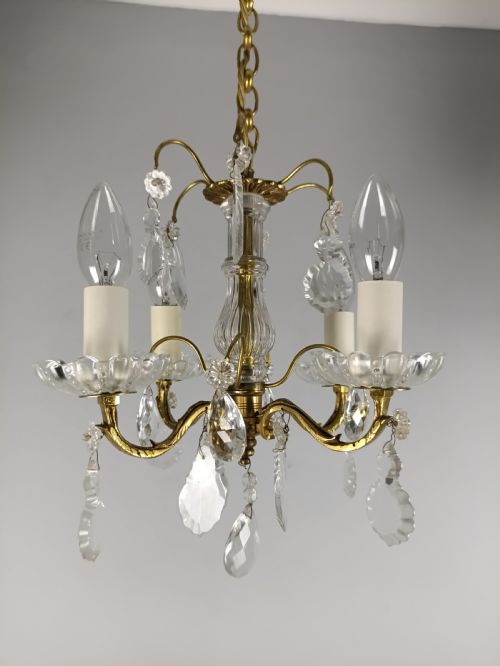
A four light crystal chandelier brings unmistakable sparkle to a room, offering the classic brilliance of cut glass mounted in gilded brass.
Four Light Crystal Chandelier
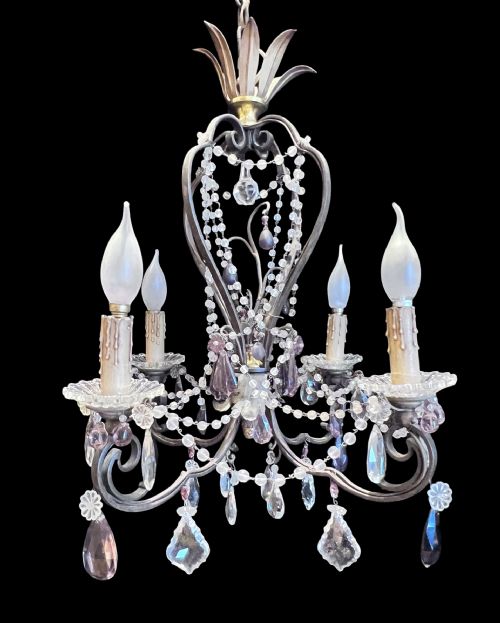
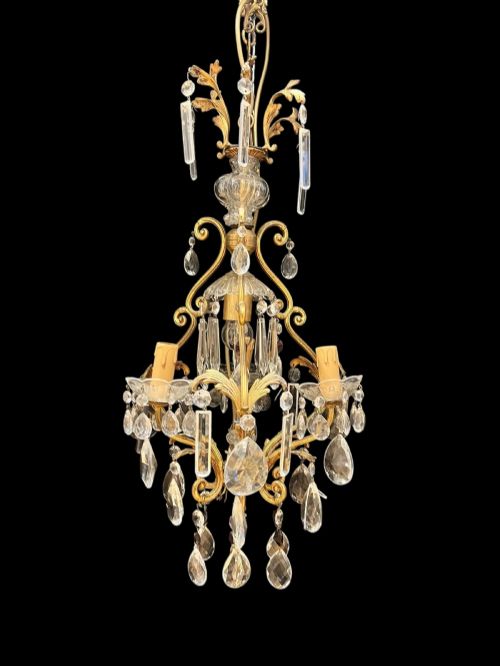
When someone searches for a four light crystal chandelier, they are looking at overhead lighting designed to distribute illumination through multiple glass drops and branches. These pieces originate across the nineteenth and twentieth centuries, taking forms that span the late Victorian era up to the interwar period. The versions most commonly met on this page are French designs from the nineteen thirties, built with four branches and fitted with extensive crystal elements.
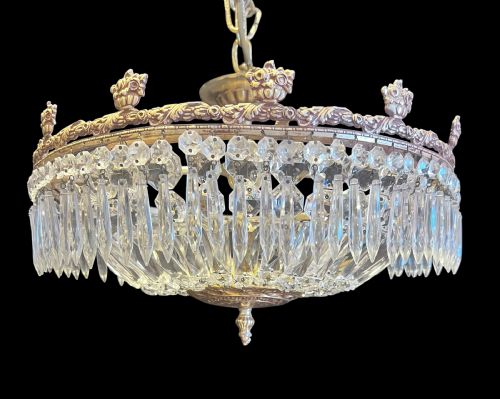
The aesthetic draws heavily on continental European design traditions, particularly French styles such as Rococo, Beaux-Arts, and Louis XV revivals. Alongside central ceiling pendants, related forms occasionally appear, including wall lights and plafonnières sharing the same metallic frames and glass dressing. Origins extend beyond France to include Italy and Belgium, though French brass and crystal work dominates the surviving examples.
Scale remains a vital consideration, as a four light configuration suits medium-sized rooms rather than vast halls, providing balanced illumination without overwhelming the space. The visual weight relies on the combination of gilded metal armatures and reflective crystal pendants that catch daylight as well as artificial bulb light. Every piece reflects historical interior tastes that favoured ornate metalwork paired with glittering glass components.
How they were made
Makers constructed the primary framework of a four light crystal chandelier using cast brass or gilded brass, forming durable armatures that supported both the electrical fittings and the hanging glass. Gilt and gilt-brass surfaces provided a bright, luxurious finish that complemented the transparency of the surrounding glass drops. Artisans shaped metal branches to curve outward, creating symmetrical pathways for four distinct light sources.
Cut glass and crystal formed the shimmering pendants, beads, and swags that draped across the metal frames to diffuse the illumination. Workers hand-cut and polished individual glass components to maximise refraction, securing them to the brass structure with tiny wire loops. This combination of heavy metal casting and delicate glass assembly ensured both structural stability and brilliant optical effects.
Four Light Crystal Chandelier Retail Price Guide 2026
Typical asking prices for four light crystal chandelier among the pieces listed under this phrase on Sellingantiques today, from the lower quarter to the upper quarter. They describe what is for sale here now, not the wider market.
Object forms recorded here include central ceiling chandeliers alongside matching wall lights and low-profile plafonnières.
What varies in quality
The refinement of the cast brass frame dictates much of the visual standard, with finer examples displaying crisp chasing and deeply modelled ornamentation rather than soft, flat contours. Superior pieces utilise heavier gauge metal for the arms and central cage, ensuring the fixture hangs true and supports the weight of the glass securely. Gilding depth and quality also separate standard production from superior work, maintaining a rich tone across decades.
The cut and clarity of the crystal components determine the brilliance of the piece, as superior glass yields sharper light refraction and fewer internal imperfections. Complete and matching sets of original drops indicate a higher grade of manufacture, whereas mixed or replaced glass pieces alter the overall harmony. Attention to detail in the pinning and suspension of the crystal dressing distinguishes master assembly from ordinary workshop output.
The Four Light Crystal Chandelier Glossary
- Plafonnière
- A ceiling light fitted flush or close to the ceiling surface rather than suspended on a long chain. These fixtures suit rooms with lower ceiling heights while maintaining decorative glass and metal elements.
- Cage Chandelier
- A style of lighting featuring a central metal frame enclosed by or draped in crystal strands and drops. This structural form creates a voluminous silhouette reminiscent of an open birdcage.
- Gilt Brass
- Brass that has been coated with a thin layer of gold leaf or a gold-coloured finish to enhance its appearance. This material provides a warm, reflective foundation for hanging crystal elements.
- Rococo
- An ornate artistic style characterised by asymmetrical scrollwork, naturalistic plant motifs, and C-scrolls. Many chandeliers adopt this aesthetic through flowing, curved metal arms and decorative flourishes.
- Drop
- An individual piece of cut glass or crystal suspended from the chandelier frame. Drops catch and scatter light across the surrounding interior.
Four Light Crystal Chandelier: Frequently Asked Questions
Can these chandeliers be rewired for modern use?
Most antique lighting requires professional rewiring to meet modern safety standards and voltage requirements. Electricians can update internal cables while preserving the original exterior metal and glass components.
It is advisable to consult a qualified lighting restorer before installation to ensure safe operation in a contemporary home. This adaptation keeps historical fixtures functional without altering their outward appearance.
What ceiling height do I need?
A four light crystal chandelier generally requires a ceiling height of at least nine feet to hang properly in a living space or dining room. Lower ceilings benefit from flush-mounted plafonnière variants that occupy less vertical space.
Allowance must be made for clearance beneath the lowest pendant drop to ensure safe movement underneath. Positioning the fixture over a central table reduces clearance concerns in standard rooms.
How do I date an antique chandelier?
Dating relies on examining the construction methods of the brass frame, the style of the metal casting, and the cut of the crystal. Interwar pieces from the nineteen thirties often show specific wiring channels and stylistic nods to French Beaux-Arts design.
Archival comparisons and known decorative motifs from periods like the Louis XV revival help narrow down the decade of manufacture. Consulting the materials and stylistic markers provides a reliable chronological anchor.