

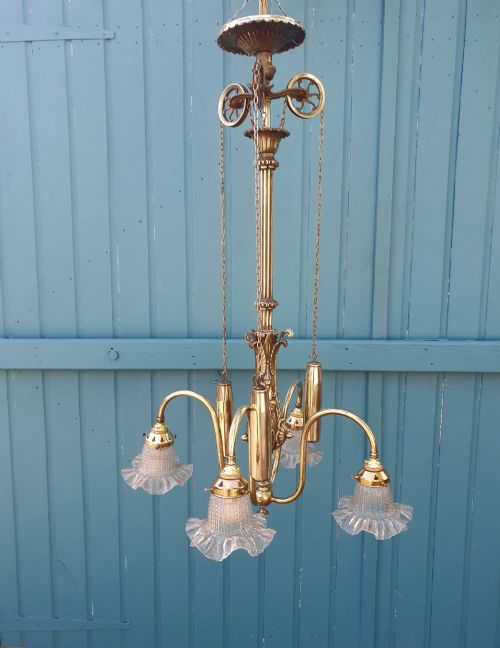
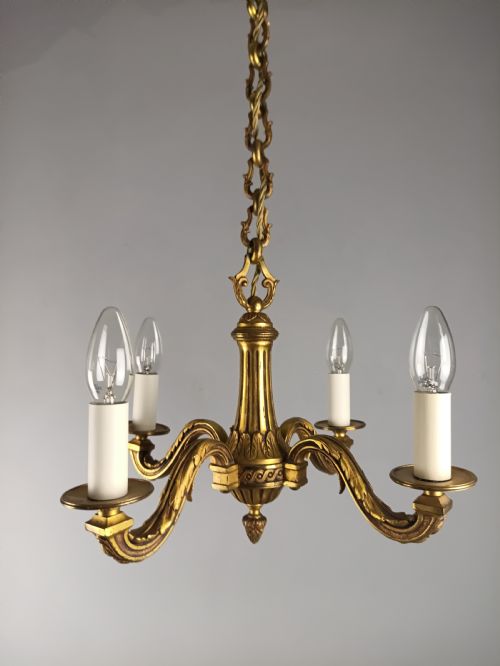
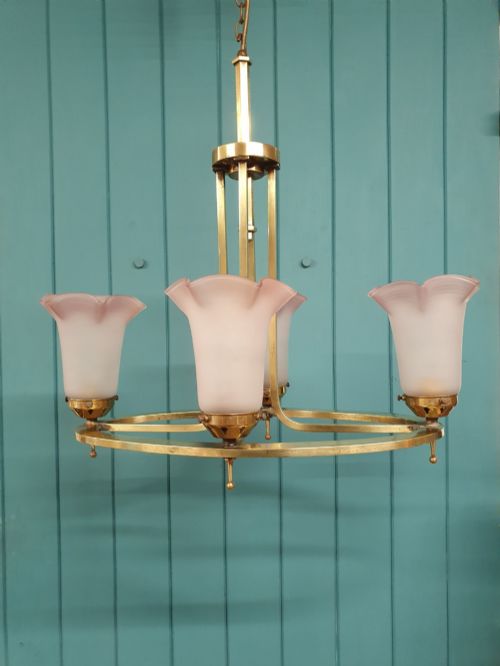
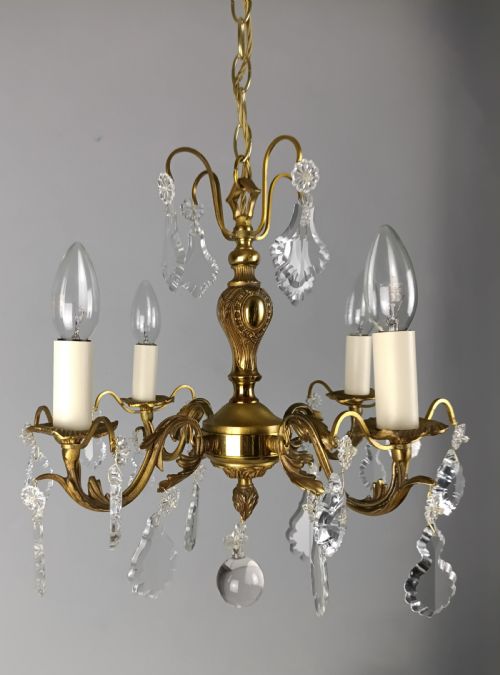
Four Light Brass Pendant
A four light brass pendant brings purposeful illumination and classical proportion to a ceiling, rooted in early twentieth-century design.
Four Light Brass Pendant
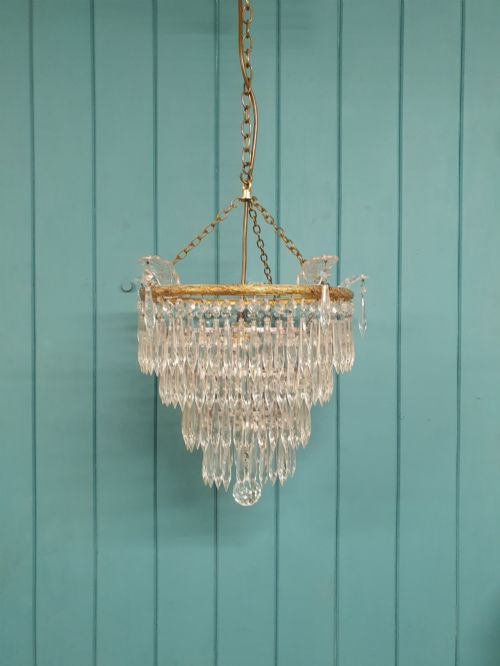
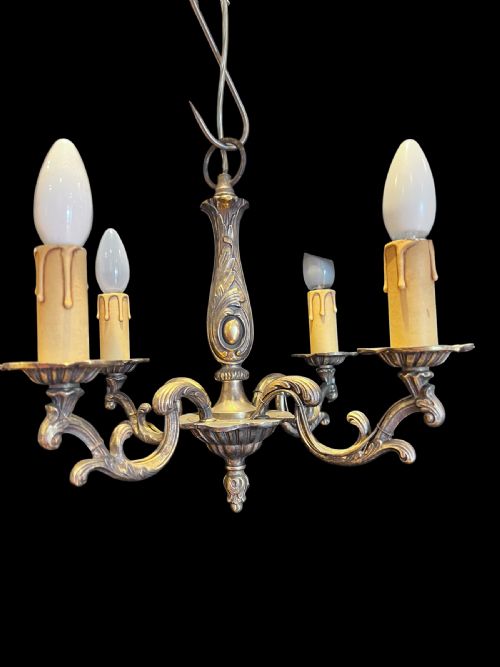
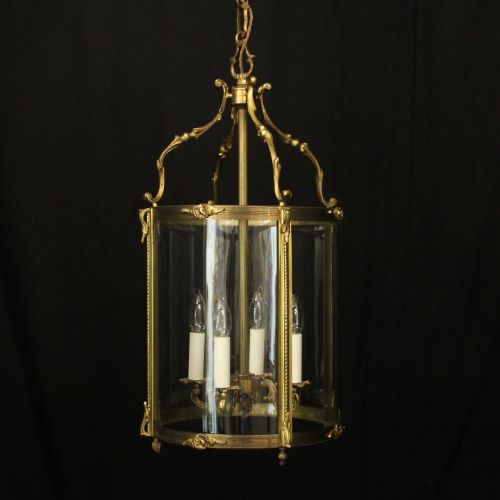
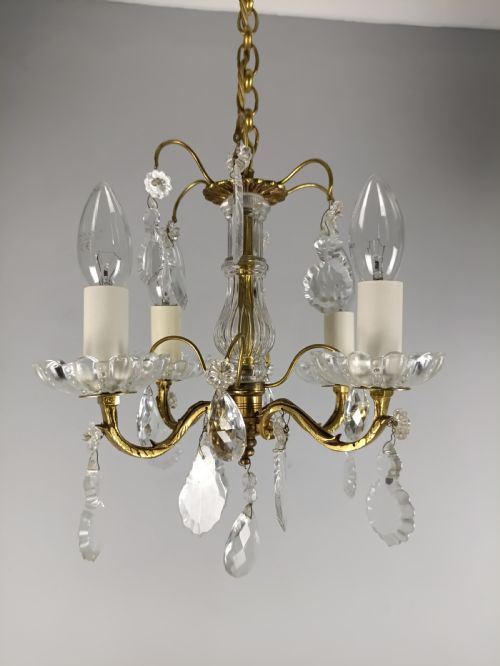
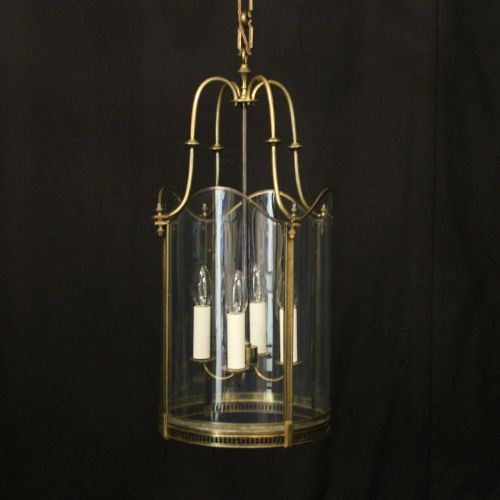
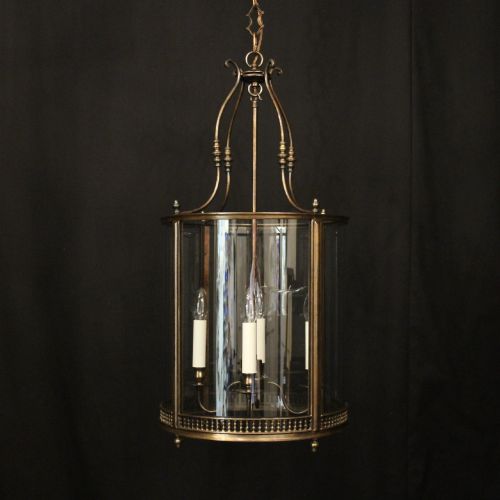
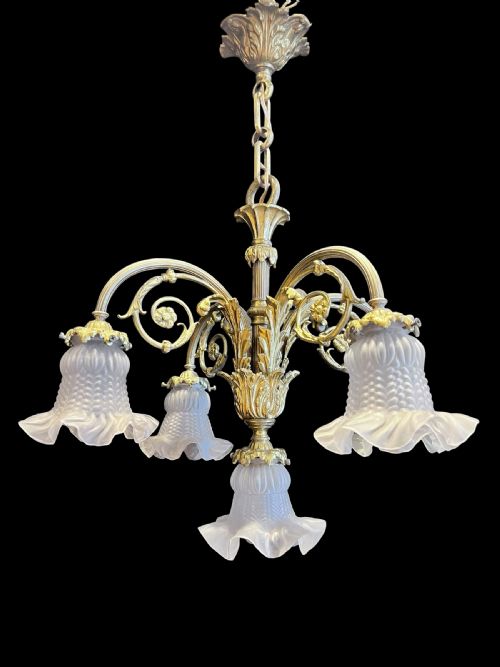
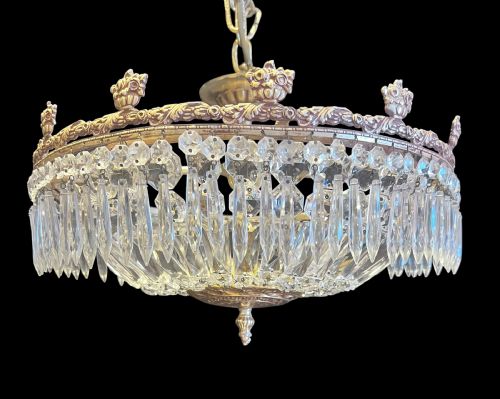
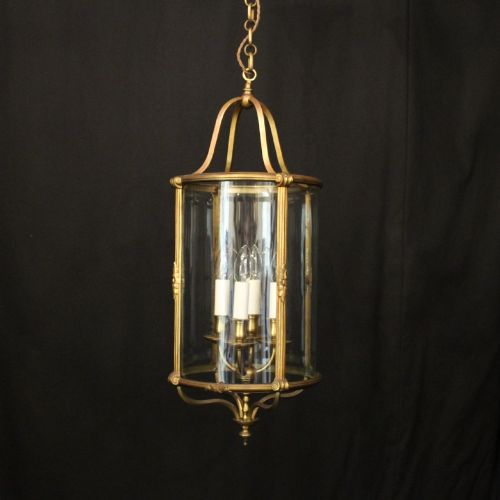
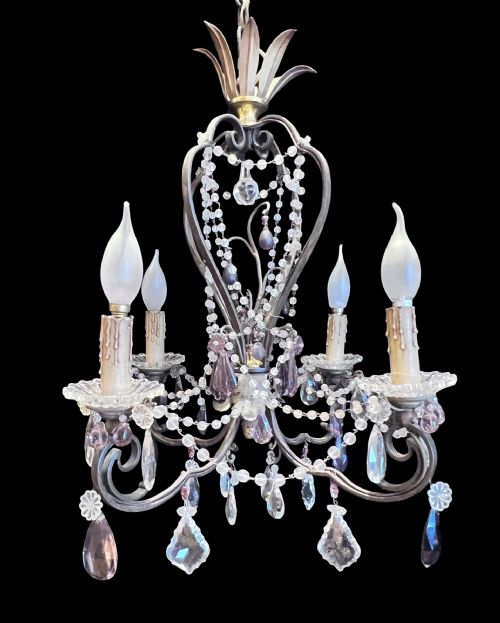
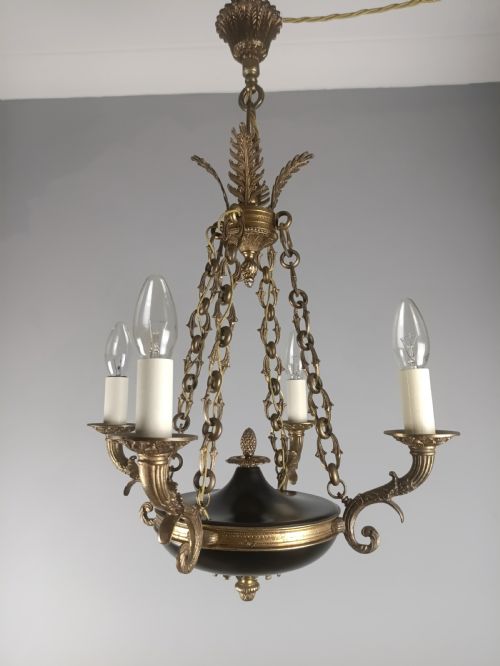
When you search for a four light brass pendant, you find ceiling fixtures designed to hold four distinct bulbs within a framework of brass, gilt bronze, or gilded metal. These pieces take the form of chandeliers, plafonieres, and enclosed hall lanterns rather than single-bulb drops.
You are most likely to meet French and English examples originating from the nineteenth century up to the 1930s, including Edwardian designs. The selection spans formal chateau styles, neoclassical arrangements, and convex hall lanterns built to cast light evenly across a threshold.
Materials and construction methods
Makers built these fixtures using brass, gilt bronze, and steel frameworks, often incorporating cast mounts and chased metalwork. Structural elements were assembled with mechanical fixings, holding glass panels, crystal drops, or open candelabra arms securely in place.
Surface treatments range from polished brass to heavy gilding, ormolu, and bronzed finishes. Glass components include convex panes for lanterns, amethyst glass, and leaded crystal drops that catch and refract the illumination from the four internal lights.
The documented forms span open chandeliers, flush plafonieres, and enclosed hall lanterns built with convex glass panels.
Distinguishing quality and execution
The distinction between standard production and superior work lies in the crispness of the metal casting and the depth of the gilding. Better pieces display finely chased details on bronze mounts and substantial gauge metal rather than thin, pressed sheet.
Quality also shows in the integrity of the glass panels and crystal dressing, where heavy bevelled or convex glass fits flush into sturdy frames. Original patination and well-balanced proportions separate finer period examples from later adaptations.
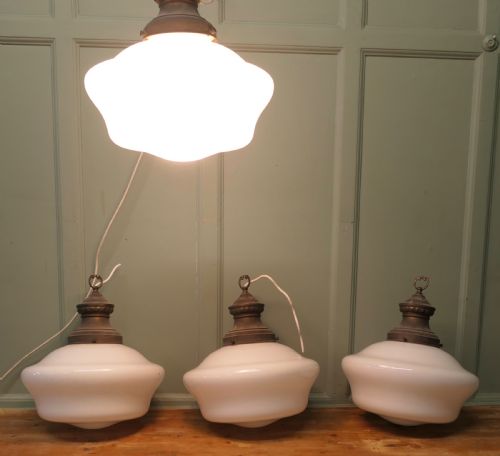
G.E.C
The Four Light Brass Pendant Glossary
- Plafoniere
- A ceiling light fitted flush or very close to the ceiling surface, often featuring glass bowls or crystal drops held in a metal frame.
- Convex lantern
- A hanging hall light constructed with curved glass panels that project outward to diffuse light across a wider entrance space.
- Ormolu
- Finely ground high-carat gold applied to a bronze base metal using a mercury amalgamation technique, common in French decorative arts.
- Cage chandelier
- A style of lighting fixture where the metal frame forms an open skeletal structure enclosing internal candle arms and crystal strands.
- Chased
- Metalwork decorated by hand with hammers and punches to create textured surface details and sharp relief patterns.
Four Light Brass Pendant: Frequently Asked Questions
Where should a four light pendant go?
These fixtures suit hallways, high-ceilinged landings, and principal rooms where a substantial drop and four-bulb illumination provide adequate spread. Hall lanterns work particularly well in entrance spaces with convex glass to bounce light outward.
Placement depends on clearance requirements and the vertical proportions of the room. Position them centrally so the fixture commands the space without obstructing movement underneath.
How do I date a brass pendant?
Dating relies on stylistic markers, construction techniques, and materials recorded across Edwardian, 19th-century, and 1930s examples. Heavy cast bronze and neoclassical motifs point toward earlier periods, while cleaner lines often suggest the 1920s or 1930s.
Examine the fixings, screw threads, and wiring channels for signs of period manufacturing methods. Comparing the decorative vocabulary to documented styles helps narrow down the decade of production.
Can I use modern bulbs in these lights?
Most antique fixtures accept modern candle-style LED lamps that replicate the warmth of traditional lighting while consuming very little energy. Ensure the internal lampholders match standard modern base sizes and consult a qualified electrician if rewiring is necessary.
Using low-heat LED bulbs also protects fragile historic components, such as silk cords, lacquered brass, and old crystal drops, from thermal degradation.