



Forged Metal Lighting
Forged metal lighting brings rugged, hand-hammered character and enduring utility into a room through honest iron, copper, and brass.
Forged Metal Lighting
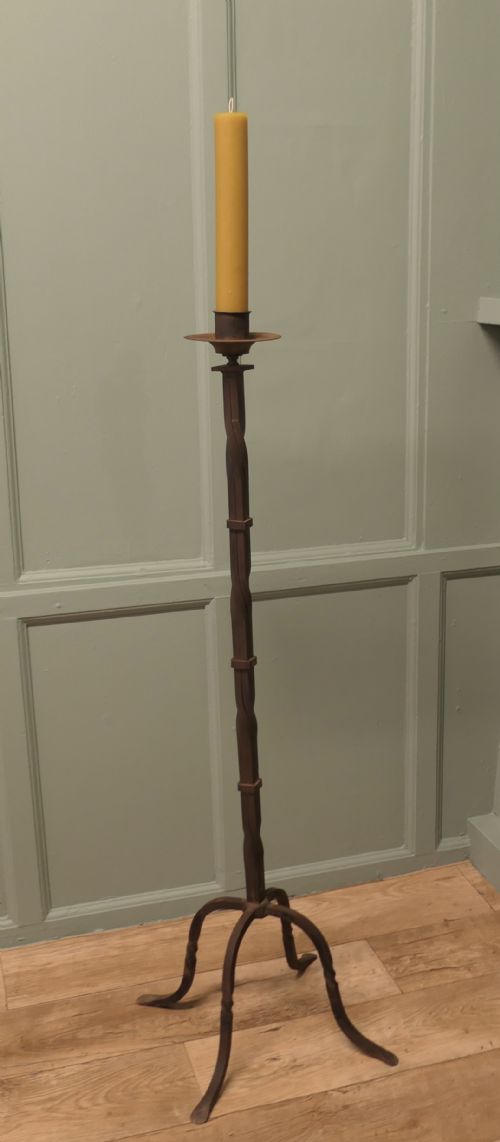
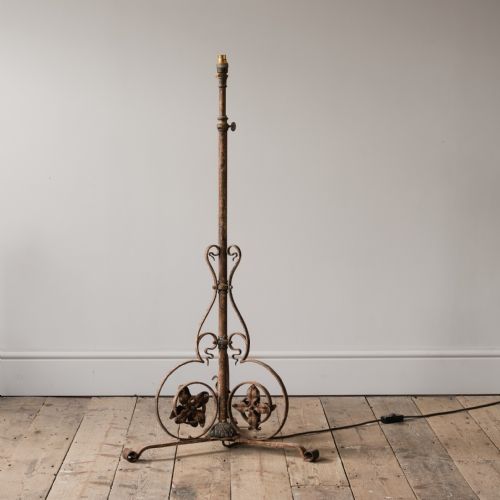
When you search for forged metal lighting, you are looking at utilitarian objects shaped by the blacksmith's hand across the eighteenth, nineteenth, and early twentieth centuries. These pieces encompass sturdy floor lamps, adjustable standard lamps, wall lights, and lantern stands designed to bring artificial illumination into domestic spaces. The selection on this page leans heavily toward nineteenth-century wrought iron and Victorian forms, alongside Arts and Crafts designs.
You will frequently encounter tall floor candlesticks, standard lamps with adjustable arms, and pairs of wall lights built to withstand daily use. Materials span wrought iron, forged iron, copper, brass, and steel, occasionally paired with fabric or finished with paint. Styles range from Gothic Revival and Victorian Country to Portuguese Country, trench art, and Secessionist work.
How they were made
Makers shaped these lights by heating iron and other metals in a forge before hammering them on an anvil to achieve the desired thickness and curve. Blacksmiths utilised traditional joining techniques such as riveting and collar joints to construct floor stands and wall brackets without modern welding. Copper and brass elements were often beaten or spun to create contrasting reflective surfaces against the darker iron frameworks.
Surfaces frequently display the direct evidence of the hammer, leaving tool marks that give each piece its individual texture and weight. Some items incorporate adjustable mechanisms, allowing arms to move or heights to shift through simple mechanical ingenuity rather than mass-produced spring systems.
Forged Metal Lighting Retail Price Guide 2026
Typical asking prices for forged metal lighting among the pieces listed under this phrase on Sellingantiques today, from the lower quarter to the upper quarter. They describe what is for sale here now, not the wider market.
Some trench art candlesticks started life as artillery shell cases before spending their retirement holding candles.
What varies in quality
The distinction between ordinary utility items and exceptional pieces lies in the subtlety of the blacksmith's forging and the balance of the overall design. Superior examples show purposeful manipulation of hot metal, with clean taperings, well-proportioned bases, and thoughtful integration of adjustable arms that move smoothly.
The integrity of the construction also dictates the standing of a piece, separating straightforward utilitarian ironwork from more decorative expressions found in Arts and Crafts or Secessionist workshops. Better items maintain structural harmony across heavier elements like standard lamp bases and lantern stands without appearing clumsy.
Hugo Berger Goberg
The Forged Metal Lighting Glossary
- Wrought iron
- Iron that has been heated and hammered into shape by hand, known for its fibrous texture and resilience. It resists snapping under stress better than cast iron.
- Standard lamp
- A tall freestanding lamp designed to stand on the floor rather than a table. These often feature adjustable arms for directing light downwards.
- Trench art
- Objects fashioned by soldiers, prisoners of war, or civilians from the debris of conflict, utilising spent shell cases and scrap metal. Candlesticks are a common form within this category.
- Secessionist
- A stylistic movement from the late nineteenth and early twentieth centuries that favoured geometric simplicity and clean lines over ornate Victorian revivalism.
Forged Metal Lighting: Frequently Asked Questions
What is forged metal lighting?
Forged metal lighting encompasses hand-hammered iron and copper fixtures made by blacksmiths and metalworkers primarily during the eighteenth, nineteenth, and early twentieth centuries.
These pieces include floor lamps, standard lamps, wall lights, and lantern stands designed for practical illumination in domestic settings.
How were these lamps used?
These fixtures provided functional lighting in homes, workshops, and public spaces before electricity became widespread, using candles or early oil mechanisms.
Floor lamps and standard lamps could be moved to illuminate specific areas for reading or working, while wall lights and lanterns remained fixed.
How do I date a piece?
Dating relies on observing construction methods, tool marks, and stylistic indicators such as Gothic Revival motifs or Secessionist geometric lines.
Earlier eighteenth-century and nineteenth-century items typically show heavier blacksmith forging, whereas 1910s pieces may reflect specific designer outputs and industrial refinements.