
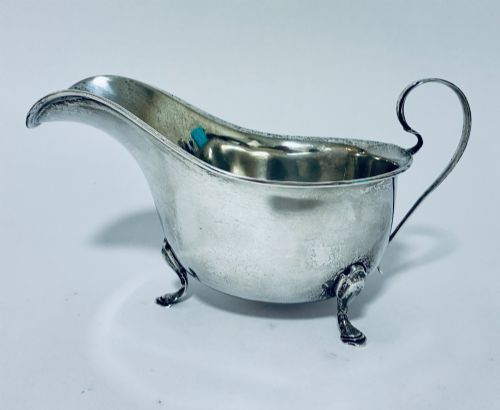
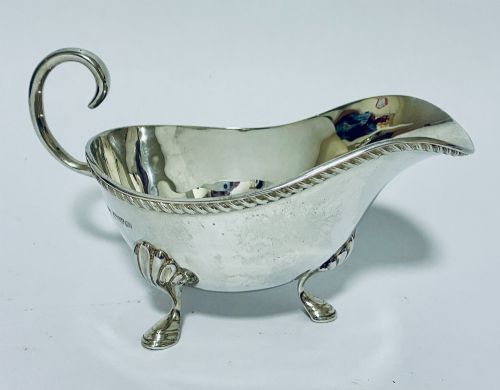
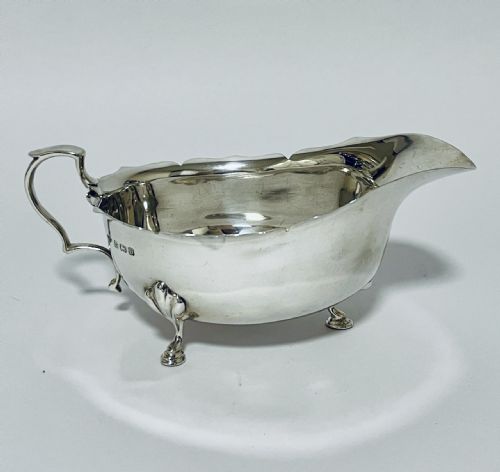
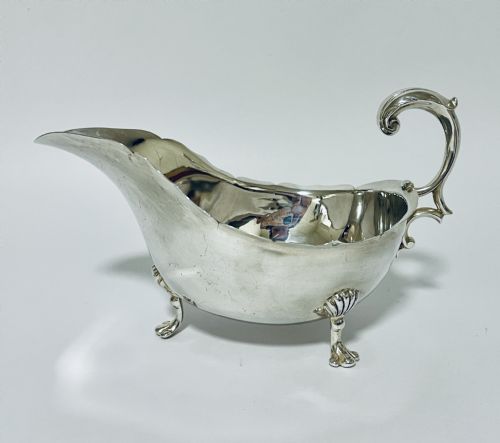
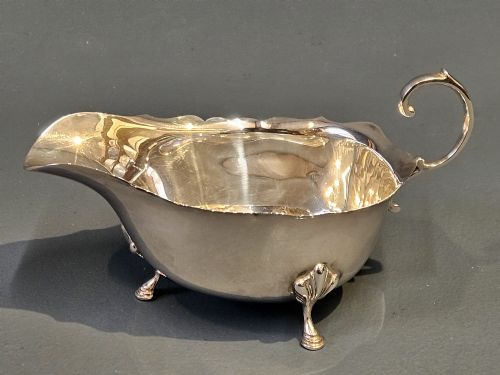

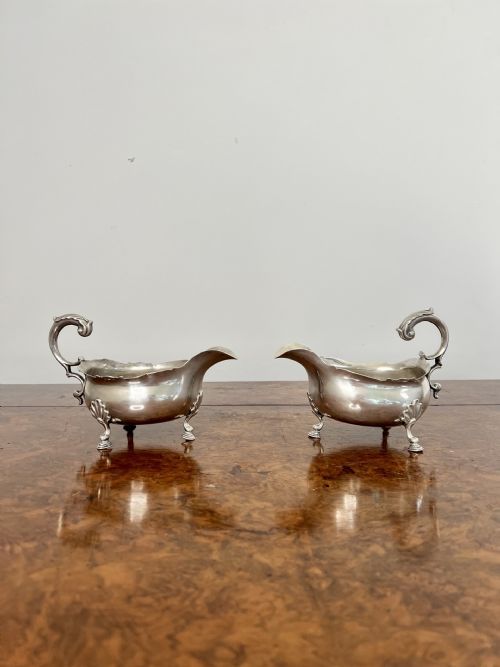


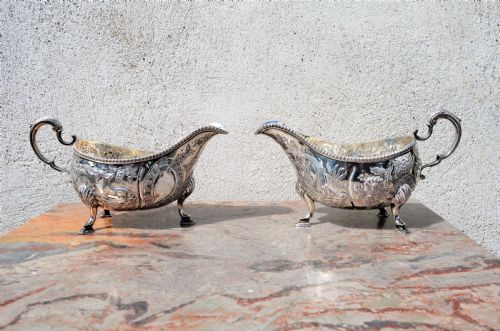


Footed Silver Sauce Boat
These footed silver sauce boat examples bring genuine Georgian and later elegance to the table, offering a graceful vessel for gravies and dressings.
Footed Silver Sauce Boat
When you search for a footed silver sauce boat, you are looking at classic serveware designed to hold gravies, melted butter, and table sauces. These pieces typically stand upon three or four feet, raising the body cleanly above the dining surface.
The versions you are most likely to meet on this page span several centuries, reaching from the mid-eighteenth century through the Victorian and Edwardian eras up to the mid-twentieth century. They appear in solid sterling silver, silver plate, Sheffield plate, and electroplated nickel silver.
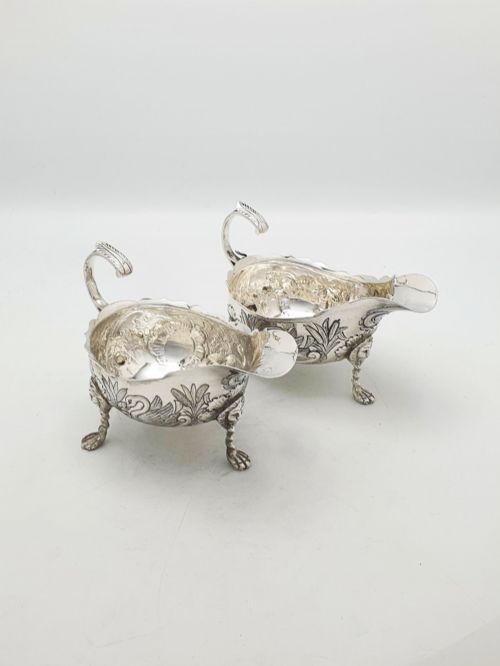
Styles range widely across these periods, encompassing Georgian, George II, George III, George V, Edwardian, Victorian, and Regency aesthetics. Forms vary from simple vessels to paired sets and examples featuring detailed embossing, engraving, or naturalistic acorn motifs.
How they were made
Makers fashioned these vessels primarily from sterling silver or applied silver layers over base metals such as copper and nickel silver, utilising techniques like Sheffield plating. Solid silver pieces demonstrate traditional silversmithing methods, shaped through hammering, casting, and soldering.
Decoration often involved hand engraving, embossing, or casting naturalistic details such as feet and handles in the form of acorns and foliage. Plated examples reveal the skilled fusing of silver sheets to copper cores before final shaping and polishing.
Some nineteenth-century makers went wild with acorns, turning humble gravy holders into miniature oak forests.
What varies in quality
The distinction between standard examples and the finest pieces rests upon the weight of the metal, the crispness of any chased or embossed decoration, and the integrity of the original form. Heavy gauge sterling silver and well-preserved Sheffield plate represent the higher tiers of production.
Subtleties in the cast feet and the proportional balance of the handle against the body separate basic utilitarian serveware from masterworks of the silversmith's art.
The Footed Silver Sauce Boat Glossary
- Sterling silver
- A silver alloy containing 92.5 percent pure silver by mass and 7.5 percent other metals, usually copper, ensuring durability while maintaining a bright lustre. This standard has governed British silversmithing for centuries.
- Sheffield plate
- An early form of plated silver produced by fusing a sheet of silver to a thicker copper ingot before rolling them into thin sheets together. This technique creates a distinctive edge where the underlying copper sometimes subtly shows.
- Electroplated nickel silver
- A base metal alloy of copper, nickel, and zinc coated with a thin layer of pure silver through an electrolytic process. This method became widespread in the nineteenth century as a cost-effective alternative to solid silver.
- Georgian
- A period of British design spanning the reigns of the first four Georges, renowned for classical proportions and refined ornamentation. Pieces from this era often display restrained elegance.
- Embossing
- A metalworking technique where a design is raised from the reverse side using hammers and punches to create a three-dimensional surface pattern. This method gives texture and depth to the body of the vessel.
Footed Silver Sauce Boat: Frequently Asked Questions
What is a footed silver sauce boat used for?
These vessels were created specifically to hold and pour gravies, sauces, and melted butter at the dining table. Their elevated feet protect the table surface and lend a formal appearance to meal service.
Today, they function as decorative table centrepieces or serveware for formal dinners and gatherings.
How do I clean a silver sauce boat?
Cleaning requires a soft microfibre cloth and a specialist silver polish designed to remove tarnish without scratching the metal surface. Avoid harsh abrasive pads or scouring powders that can wear away thin silver plating.
Wash the piece gently in warm soapy water and dry it thoroughly immediately afterwards to prevent water spots.
How can I tell a Georgian sauce boat from a Victorian one?
Georgian pieces generally display cleaner, more restrained classical lines with smooth surfaces or simple beaded borders. Victorian examples often introduce heavier ornamentation, naturalistic motifs, and more elaborate handles.
Examining the overall weight, form, and any hallmarks helps clarify the specific period of manufacture.
Are pairs of sauce boats common?
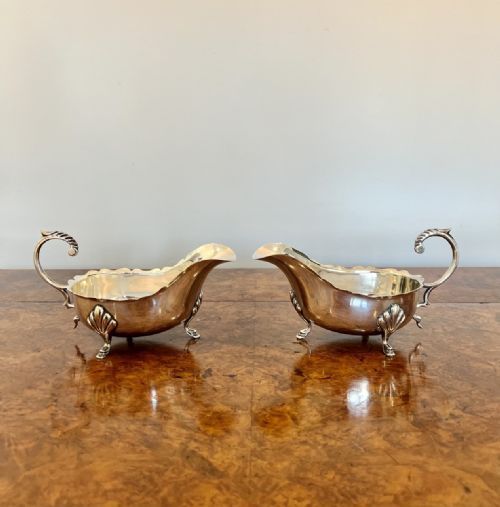
Pairs of matching sauce boats do appear, particularly from the eighteenth and nineteenth centuries, intended for serving two different sauces at opposite ends of a large dining table. Finding a matched pair adds significant appeal for collectors.
Single vessels are also frequent, reflecting the dispersal of original sets over time.