

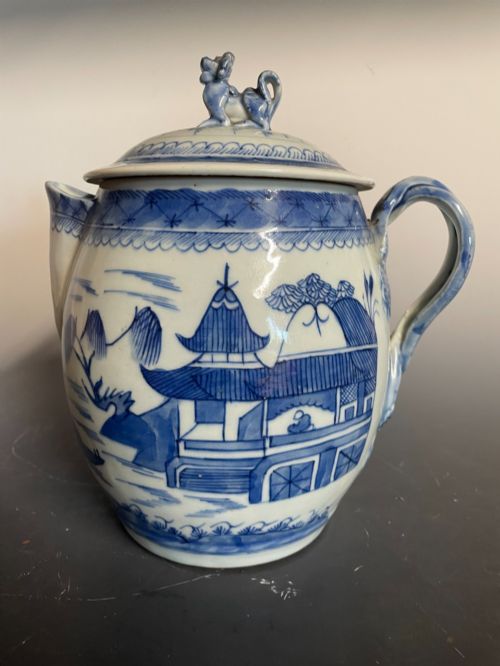


Foo Dog Lid Vessel
These foo dog lid vessel pieces bring together animal finials and lidded forms from Asian and export traditions.
Foo Dog Lid Vessel
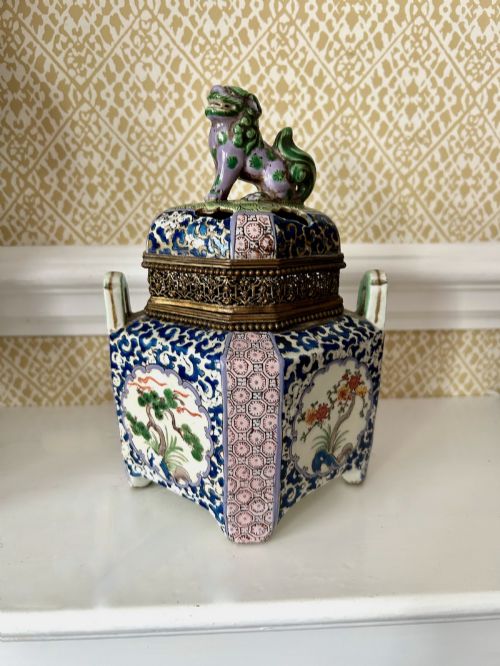
When you search for a foo dog lid vessel, you are looking at lidded containers, censers, koro, and jars topped with guardian lion finials. These pieces primarily originate from Chinese Qing Dynasty, Chinese Export, and Japanese Meiji period workshops.
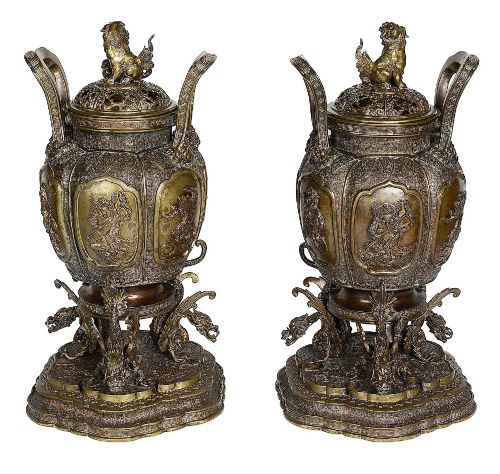
The most common versions on this page are tripod bronze censers and porcelain jars spanning the nineteenth century to the Edwardian era. They combine functional vessel bodies with detailed guardian lion handles or lids.
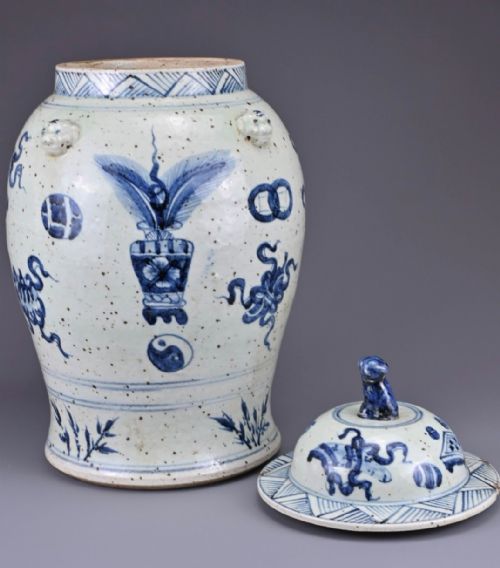
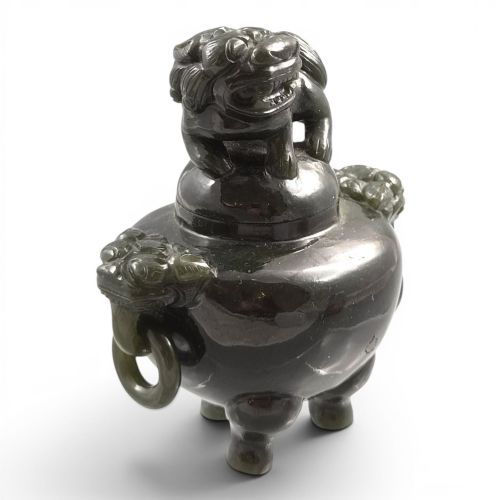
Forms range from large blue and white jars and cloisonne vessels to dark green jade and gilt bronze tripod censers. Each piece serves as both a container and a sculptural display of traditional craftsmanship.
How they were made
Metal vessels utilise bronze, gilt bronze, and cloisonne enamel techniques, cast and finished with applied lion finials and tripod feet. Artisans shaped metal through casting and detailed surface ornamentation.
Ceramic pieces employ porcelain decorated with cobalt pigment underglaze and Japanese Imari palettes. Glaze applications seal the ceramic body while carrying intricate blue and white or polychrome designs.
Foo Dog Lid Vessel Retail Price Guide 2026
Typical asking prices for foo dog lid vessel among the pieces listed under this phrase on Sellingantiques today, from the lower quarter to the upper quarter. They describe what is for sale here now, not the wider market.
Listings feature items spanning the nineteenth century, Edwardian period, and early twentieth century in bronze, porcelain, jade, and enamel.
What varies in quality
The standard of carving and casting on the finial distinguishes finer pieces, where facial expressions and musculature of the guardian lion show greater crispness. Heavier metal and more precise porcelain potting separate robust examples from simpler wares.
Decoration quality depends on the control of cobalt pigment and enamel work, where clean lines and balanced composition elevate the visual weight of the jar or censer.
The Foo Dog Lid Vessel Glossary
- Censer
- A vessel designed for burning incense, frequently fitted with a cover and resting on tripod feet. These containers appear in both bronze and ceramic materials.
- Koro
- A Japanese term for an incense burner, often featuring a pierced lid and decorative handles. They share the same functional roots as Chinese censers.
- Imari
- A style of Japanese export porcelain characterised by cobalt blue, iron red, and gilt decoration. The palette creates high-contrast geometric and floral patterns.
- Cloisonne
- An enamelwork technique where metal wire creates cells on a metal base, filled with enamel paste and fired. This produces vibrant coloured patterns across the vessel body.
- Qilin
- A mythical hooved creature whose presence denotes good fortune and protection, occasionally referenced in finial designs alongside guardian lions.
Foo Dog Lid Vessel: Frequently Asked Questions
What is a foo dog lid vessel used for?
These pieces served primarily as decorative jars or functional incense burners in domestic and ritual settings. The lidded design helped contain aromatic materials or protected the contents within.
Over time, many of these vessels transitioned into purely decorative objects valued for their sculptural lid finials and traditional forms.
How do I date a bronze censer?
Dating relies on examining the casting technique, patina, and stylistic markers associated with periods like the Qing Dynasty or Meiji era. Heavier weight and specific bronze compositions often point towards nineteenth-century production.
Comparing the detailing of the tripod feet and the guardian lion finial against known period pieces helps narrow down the timeframe.
What is the difference between porcelain and bronze versions?
Porcelain versions utilise cobalt pigment underglaze or Imari enamel palettes to achieve colourful, patterned surfaces. They offer a smoother, ceramic finish suited for jars and smaller containers.
Bronze examples focus on cast metalwork, often taking tripod censer forms with patinated surfaces and sculptural handles. They provide greater heft and tactile metal texture.
How do I care for cloisonne and enamel pieces?
Enamel surfaces require gentle dusting with a soft, dry cloth to prevent scratching the delicate glass paste. Avoid using harsh chemical cleaners or abrasive sponges that could damage the wire cells.
Keep them away from direct sunlight and extreme temperature fluctuations to preserve the stability of the metal and enamel bond.