


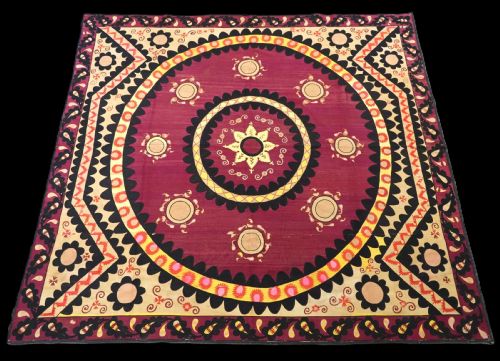

Folk Art Needlework
Folk art needlework pieces are hand-stitched textiles from past centuries that bring vibrant domestic narratives and maritime history into modern rooms.
Folk Art Needlework
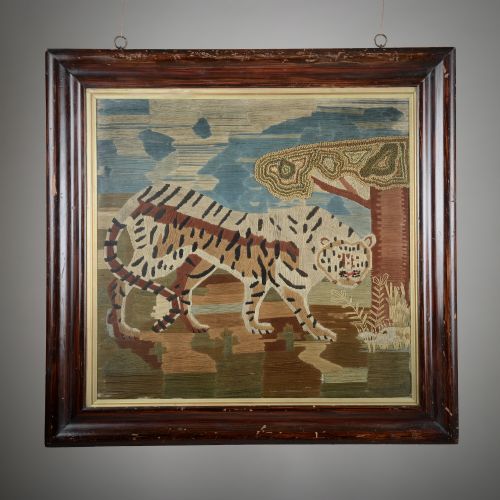
Folk art needlework encompasses framed textile panels, sampler pictures, and embroidered wall art created across the eighteenth, nineteenth, and early twentieth centuries. When searching for folk art needlework, buyers encounter everything from traditional alphabetic samplers to large-scale woolwork pictures depicting maritime scenes and exotic animals.
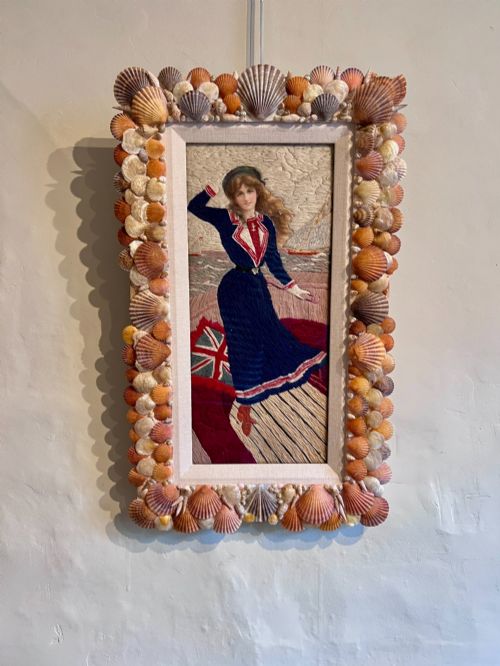
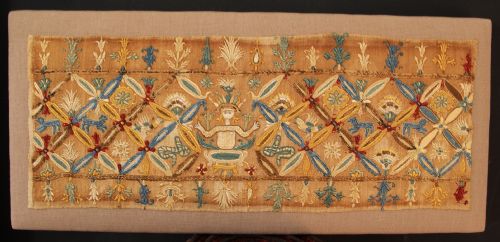
Originating from diverse regions including Britain, Greece, Sweden, and Central Asia, these pieces reflect local domestic traditions and vernacular styles. The selections on this page frequently include Victorian woolies depicting sailors, Greek island embroideries from Skyros, and detailed pictorial works on linen or canvas.
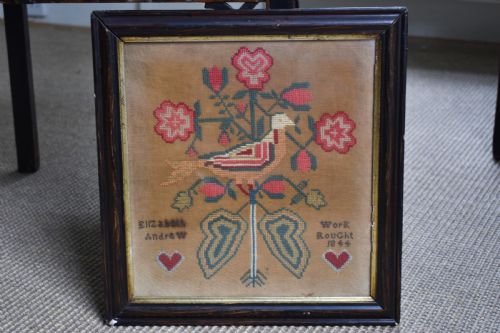
Domestic makers and skilled amateurs produced these pieces using traditional stitches, often recording family names, dates, or stories. Surviving examples range from miniature samplers to large regional embroideries mounted behind glass in wooden frames.
How they were made
Needlework pieces rely on a fabric ground of linen, cotton, or canvas stretched to receive the thread. Makers worked with wool, silk thread, and occasionally glass beads to build up pictorial surfaces and textured patterns.
Stitching techniques vary from counted thread embroidery on samplers to free-form woolwork pictures and heavy suzani embroideries. Finished panels were typically mounted onto wooden supports and framed for wall display.
The listings span the eighteenth, nineteenth, and twentieth centuries, incorporating materials such as linen, wool, silk, cotton, and glass beads.
What varies in quality
Quality in these textiles rests upon the complexity of the composition and the fineness of the execution. Pictorial works depicting tigers, ships, or narrative scenes demonstrate greater draughtsmanship than standard repetitive exercises.
The choice and preservation of materials also distinguish the range. Pieces retaining rich, unfaded wools, bright silk threads, and stable linen grounds hold stronger visual presence than heavily degraded examples.
The Folk Art Needlework Glossary
- Sampler
- A piece of needlework produced to demonstrate proficiency in various stitches and alphabets. These often include dates, maker names, and pious verses.
- Woolie
- A nineteenth-century sailor's embroidery made using wool yarn, typically depicting naval vessels, flags, or maritime figures.
- Suzani
- A type of embroidered tribal textile originating from Central Asia, featuring large floral or geometric motifs worked in silk on a cotton ground.
- Cretan Embroidery
- Needlework originating from the Greek islands, characterised by dense geometric and floral designs worked in rich silk threads.
Folk Art Needlework: Frequently Asked Questions
How do I hang folk art needlework?
Most framed textile panels and samplers mount securely using standard picture wire fixed to wooden frames. Ensure the piece hangs away from direct sunlight to protect fragile silk and wool threads from fading.
Keep the textile in a stable indoor environment away from excessive moisture. Professional framing with conservation glass provides additional protection against dust and atmospheric changes.
How are different periods identified?
Periods are identified through a combination of materials, styles, and internal evidence such as dated inscriptions. Eighteenth-century pieces often show specific regional embroidery traits, whereas Victorian works frequently feature woolies or moral samplers.
Changes in canvas types and framing methods also help establish the age of an unlabelled textile. Comparing stitch density and colour palettes against known examples confirms the era of production.
Where did regional embroideries originate?
Regional embroideries seen in these collections originate from distinct European and Asian locations such as the Greek islands, Sweden, and Uzbekistan. Each area developed specific motifs, such as the geometric patterns of Skyros or the large floral discs of Central Asian suzanis.
Local women produced these textiles for domestic use, dowries, or wall decoration. Their distinctive regional styles make it possible to trace where a specific textile was stitched.