



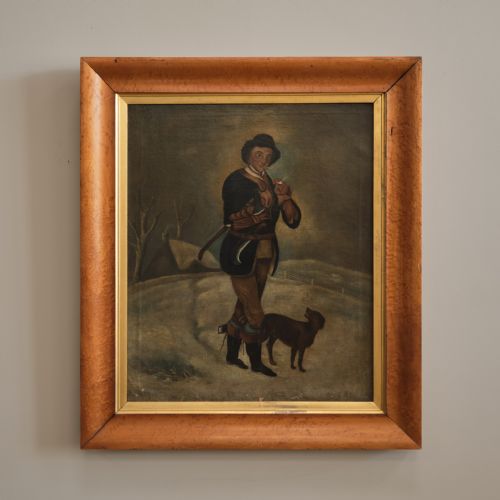

Folk Art Canvas
Folk art canvas works bring untutored charm and direct local observation into a room, offering immediate character.
Folk Art Canvas
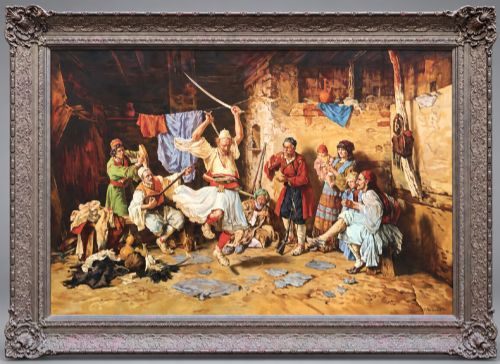
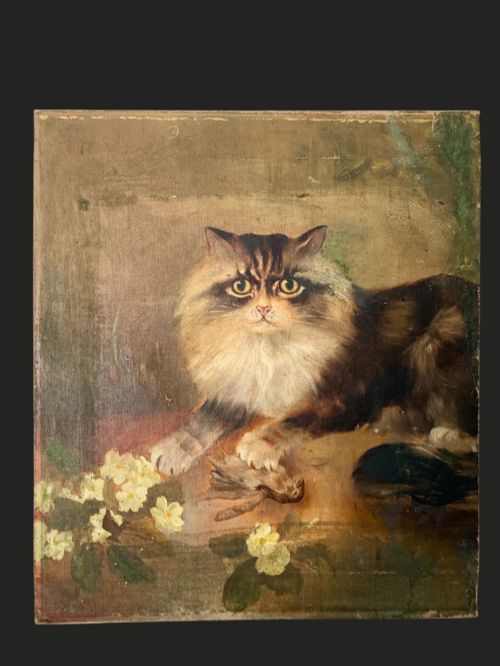
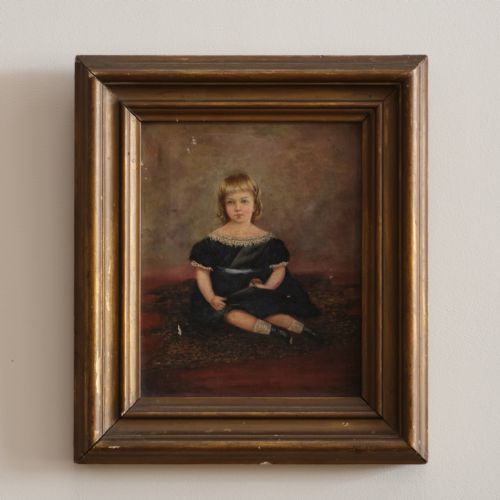
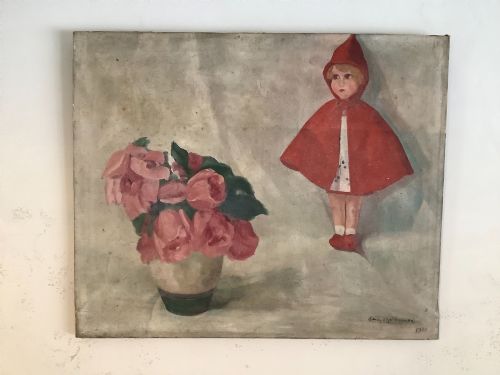
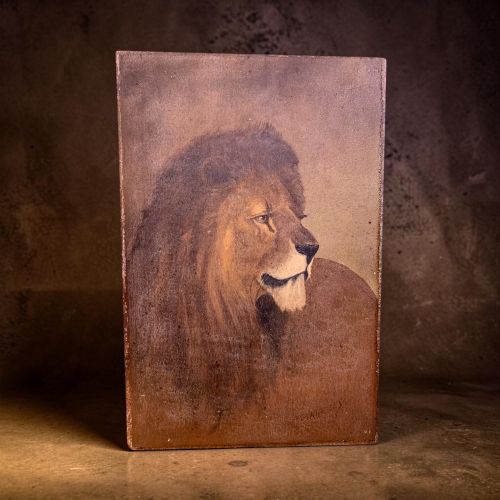
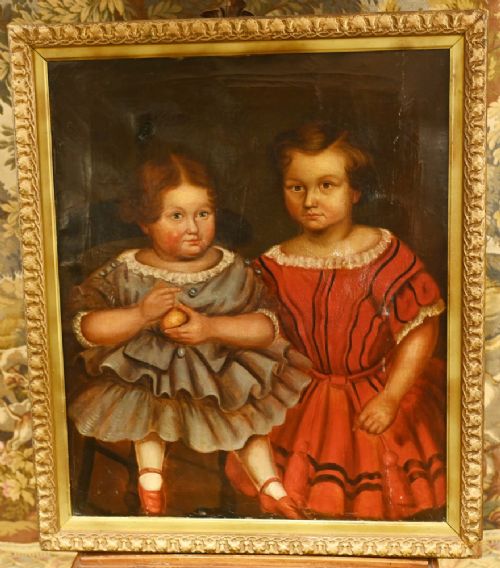
When you examine folk art canvas pieces, you look at works created outside formal academic traditions by provincial painters, self-taught artists, and local makers. These works record domestic scenes, rural landscapes, animal subjects, and family portraits with an unpretentious directness.
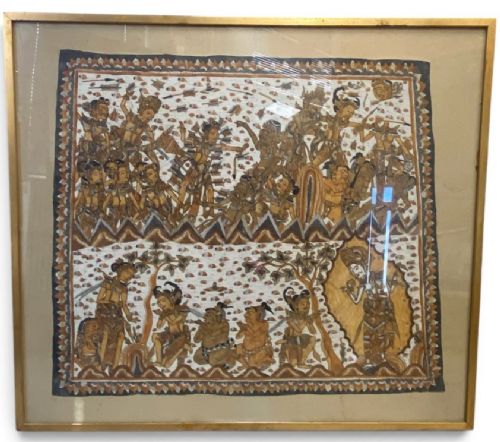
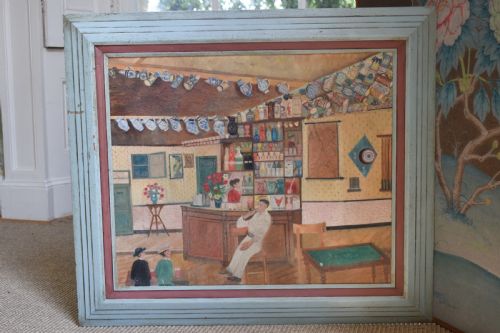
The versions you meet most frequently on this page belong to the nineteenth century, alongside later mid-twentieth-century examples from British, European, American, and Asian provincial schools. The forms range from small naive portraits of children and animals to larger genre scenes depicting farm life, coastal landscapes, and street views.
Many of these paintings present subjects with flat perspective and bold outlines, relying on local colour rather than complex tonal graduation. They capture regional life and domestic animals with an honest eye that academic painting often overlooked.
Materials and construction methods
The works listed here rely primarily on oil paint applied to woven canvas supports, though related items incorporate wood, textile grounds, and occasionally gilt frames or gold leaf accents. Artists utilised standard oil mediums, working with brushes on stretched or pinned fabric to build up flat areas of pigment.
The preparation of the ground varied according to the maker's workshop or local availability, with some artists applying a simple priming coat directly to the canvas before painting. Over time, these oil layers have developed natural craquelure, reflecting the organic movement of the textile support and the ageing of the oil paint.
Several canvases record local racing pigeons and family pets, ensuring that long-forgotten animals share space with portraits of children and agricultural scenes.
Distinctions in quality
Quality in these works rests upon the confidence of the brushwork and the strength of the composition, rather than adherence to strict anatomical rules or academic proportion. A superior naive painting possesses a deliberate rhythm and emotional directness that animates the subject, while weaker examples lapse into stiff repetition.
The preservation of the original surface and the integrity of the canvas also define the standing of a piece. Works retaining their untouched paint layers and early or original framing hold greater visual coherence than those altered by heavy restoration or relining.
J Brown·Ferruccio Vitale·William Shayer·James G. Faulds·Louis Marie Dominique Robbe
The Folk Art Canvas Glossary
- Naive art
- Painting produced by an artist without formal academic training, often characterised by a flat perspective and simplified forms. These works focus on direct narrative and personal observation.
- Oil on canvas
- Pigment suspended in a drying oil, usually linseed, applied to a woven fabric support. This combination allows for rich colour saturation and subtle blending over time.
- Provincial school
- Art produced in regional areas away from metropolitan academies, reflecting local tastes, traditions, and materials. Such works often preserve distinct local character.
- Genre painting
- The depiction of aspects of everyday life by portraying ordinary people engaged in common activities. These scenes offer a record of past domestic and working habits.
- Craquelure
- The network of fine cracks that develops across the surface of an oil painting as the paint film ages and hardens. It serves as an indicator of natural age in canvas works.
Folk Art Canvas: Frequently Asked Questions
What defines a folk art canvas?
A folk art canvas is an oil painting created by an untrained or provincial artist working outside mainstream academic conventions. These pieces emphasise direct observation, bold colour, and personal narrative over formal perspective.
They capture domestic life, animals, and local scenes with an unpretentious honesty that distinguishes them from academic fine art.
How should I hang these paintings?
These paintings suit spaces where their informal character can be appreciated up close, such as hallways, kitchens, or living rooms. Pair them with simple wooden or antique frames that complement their age and regional origins.
Keep them away from direct sunlight and damp environments to protect the organic canvas and oil paint layers.
How do I identify the period?
Dating relies on examining the preparation of the canvas, the style of the framing, and the specific pigments used in the paint layer. Costume, hairstyles, and domestic objects depicted within the scene also offer reliable clues to the era.
Nineteenth-century examples often feature hand-stretched linen supports and earth-based pigments characteristic of provincial workshops of that time.
Why do some paintings lack signatures?
Many provincial and untrained artists did not sign their work because their paintings served local or domestic functions rather than the formal art market. Their output was part of regional craft traditions rather than commercial gallery production.
An unsigned canvas often reflects its creation by a local maker recording family members, farm animals, or neighbourhood scenes for everyday settings.