


Folding Step Stool
These folding step stool designs are clever metamorphic items that transition from sturdy seating into practical ladder steps, built for reaching high bookshelves.
Folding Step Stool
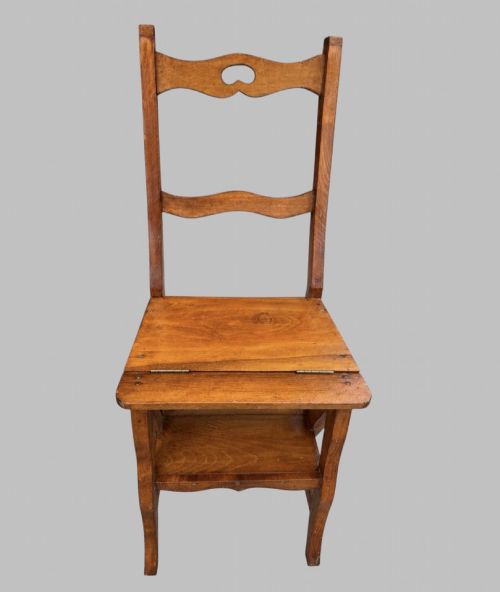
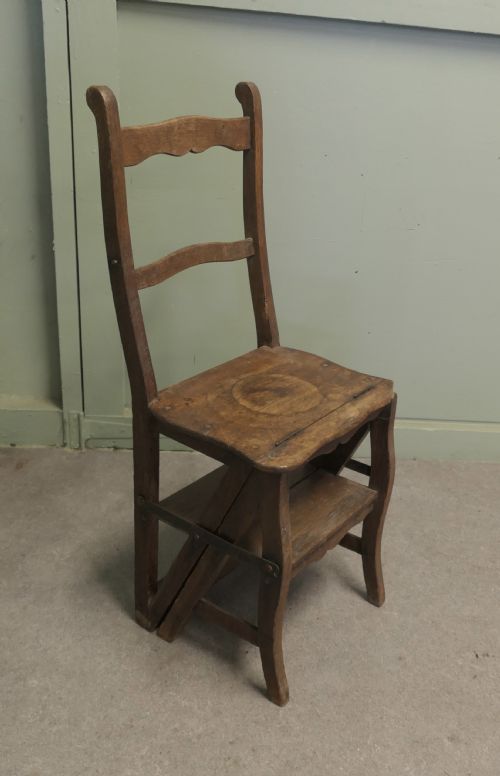
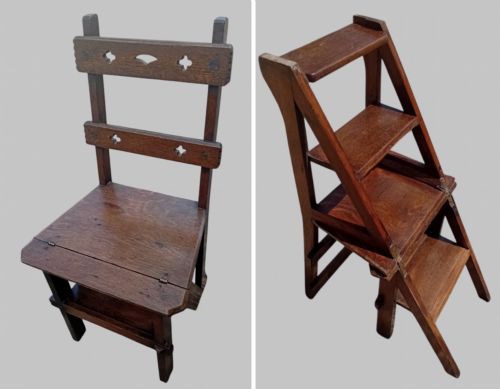
A folding step stool takes several forms on this page, most commonly appearing as metamorphic library chairs or traditional step ladders. These pieces serve a double purpose, functioning as everyday seating before unfolding to reveal hidden treads for climbing.
The materials and styles span from Georgian mahogany armchairs to 19th Century oak Gothic Revival pieces and industrial utility steps. Buyers encounter simple pine and fruitwood ladders alongside sophisticated metamorphic designs originating from English and French workshops.
Materials and construction
Makers utilised solid timbers including oak, mahogany, fruitwood, and pine for the main framework of each folding step stool. Selected pieces integrate brass hinges, iron brackets, and metal locking mechanisms to support the weight and movement of the folding sections.
Upholstery and detailing introduce leather and cane inserts into the seats of metamorphic library chairs, while other utilitarian versions remain entirely in bare wood or painted finishes. Joinery methods depend on the period, ranging from traditional pegged joints in Georgian pieces to robust industrial metal fittings.
Listings feature oak, mahogany, fruitwood, and pine, demonstrating how cabinetmakers selected hardwoods for strength in folding furniture.
Assessing quality in folding step stools
Quality rests upon the smoothness and reliability of the metamorphic action, where superior examples transition between chair and ladder without sticking or wobbling. The integrity of the timber framing and the original mechanical hinges dictate how well the piece endures repeated transformation.
Refinement in carving and timber selection separates utilitarian workaday stepladders from high-style library armchairs designed by prominent makers. Pieces retaining original leather, cane, or brass hardware command greater attention from collectors than modified or heavily restored examples.
The Folding Step Stool Glossary
- Metamorphic
- Furniture that transforms from one functional object into another, such as a chair converting into library steps.
- Gothic Revival
- A design style drawing inspiration from medieval architecture, often featuring pointed arches, tracery, and heavy oak construction.
- Arts and Crafts
- A design movement prioritising traditional craftsmanship, visible construction, and simple forms over mass-produced ornamentation.
- Fruitwood
- Timber sourced from fruit-bearing trees such as pear or apple, utilised by cabinetmakers for its fine grain and pleasing warmth.
Folding Step Stool: Frequently Asked Questions
How do metamorphic library chairs work?
These chairs feature clever pivot points and hidden hinges beneath the seat and frame. By lifting and rotating sections of the backrest or seat, the furniture unfolds securely into a stable set of ladder steps.
Once finished, the process reverses simply to lock the wooden treads back into a comfortable seat for sitting.
Are these steps safe to use?
Most antique folding steps remain structurally sound if the wooden joints and metal hinges are tight. Solid oak and mahogany examples offer sturdy support when fully locked into position.
Buyers should test the locking mechanism and check the stability of the treads before climbing to reach high shelves.
How do I date a folding step stool?
Dating relies upon examining the timber species, joinery techniques, and prevailing stylistic details such as Gothic Revival tracery or Georgian proportions. Plain utility steps often show minimal decoration, making construction methods and brass or iron hardware the primary clues to their age.
Later 19th and early 20th century pieces frequently adopt simpler Arts and Crafts or industrial utility designs.
Can I use these steps in a modern home?
These items function exceptionally well as compact bookcases ladders, kitchen steps, or decorative display stands. Their dual purpose makes them practical for daily use in rooms with high ceilings.
Many collectors also place metamorphic armchairs beside desks or bookshelves as traditional seating.