



Folding Bedroom Mirror
A folding bedroom mirror brings both practical dressing function and clever pivoting geometry to the dressing room or washstand.
Folding Bedroom Mirror
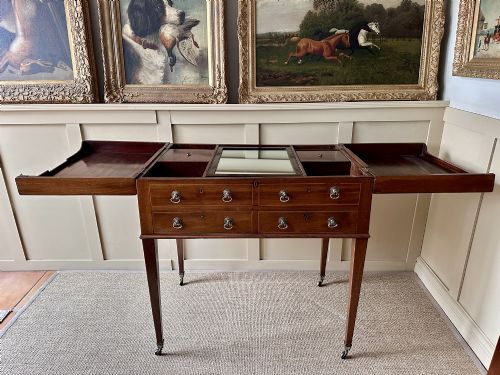
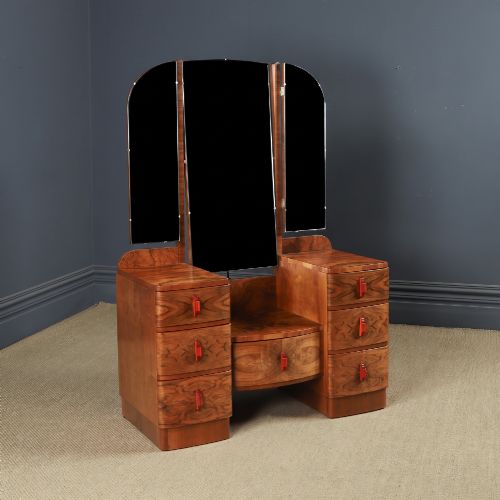
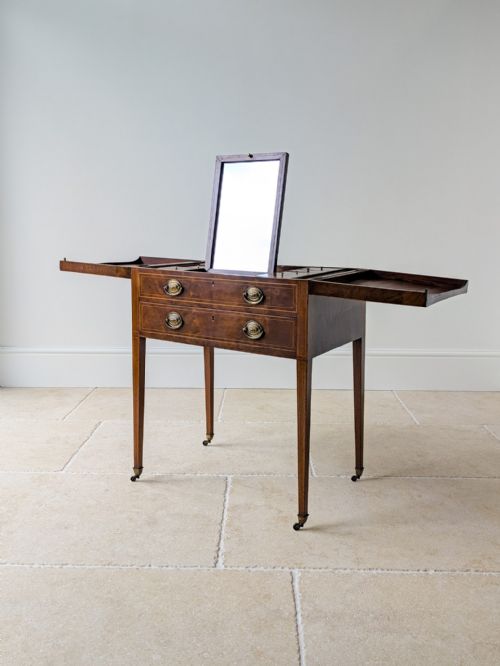
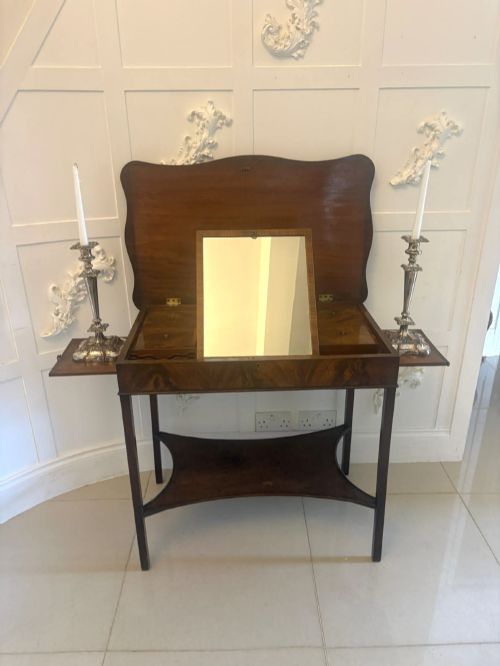
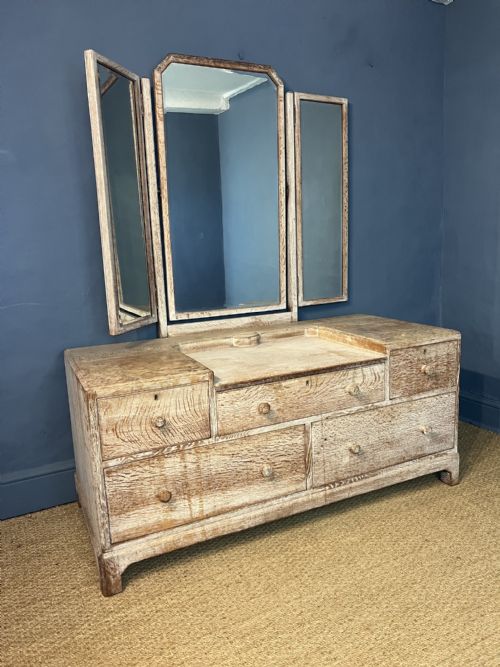
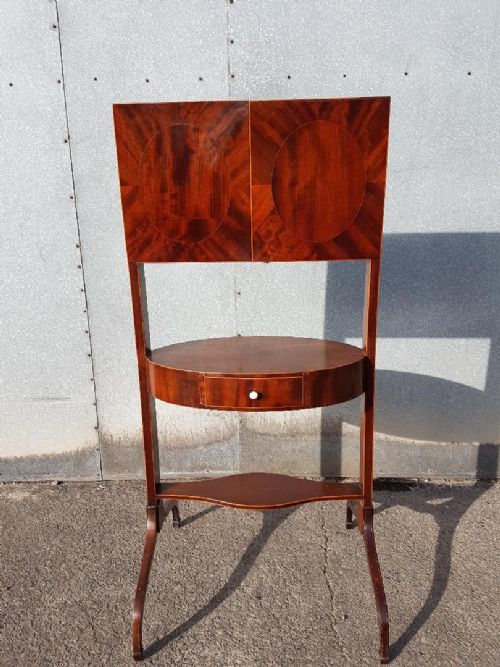
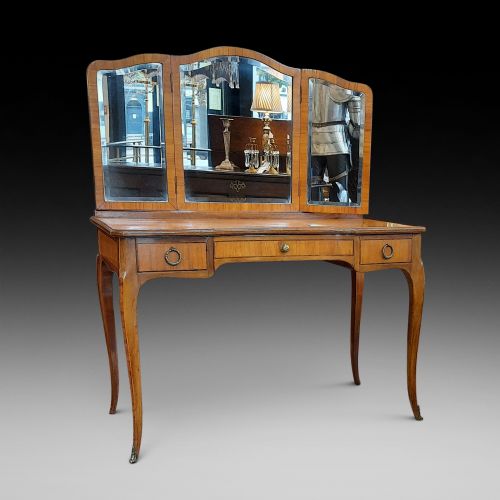
A folding bedroom mirror most frequently appears integrated into dressing tables, vanity tables, and washstands from the Georgian era through the early twentieth century. These pieces range from eighteenth-century mahogany triplate designs to nineteen-thirties figured walnut and limed oak pedestals.
Buyers seeking a folding bedroom mirror will encounter compact tri-fold table models in brass alongside larger French provincial and neoclassical dressing furniture equipped with adjustable glass plates. The selection spans periods from the seventeen-nineties up to nineteen-fifty, reflecting diverse domestic grooming habits across two centuries.
How they were made
Cabinetmakers constructed these dressing pieces using solid and veneered timbers including mahogany, figured walnut, limed oak, kingwood, rosewood, and boxwood inlay. Brass embellishments, hinges, and mounts secure the pivoting mirror frames and drawers.
Surfaces feature marble tops on French washstands and dressing tables, while mirror assemblies employ multi-plate glass configurations held within hinged wooden or brass surrounds.
Folding Bedroom Mirror Retail Price Guide 2026
Typical asking prices for folding bedroom mirror among the pieces listed under this phrase on Sellingantiques today, from the lower quarter to the upper quarter. They describe what is for sale here now, not the wider market.
Materials represented include glass, brass, mahogany, marble, figured walnut, bakelite, boxwood, and limed oak.
What varies in quality
Quality rests in the precision of the timber selection, such as figured walnut and crossbanded rosewood veneers, and the sturdiness of the brass hinges supporting the folding mirror leaves. Finer examples display careful joinery in dressing table drawers and crisp carving on oak or mahogany frames.
The sophistication of the mirror arrangement sets apart ordinary vanity furniture from exceptional pieces, particularly multi-plate triplate designs that allow angled reflection.
Heals
The Folding Bedroom Mirror Glossary
- Triplate
- A mirror assembly composed of three distinct glass panels hinged together so the outer sections angle inward. This configuration allowed users to view their profile from multiple directions during grooming.
- Crossbanded
- A border technique where thin strips of veneer are laid across the grain of the primary wood. It frames drawer fronts and table tops with a contrasting directional pattern.
- Pedestal vanity
- A dressing table supported by one or more cabinet pedestals containing drawers rather than simple four-leg construction. These offer substantial storage beneath the mirror surface.
- Limed oak
- Timber treated with a white pigment or lime finish to highlight the open grain pattern. This treatment gained popularity in twentieth-century modern and arts and crafts furniture.
Folding Bedroom Mirror: Frequently Asked Questions
What is a triplate mirror?
A triplate mirror consists of three hinged glass panels that adjust to different angles. This design lets you see your reflection from the side as well as straight on.
Such mirrors appear on both Georgian dressing tables and mid-century brass vanity pieces.
How do I date a dressing table?
Dating relies on the combination of timber choices, construction methods, and stylistic details like Art Deco veneers or Georgian mahogany. Cabinet hardware and mirror hinge types also offer strong clues to the decade of manufacture.
Pieces range from eighteenth-century examples to nineteen-fifties brass designs.
Are these mirrors fixed or adjustable?
The folding mirrors on these pieces use brass hinges or pivots to adjust their angles. You can move the side leaves to suit your light and viewing needs.
Many are permanently built into dressing tables and washstands rather than hung on walls.
What woods were commonly used?
Cabinetmakers utilised mahogany, figured walnut, oak, kingwood, and rosewood for these dressing tables. Boxwood often appears as fine inlay stringing around drawer edges.
Later pieces also incorporated brass frames and marble tops.