



Fold Out Wood Table
These fold out wood table examples offer clever transforming designs in mahogany, oak, and satinwood that bring period ingenuity directly into your home.
Fold Out Wood Table
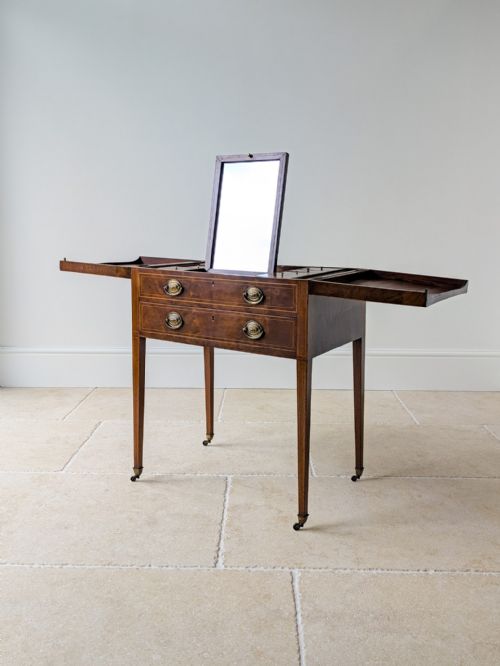
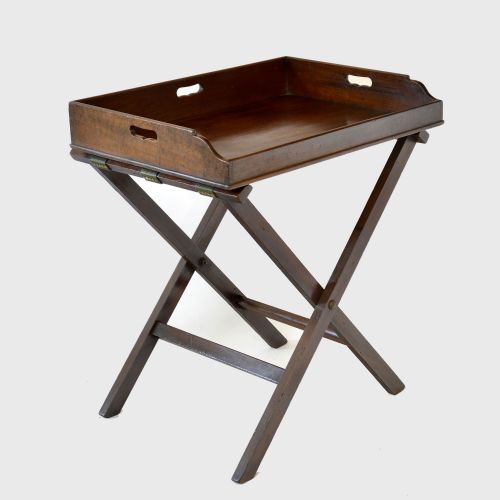
A fold out wood table encompasses ingenious transforming furniture designed to expand surfaces for games, dining, or dressing. The selection on this page bridges centuries of craftsmanship, spanning robust seventeenth-century oak to refined eighteenth-century Georgian and Regency pieces.
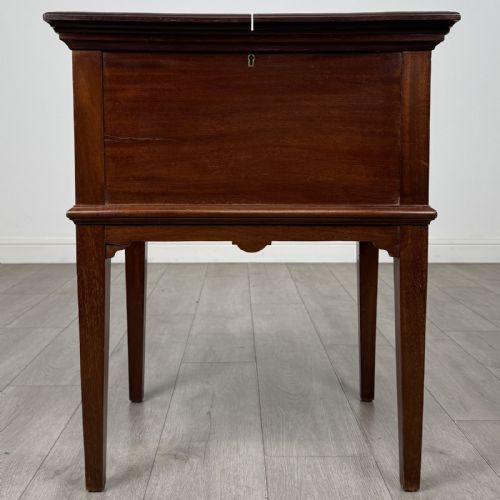
Buyers frequently encounter specialised forms like card tables, games tables, and dressing tables alongside occasional tea tables and metamorphic cabinets. These pieces utilise clever folding leaves, rotating tops, and hidden compartments to alter their footprint as function requires.
Origins stretch across British periods including George III and the Edwardian era, alongside Chinese export examples. Each piece demonstrates how historical makers solved the perennial problem of maximising interior space without sacrificing elegance.
How they were constructed
Makers relied on dense hardwoods like mahogany and oak as the structural foundation for these transforming surfaces. Timber selection prioritized stability, allowing moving leaves and folding tops to operate smoothly over generations of use.
Surface decoration frequently incorporated contrasting boxwood stringing, satinwood veneers, and intricate marquetry inlay. Brass hinges and swing-out legs provided the necessary mechanical support for leaves that doubled the surface area when deployed.
Fold Out Wood Table Retail Price Guide 2026
Typical asking prices for fold out wood table among the pieces listed under this phrase on Sellingantiques today, from the lower quarter to the upper quarter. They describe what is for sale here now, not the wider market.
Current listings feature pieces spanning the seventeenth through the early twentieth centuries, constructed from mahogany, oak, satinwood, and hardwood with brass hardware.
What separates the finest examples
Quality rests in the precision of the joinery where folding leaves meet and the smoothness of the mechanical action supporting extended tops. Superior execution ensures that hinges, rotating pivots, and swing-out legs operate without binding or excessive play.
The choice of timber and decorative technique also dictates distinction, from plain vernacular oak to finely figured mahogany and detailed satinwood marquetry. Finer pieces maintain crisp carving and harmonious proportions whether closed as a side table or open for use.
The Fold Out Wood Table Glossary
- Card table
- A specialised folding table designed for evening entertainment, featuring a hinged top that opens to reveal a baize-lined playing surface. These often include corner wells for counters and candlesticks.
- Demilune
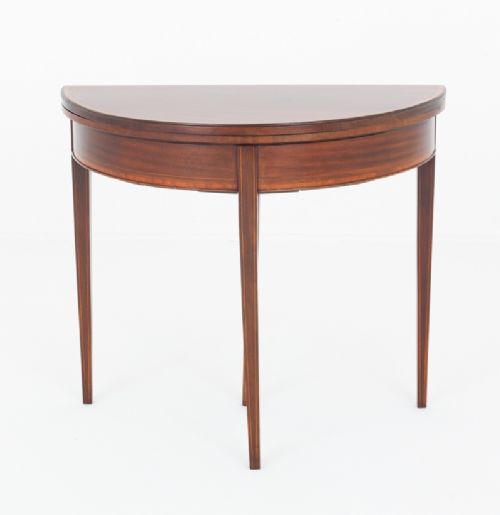
- A half-moon shape utilised in furniture design, particularly popular for card tables that sit flat against a wall when closed. The straight edge pivots to reveal a full circular surface when opened.
- Envelope card table
- A sophisticated form featuring four triangular flaps that fold inward over the centre like an envelope. Rotating the top automatically deploys the leaves into position.
- Metamorphic
- Describing furniture designed to transform into an entirely different object, such as a cupboard converting into a table. These pieces showcase ingenious concealed mechanisms and clever joinery.
- Marquetry
- Decorative veneer patterns formed by fitting together thin slices of various coloured woods and other materials. This technique creates elaborate pictorial or geometric designs across tabletops.
Fold Out Wood Table: Frequently Asked Questions
What is a fold out wood table?
A fold out wood table is a piece of transforming furniture featuring hinged leaves, rotating tops, or expanding sections designed to increase surface area when needed. Historical examples range from card and games tables to dressing tables and occasional tea tables.
These pieces were engineered to save space in domestic interiors while providing specialised surfaces for dining, entertainment, or grooming. Their hidden compartments and folding mechanisms highlight period ingenuity.
How do I identify a Georgian card table?
Georgian card tables typically feature rich mahogany timbers, straight or cabriole legs, and a hinged fold-over top supported by a swinging rear leg. They often display period carving details such as claw-and-ball feet or restrained edge moulding.
When opened, these tables reveal a baize or leather playing surface designed for card games. The proportions remain elegant both closed against a wall and fully extended.
Where were these tables used historically?
These transforming tables served primarily in the principal reception rooms, parlours, and bedchambers of period homes. Card and games tables appeared during evening gatherings, while dressing tables occupied private chambers.
Metamorphic cupboards and occasional tea tables provided flexible utility across multiple living spaces. Their dual-purpose nature suited the social demands of eighteenth and nineteenth-century households.
How do I care for a historic folding table?
Protect the timber surfaces by avoiding direct sunlight, excessive heat, and moisture fluctuations that can affect wood movement. Maintain stable indoor humidity to preserve both the primary timbers and delicate veneer work.
Operate folding mechanisms and hinges gently without forcing stuck joints. Regular dusting with a soft, dry cloth preserves the finish without abrasive polishes.