
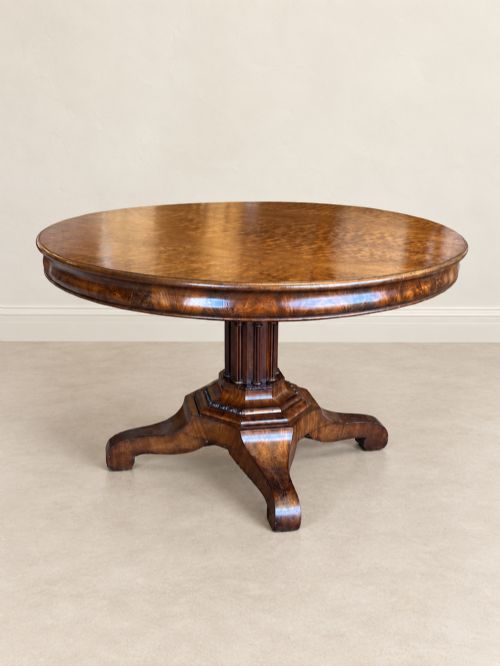
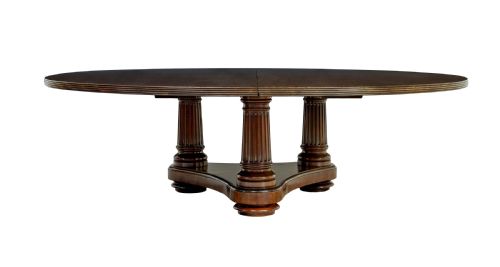


Fluted Column Dining Table
A fluted column dining table is a grand centrepiece for a formal room, bringing classic architectural lines straight from the Georgian and Victorian eras into your home.
Fluted Column Dining Table
A fluted column dining table draws upon neoclassical and classical revival design, using vertical channeling along the legs or base to create a sense of height and proportion. The examples found here span the Georgian, Regency, and Victorian periods, alongside later nineteenth and early twentieth century interpretations.
Most pieces of this scale utilise rich timbers like mahogany or oak, showing the structural strength required for a principal dining room table. Alongside large dining tables, the related furnishings in this style often incorporate column supports in smaller serving pieces and side tables.
Buyers seeking this form appreciate the architectural discipline it brings, whether in a grand nineteenth century proportion or a refined revival piece. The carved detailing on the columns defines the character of each piece, linking cabinetmaking traditions directly to classical architecture.
How they were made
Cabinetmakers constructed these tables using dense hardwoods such as mahogany and oak, selecting timber for both its load-bearing strength and rich grain pattern. The characteristic fluting on the columns was carved by hand or shaped with specialised moulding planes before being assembled into the main frame.
Joinery techniques relied on traditional mortise and tenon methods to ensure stability across large dining surfaces, while secondary timbers were chosen to support the primary show woods. Surface finishes were built up using traditional polishing methods that enhanced the natural colour of the mahogany or oak.
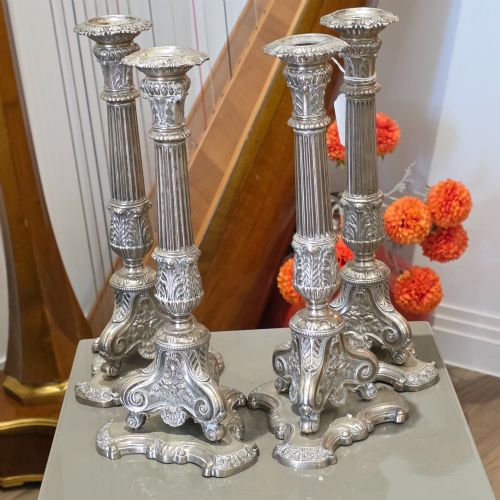
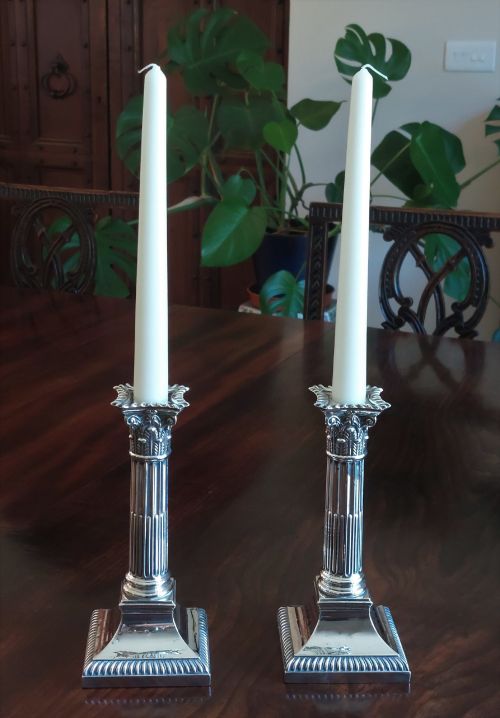
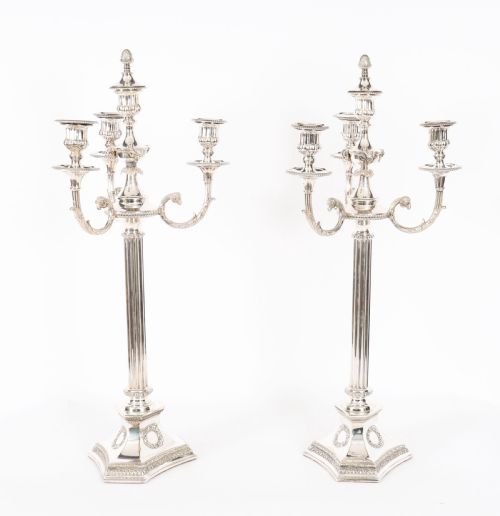
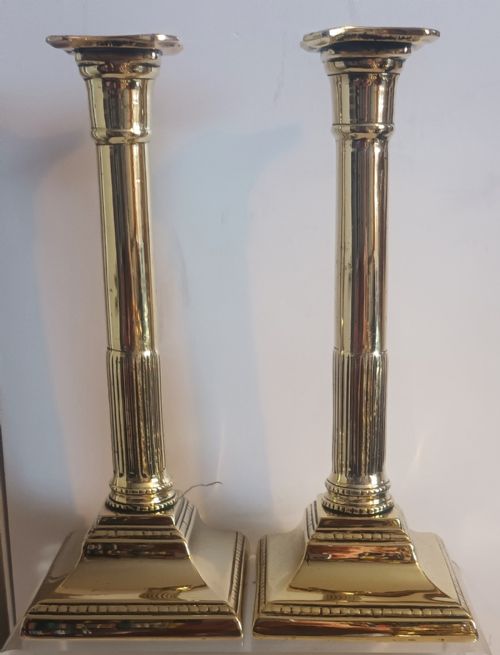
Several pieces include tiny silver candle holders that somehow survived centuries of dinner parties without losing their drip pans.
What varies in quality
The distinction between standard workshop production and superior cabinetmaking lies in the crispness and depth of the carved fluting on the columns. Sharp, clean lines indicate skilled hand-carving, whereas softer, rounded edges point to hurried execution or later wear.
Timber selection and grain matching across the table top and base dictate the visual harmony of the finished piece. Higher quality examples maintain consistent colour and grain direction throughout, ensuring the architectural elements balance the expanse of the top.
Garrard & Co·Conrad Eduard Mappe
The Fluted Column Dining Table Glossary
- Fluting
- Vertical parallel grooves carved into the shaft of a column or pilaster. This decorative technique derives from classical architecture and draws the eye along the vertical axis of the furniture leg.
- Neoclassical
- A style originating in the mid eighteenth century that drew inspiration from the classical art and architecture of ancient Greece and Rome. It prioritises symmetry, straight lines, and structural clarity.
- Regency
- A British design period spanning the early nineteenth century defined by a strong archaeological interest in classical antiquity. Furniture from this era frequently incorporates bold architectural motifs such as columns and brass mounts.
- Victorian
- A period of diverse revival styles spanning the reign of Queen Victoria, during which cabinetmakers reinterpreted earlier Georgian and neoclassical forms with heavier proportions and deep carving.
- Mahogany
- A durable, reddish-brown tropical hardwood favoured by British cabinetmakers from the eighteenth century onward. Its stable nature and fine grain made it ideal for intricate carving and large dining furniture.
Fluted Column Dining Table: Frequently Asked Questions
What periods do these tables come from?
The pieces listed span the Georgian, Regency, and Victorian eras, alongside later nineteenth and early twentieth century interpretations. Each period brought its own distinct interpretation of classical architecture to dining furniture.
Cabinetmakers of these eras drew heavily on neoclassical design principles, adapting ancient architectural forms for domestic use in British homes.
How do I care for a mahogany dining table?
Maintenance involves protecting the polished surface from direct heat, moisture, and prolonged sunlight. Regular dusting with a soft cloth helps preserve the natural sheen of the timber.
Avoid using silicone-based polishes, as they can build up over time and dull the traditional finish applied by the original cabinetmaker.
Are these tables suitable for daily use?
These pieces were built using dense hardwoods like mahogany and oak specifically for regular dining and entertaining. Their sturdy construction handles daily domestic life well when treated with reasonable care.
Using heat-resistant mats and coasters prevents accidental marking on the polished surface while maintaining the integrity of the antique wood.