





Flush Mount Chandelier
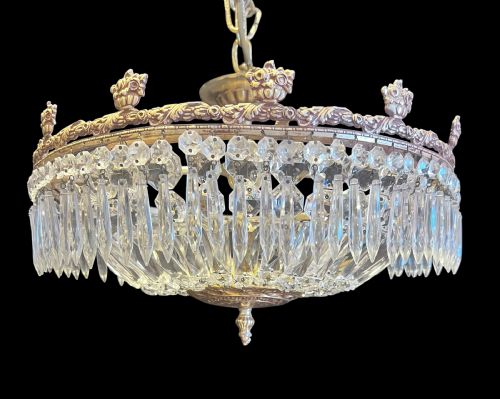
A flush mount chandelier hugs the ceiling closely, bringing direct overhead brilliance and intricate period character to rooms with lower heights.
Flush Mount Chandelier
A flush mount chandelier combines the low profile of a ceiling fixture with the decorative presence of traditional drop lighting, making it ideal for spaces where hanging stems or long chains are impractical. When you search for a flush mount chandelier, you encounter compact fixtures designed to sit tight against the plaster.
The selections span distinct historical eras, ranging from Victorian and Edwardian examples to robust 1930s creations. Common forms on this page include plafonieres, bag chandeliers, and tent styles that direct light downward through glass and metal mountings.
Origins heavily lean towards French ateliers and classical revival designs, incorporating styles such as Art Deco, French Empire, and Rococo Revival. These pieces utilise close-fitting mounts to secure dense arrangements of crystals or beads directly to the ceiling fixture.
How they were made
Makers constructed the structural frames from durable metals including brass, bronze, copper, nickel, chrome, and ormolu. These metal mounts provided a sturdy framework to support heavy glass components without excessive downward extension.
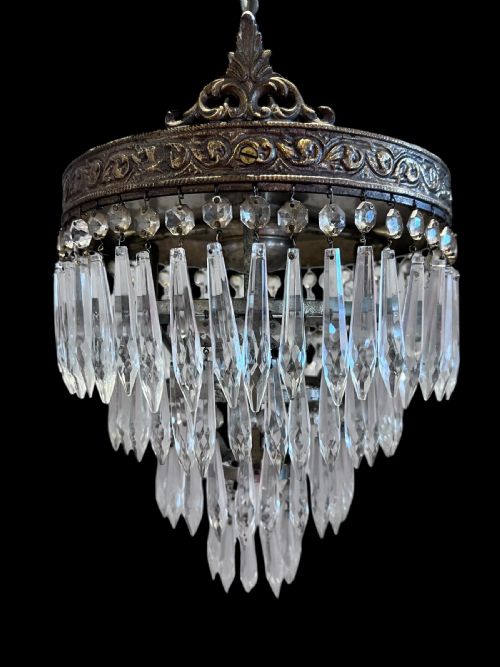
The optical elements rely on cut glass, crystal glass, and moulded glass panels. Artisans wired these refractive components into tight configurations like beaded swags, waterfall drops, and tent structures to maximise light diffusion.
Flush Mount Chandelier Retail Price Guide 2026
Typical asking prices for flush mount chandelier among the pieces listed under this phrase on Sellingantiques today, from the lower quarter to the upper quarter. They describe what is for sale here now, not the wider market.
Some Edwardian spike chandeliers measure just eleven inches across, proving that small spaces deserve dramatic crystal points too.
What varies in quality
Quality rests in the precision of the metal casting and the clarity of the glass elements. Heavier bronze or brass frames with crisper chased details signal superior workshops compared to simpler stamped alternatives.
Cut glass and crystal components show differences in their facet depth and brilliance. Deeper hand-cutting and higher lead content in the glass create sharper prismatic reflections when illuminated.
Jean Gauthier
The Flush Mount Chandelier Glossary
- Plafoniere
- A shallow ceiling light fixture with a glass bowl or shade held closely by a metal mount. This form sits directly against the ceiling surface.
- Bag chandelier
- A lighting fixture featuring a conical or bag-shaped mesh of strung glass beads that encloses the internal lamps. The lower edge typically terminates in a fringe of crystal drops.
- Tent and bag chandelier
- A design featuring an upper canopy of cascading crystal strands gathered into a lower bag formation. It combines draped upper tiers with a denser lower basket.
- Ormolu
- Gilded bronze ornamentation applied to decorative metalwork. This technique imparts a rich golden finish to structural mounts.
Flush Mount Chandelier: Frequently Asked Questions
What is a flush mount chandelier?
A flush mount chandelier is a compact ceiling fixture designed to mount directly against the plaster without a hanging chain or drop rod. It provides the decorative cut glass and metalwork of a traditional chandelier while maintaining a minimal vertical profile.
These pieces suit rooms with restricted ceiling heights where standard hanging lights would hang too low. They distribute ambient light evenly across the space through exposed or partially enclosed glass elements.
Where were these chandeliers used?
These fixtures historically illuminated principal rooms, hallways, and bedrooms where lower ceilings required a snug overhead light source. French salons and Edwardian parlours frequently utilised them to blend formal decoration with practical clearance.
Their compact proportions allowed homeowners to introduce decorative crystal and brass work into confined architectural spaces. They served as primary light sources in domestic interiors without dominating the room's vertical volume.
How do I date a fixture?
Dating relies on identifying stylistic markers, metal types, and manufacturing techniques associated with specific periods. Edwardian and Victorian pieces often feature heavy cast brass or bronze with simpler glass drops, whereas 1930s examples frequently incorporate Art Deco geometries or specialised moulded glass.
Examining the wiring channels, screw types, and metal finishing helps narrow the decade of production. Stylistic crossovers, such as French Empire Revivals, combine classical motifs with early twentieth-century construction methods.
How do I clean the crystals?
Cleaning requires gentle handling of individual glass drops and beaded nets while they remain secured to the frame, or careful removal if the wiring permits. Using a mild solution of warm water and professional glass cleaner prevents damage to aged brass or bronze mounts.
Avoid harsh chemical abrasives that can strip patination from the metal or dull the facets of cut glass components. Regular dusting with a soft cloth maintains the reflective brilliance of the crystal without requiring frequent dismantling.