




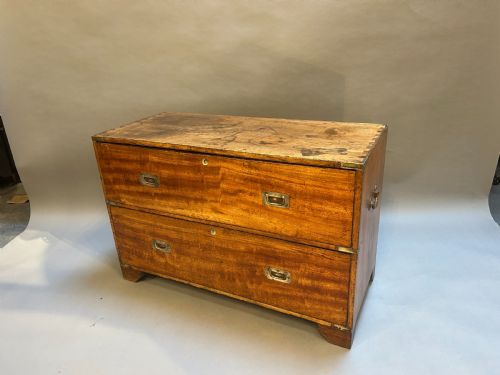


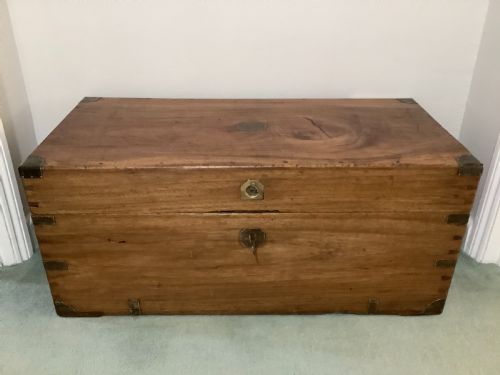


Flush Brass Handle Trunk
These flush brass handle trunk pieces are sturdy campaign boxes designed for travel, combining solid timbers with inset hardware to withstand rigorous journeys.
Flush Brass Handle Trunk
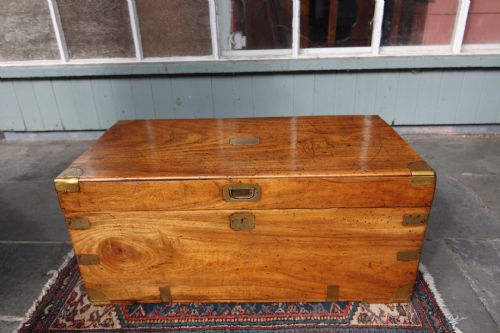
A flush brass handle trunk serves as a practical storage chest constructed during the nineteenth and early twentieth centuries. These boxes are frequently encountered in campaign styles, reflecting an era when officers required portable yet durable furniture for travel across distant territories.
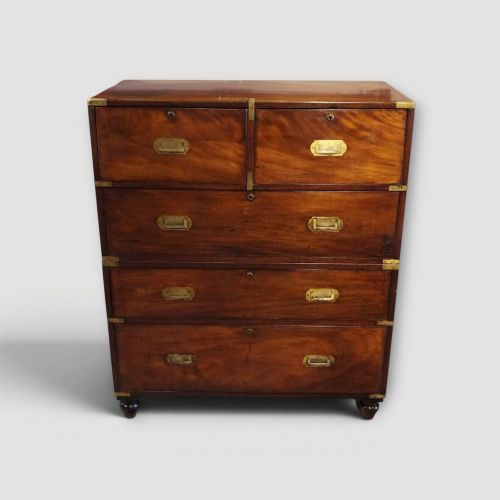
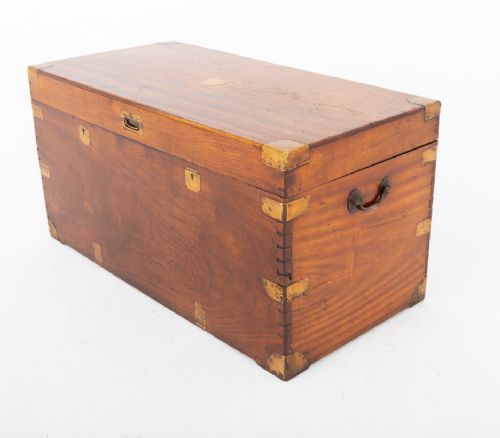
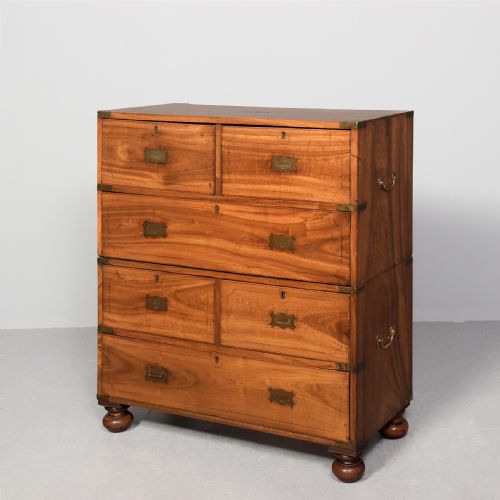
Most examples found in these listings take the form of camphorwood or teak chests, often divided into two stacked sections for easier transport. The form encompasses both simple blanket boxes with lift-up lids and more complex chests of drawers featuring secretaire compartments.
Originating from periods spanning the Victorian era through to the early decades of the twentieth century, these pieces embody military campaign designs. Anglo-Chinese colonial influences also appear frequently among the camphorwood pieces currently available on the page.
Assessing quality and finish
Quality rests upon the selection of timber grain, particularly in camphorwood and mahogany chests where figuring adds visual depth. The precision with which brass fittings are sunk flush into the wood surface indicates the level of craftsmanship involved in the construction.
Internal configuration also separates basic blanket trunks from sophisticated officer's pieces equipped with multiple drawers and secretaire writing sections. The retention of original carrying handles, working locks, and structural divisions dictates the overall integrity of each piece.
Flush Brass Handle Trunk Retail Price Guide 2026
Typical asking prices for flush brass handle trunk among the pieces listed under this phrase on Sellingantiques today, from the lower quarter to the upper quarter. They describe what is for sale here now, not the wider market.
Camphorwood trunks retain a distinct herbal scent after more than a century.
The Flush Brass Handle Trunk Glossary
- Campaign chest
- A modular piece of furniture made in sections for dismantling and transport during military travels. These chests typically feature recessed brass handles to prevent snagging.
- Camphorwood
- An aromatic timber native to Asia, prized for its insect-repellent properties and distinct scent. It forms the primary material for many colonial and military trunks.
- Secretaire
- A cabinet or chest incorporating a pull-out writing drawer fitted with small compartments and pigeonholes. This feature allows officers to manage correspondence while on the move.
- Brass-bound
- Furniture reinforced at the edges and corners with brass strips to protect against heavy handling. This technique is characteristic of nineteenth-century campaign items.
Flush Brass Handle Trunk: Frequently Asked Questions
What is a flush brass handle trunk?
A flush brass handle trunk is a portable storage chest built with recessed metal hardware so the handles do not project beyond the wood surface. This design prevented items from catching during military transport.
Such pieces date mainly from the nineteenth century and were constructed in sections for ease of movement.
Why use camphorwood for trunks?
Camphorwood was selected for its natural resistance to insects and damp conditions encountered during colonial service. The timber also imparts a distinctive aromatic scent to the interior.
Carpenters favoured the wood for blanket boxes and travel chests destined for tropical climates.
How do campaign chests come apart?
Campaign chests are typically built in two or more stacked sections held together by specialised brackets or internal pins. This modular construction allowed officers to separate the units for loading onto pack animals or ships.
Brass corners on each module aligned the sections securely when reassembled.
Are these trunks suitable for daily storage?
These trunks provide deep, enclosed compartments suitable for blankets, linens, and garments. The aromatic qualities of camphorwood help protect stored textiles.
Placement in rooms should avoid direct heat sources to preserve the stability of the solid timber.