
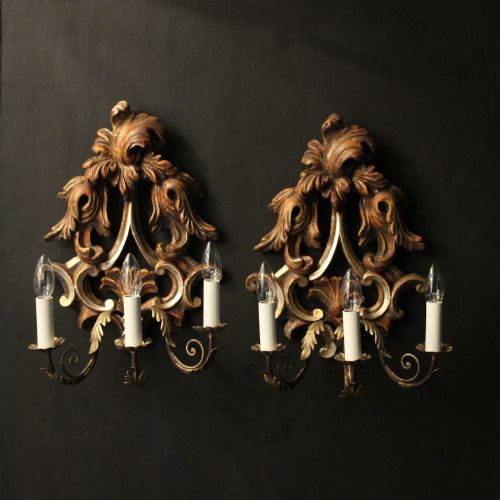


Florentine Carved Sconces
Florentine carved sconces bring dramatic Italian lighting and opulent carved detail to any interior.
Florentine Carved Sconces
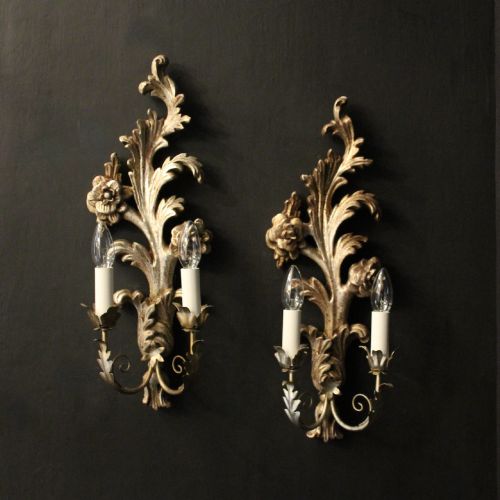
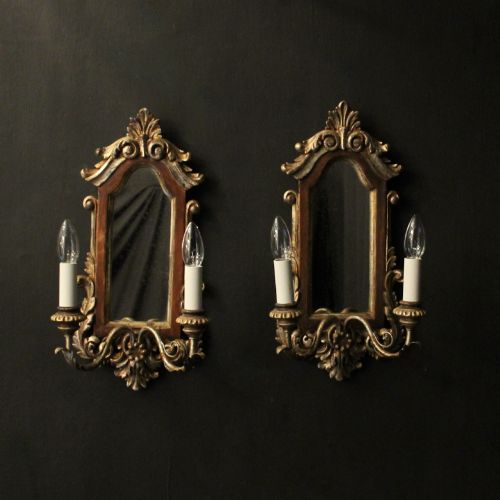
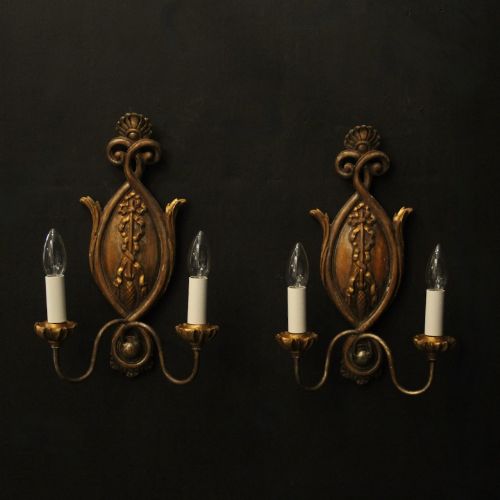
When you search for florentine carved sconces, you encounter decorative Italian wall lighting and wall mirrors shaped by regional traditions. These pieces predominantly take the form of twin, triple, or four-arm wall lights and girandoles.
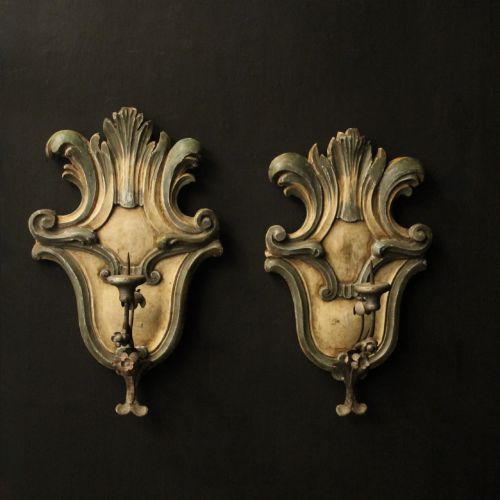
The selection ranges from nineteenth-century pricket candle sconces and eighteenth-century rococo style framed Venetian girandole pier mirrors to twentieth-century giltwood fixtures. You will frequently find pairs designed to balance a mantelpiece or a hallway.
Alongside standard wall lights, related forms such as hanging lanterns, console mirrors with shelves, and wrought iron shelves appear within the Italian tradition. These items reflect enduring styles including Florentine Baroque and Rococo Revival.
Materials and construction
Artisans constructed these fixtures primarily using carved wood, gesso, and wood bases finished with gold leaf or silver leaf to create rich reflective surfaces. Polychrome and gilded finishes also feature prominently across wooden components.
Metal elements appear in specific pieces, including wrought iron used for structural shelves and hardware. Glass is integrated into mirror frames and girandoles to complement the gilded woodwork.
Listings span periods from the eighteenth century through to the 1930s, featuring materials such as giltwood, gesso, silver leaf, and wrought iron.
Evaluating quality and craftsmanship
Quality rests in the depth and precision of the carved wood and the application of gesso and leaf work. Finer examples display crisp botanical motifs, scrolls, and structural symmetry across arms and frames.
The integrity of the gilded or polychrome surface distinguishes superior pieces, where the application ages gracefully while retaining its decorative brilliance. Construction robustness in multi-arm configurations further marks the standard of the work.
The Florentine Carved Sconces Glossary
- Giltwood
- Wood that has been coated with gold leaf or gold paint. This technique provides the luminous metallic finish characteristic of many Italian wall lights.
- Girandole
- A decorative wall bracket for candles, usually featuring a mirror that reflects the candlelight. These pieces often combine carved frames with multiple arms.
- Pricket
- A sharp spike on a candleholder designed to secure a candle in place. This form appears on earlier ecclesiastical and domestic lighting.
- Polychrome
- Decorated in several colours. This surface treatment involves painted pigments applied directly to wood or gesso.
- Gesso
- A plaster mixture applied to wood surfaces as a base for gilding or painting. It allows artisans to carve intricate relief details before applying gold leaf.
Florentine Carved Sconces: Frequently Asked Questions
What are florentine carved sconces?
These pieces are ornate Italian wall-mounted light fixtures and mirrors created using traditional woodcarving and gilding techniques. They typically feature candle arms or mirrored surfaces designed to illuminate interiors.
The category encompasses styles from the eighteenth to the twentieth centuries, showcasing regional Baroque and Rococo revivals through giltwood and polychrome finishes.
How were these sconces used?
Historically, owners mounted them on walls to provide ambient illumination by reflecting candlelight from gilded wooden backplates and attached mirrors. They served both a functional lighting purpose and a decorative role in grand rooms.
Today, they function similarly as statement wall decor, often placed in pairs flanking doorways, fireplaces, or console tables to enhance architectural symmetry.
How do I live with them?
Integrating these pieces into a modern interior involves treating them as focal wall sculptures rather than merely functional light sources. Secure mounting is essential due to the substantial weight of carved wood and gesso materials.
Pairing them with neutral walls allows the gold leaf, silver leaf, and polychrome finishes to stand out. Regular, gentle dusting preserves the delicate gilded surfaces over time.
How can I tell periods apart?
Distinguishing between periods involves examining the carving style, structural form, and finish materials. Eighteenth-century pieces often exhibit authentic rococo framing and Venetian pier mirror formats.
Twentieth-century interpretations tend to replicate earlier Baroque and Rococo Revival styles with standardised multi-arm configurations. Material patination and underlying construction methods also offer clues to age.