





Floral Wine Glasses
These floral wine glasses bring hand-painted enamels and delicate engraved motifs straight to the table from the Victorian and Edwardian eras.
Floral Wine Glasses
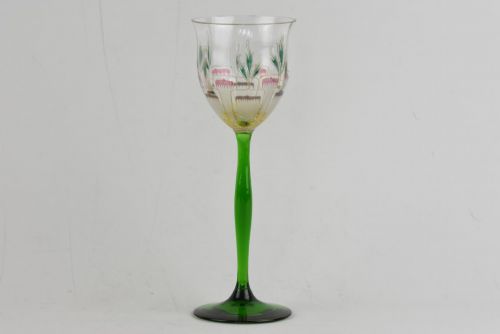
When you search for floral wine glasses, you encounter glassware decorated with botanical motifs, ranging from delicate enamel painting to crisp wheel engraving. The pieces appearing here span the nineteenth century and the early twentieth century, taking the form of individual wine glasses, dessert wines, hock glasses, and matching sets.
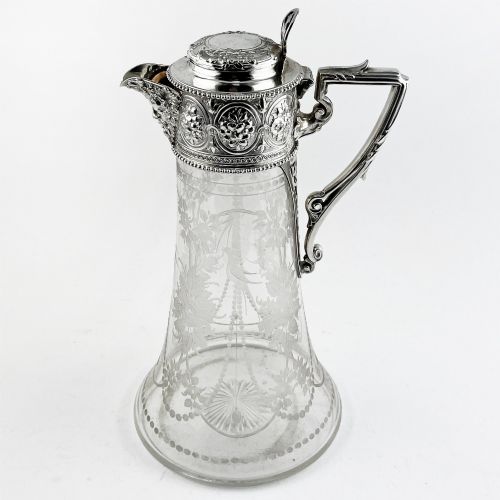
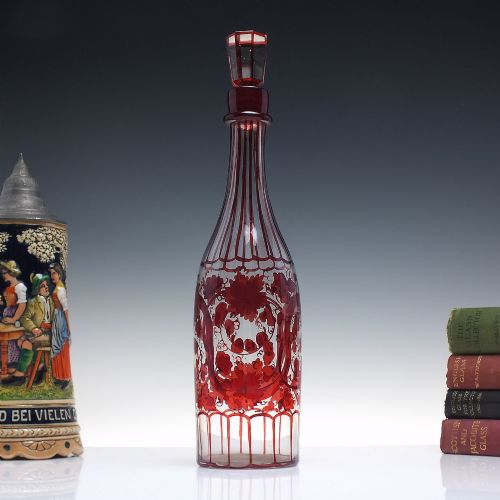
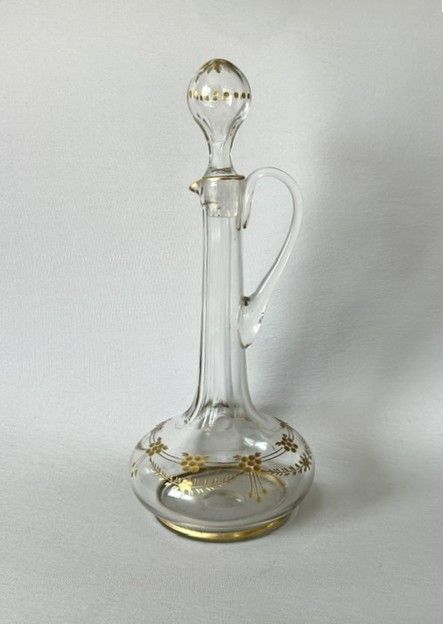
Victorian examples dominate the selection, often presenting clear glass or lead crystal enhanced by etched foliage and floral sprays. Alongside standard wine vessels, the inventory includes related serving pieces such as decanters, claret jugs, and ewers that share the same characteristic floral ornamentation.
Materials and methods
Makers utilised clear glass and heavy lead crystal as the primary canvas, shaping vessels through blowing and cutting techniques. Surface decoration relied heavily on wheel engraving to create tactile floral patterns, or freehand enamel painting applied directly to the glass body.
Many specimens incorporate sterling silver or silver plate mounts, particularly on larger forms like claret jugs and decanters. Artisans frequently added touches of gold leaf and gilding to accentuate the rims and highlight the painted botanical details.
Floral Wine Glasses Retail Price Guide 2026
Typical asking prices for floral wine glasses among the pieces listed under this phrase on Sellingantiques today, from the lower quarter to the upper quarter. They describe what is for sale here now, not the wider market.
Listings feature items spanning the Victorian era through to the early Edwardian period, incorporating clear glass, sterling silver, and enamel decoration.
Assessing quality and execution
The distinction between standard production and exceptional work lies in the crispness of the cutting and the skill of the enamel brushwork. Fine examples display deeply engraved botanical details with sharp relief, whereas lesser pieces rely on shallow surface etching.
The integration of precious metals also defines the tier of a piece, with hallmarked solid silver mounts and substantial lead crystal indicating superior original manufacture compared to lightweight glass and simple silver plate.
Theresienthal·William Davenport
The Floral Wine Glasses Glossary
- Claret jug
- A specialised vessel designed for serving red wine, typically combining a glass body with a handle and hinged silver or plated lid. These pieces often match the decorative style of accompanying wine glasses.
- Enamel
- A fused glass paste applied to the surface of glassware and fired to produce opaque or translucent coloured designs. It forms the vibrant petals and leaves seen on many continental pieces.
- Hock glass
- A tall-stemmed wine glass traditionally used for German white wines, often featuring coloured bowls and elaborate surface decoration. They appear in matched sets with floral enamel work.
- Lead crystal
- A high-clarity glass containing metal oxide that increases weight and brilliance, making it ideal for deep cutting and engraving. It gives antique wine glasses their characteristic ring and heft.
- Jugendstil
- The continental German-language variant of Art Nouveau, characterised by flowing organic lines and stylised floral motifs. It heavily influences the decorative aesthetic of pieces from the turn of the twentieth century.
Floral Wine Glasses: Frequently Asked Questions
Can I use antique floral wine glasses for dinner parties?
Most antique wine glasses from the Victorian and Edwardian periods remain entirely functional for modern dining use. Hand washing is essential to preserve the delicate enamel painting and gilt edges.
Heavier crystal stems and sturdy cut glass handle regular use well, though pieces with delicate coloured enamels require more careful handling during toasts and cleaning.
How do I date antique floral glassware?
Dating relies on a combination of manufacturing marks, glass weight, and stylistic indicators such as cutting depth and decorative motifs. Victorian pieces often display registration marks or specific wheel-engraved floral patterns typical of 1870 to 1900.
Silver mounts on claret jugs frequently carry full hallmarks with date letters, providing an exact year of production for the metalwork.
How should I display my wine glasses and decanters?
Displaying these items in a well-lit cabinet protects the fragile stems and prevents dust accumulation on the intricate glass surfaces. Natural light highlights the transparent qualities of clear crystal and the colours of painted enamels.
Pairing glasses with matching decanters or claret jugs creates an authentic period tablescape for a dining room sideboard.