


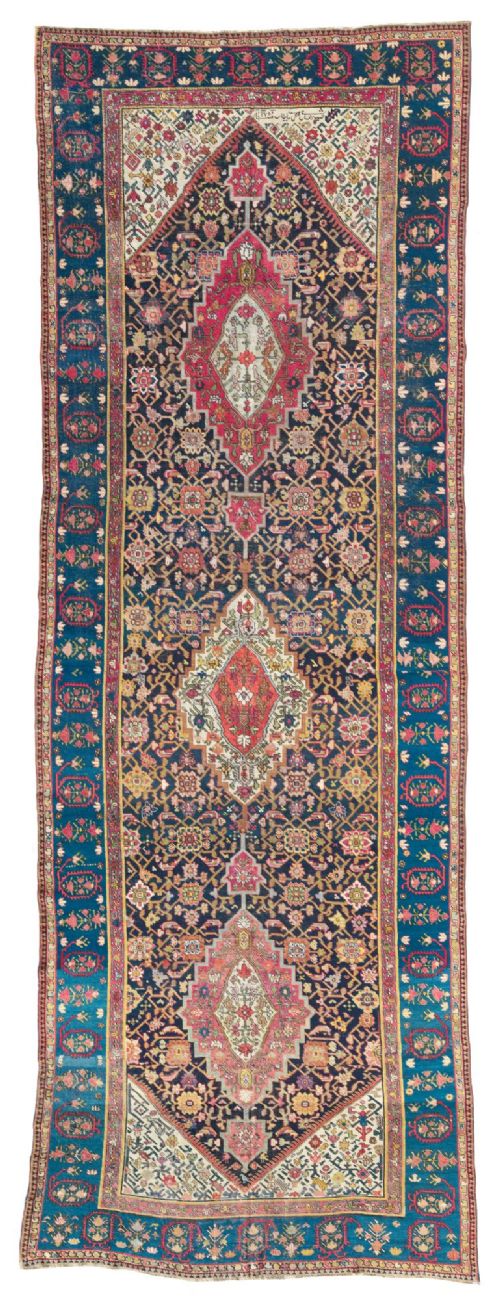
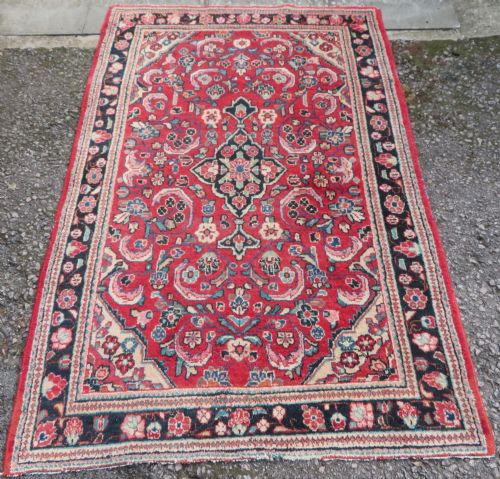
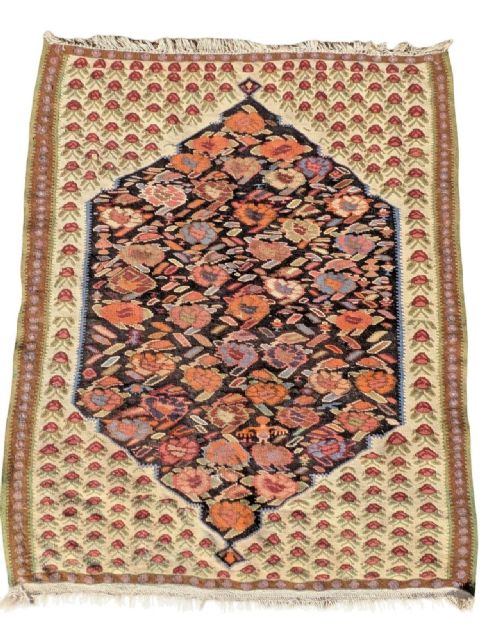

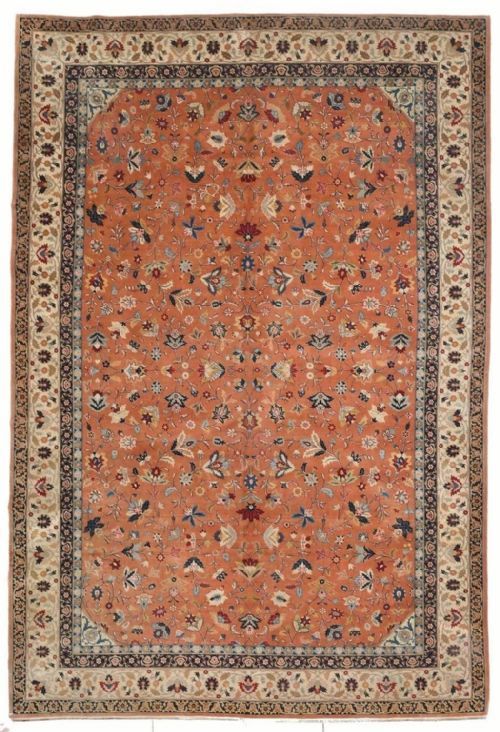
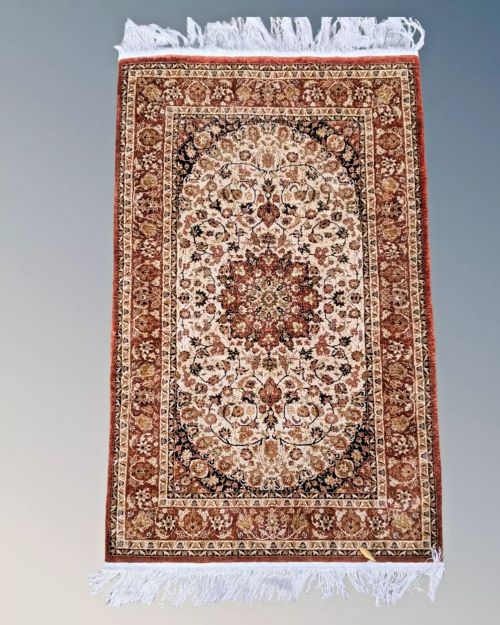
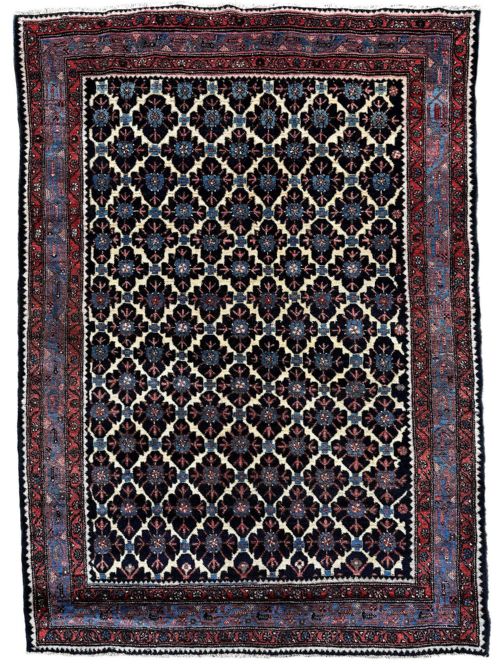


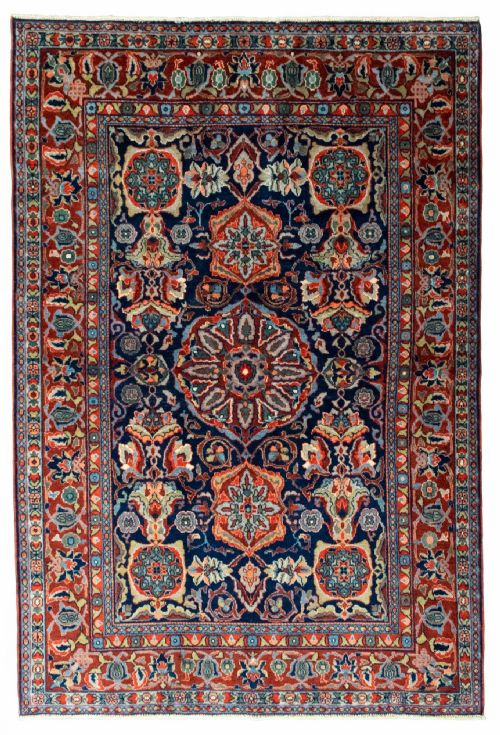


Floral Persian Runner
A floral persian runner brings enduring pattern and rich dye work to a hallway, woven with botanical motifs passed down through generations.
Floral Persian Runner
A floral persian runner is an elongated textile designed for corridors and narrow spaces, drawing upon traditional Persian styles and regional weaving traditions. When searching this phrase, a buyer encounters narrow formats such as Sarouk narrow runners alongside broader carpets and rugs that share similar botanical vocabulary.
The pieces available span from the nineteenth century into the early twentieth century, originating from workshops and villages across Persia. Makers utilised distinctive formats suited for long floors, often incorporating floral vases, trellises, and natural motifs into the central field.
How they were made
Weavers constructed these runners primarily using wool and cotton foundations, occasionally incorporating silk or wool felt depending on the specific regional workshop. Natural dyes imparted deep hues onto the fibres, ensuring the botanical patterns remained vibrant over decades of heavy foot traffic.
Techniques varied from village knotting to fine city weaving, producing dense piles that held intricate floral details. The resulting textile combined structural durability with artistic expression, balancing warp and weft to create a resilient floor covering.
Materials recorded in the inventory include wool, cotton, silk, and wool felt.
What varies in quality
Quality rests upon the fineness of the knotting and the precision of the botanical drawing across the field. Tightly packed foundations and carefully saturated dyes distinguish finer city workshops from simpler village productions.
The harmony of the colour palette and the crispness of the floral motifs dictate the overall visual success of the runner. A well-balanced composition retains its decorative authority regardless of minor age-related wear.
The Floral Persian Runner Glossary
- Runner
- A long, narrow carpet format specifically proportioned for hallways, corridors, and staircases. These pieces direct movement through a space while displaying continuous repeating patterns.
- Knot
- The individual loops of yarn tied to the warp threads that form the pile of the rug. Higher knot counts generally permit greater detail in floral and geometric designs.
- Warp
- The vertical threads stretched tightly on the loom that form the structural skeleton of the textile. Weft threads are inserted across these warps to secure the knots.
- Pile
- The surface layer of cut or uncut yarn that provides softness and displays the woven design. Shorter piles often highlight the precision of the underlying drawing.
Floral Persian Runner: Frequently Asked Questions
Where should I place a runner?
A floral persian runner suits narrow transitional spaces such as hallways, entryways, and long corridors where a decorative focal point is required. The elongated format naturally guides footsteps through the interior.
Because these textiles were built for utility, they handle moderate daily foot traffic well when supported by a proper underlay. Placed in a passage, they protect wooden floors while adding warmth and colour.
How do I clean an antique runner?
Gentle surface cleaning and regular vacuuming without a beater bar help maintain the wool pile. Professional textile conservators should handle deeper washing to protect the natural dyes.
Avoiding excessive moisture and direct sunlight preserves the integrity of the fibres and prevents the dyes from fading over time. Prompt attention to spills keeps the wool stable.
How can I date my rug?
Dating relies on examining the specific materials, dye shades, structural characteristics, and stylistic conventions of the weave. Pieces from the nineteenth and early twentieth centuries often display characteristic colour palettes and structural irregularities unique to hand-knotted production.
Comparing the border arrangements and floral motifs with documented regional examples helps narrow down the period of origin. Expert examination of the foundation threads provides further clarity.