







Floral Landscape Art
Floral landscape art brings gardens and rural scenery onto canvas and paper through oils and watercolours.
Floral Landscape Art
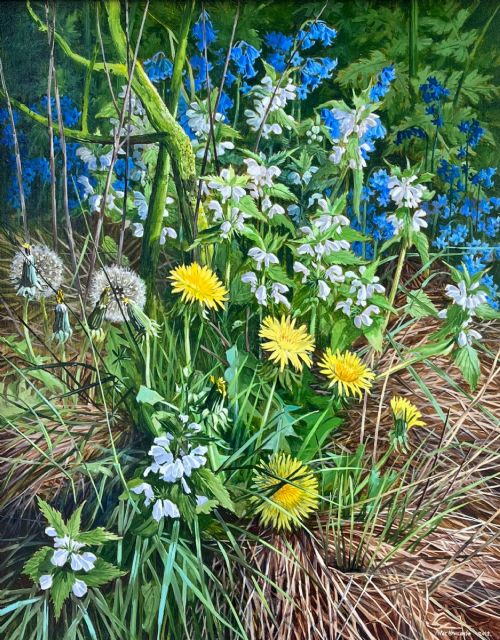
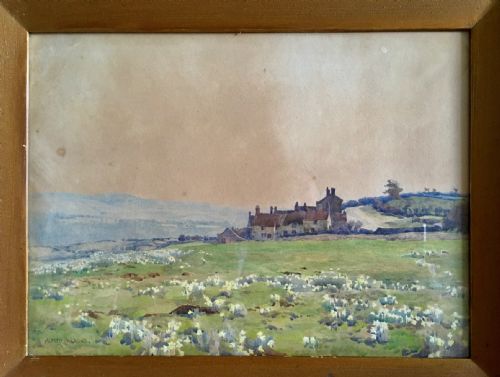
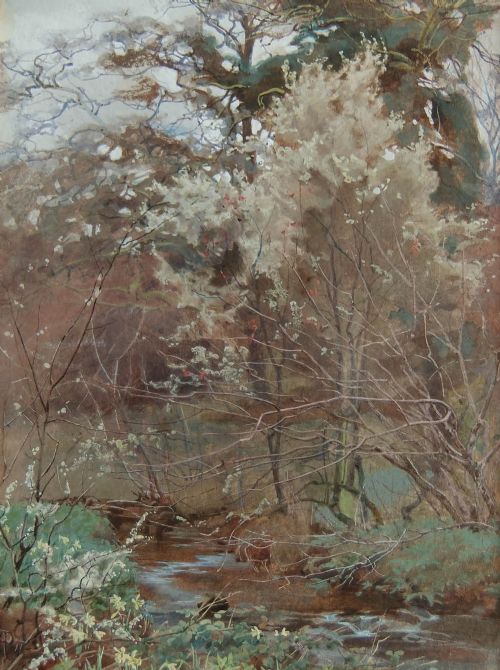
When you search for floral landscape art, you find paintings and wall art depicting gardens, country houses, woodlands, and lakes. These pieces capture natural scenery interwoven with flowers, blossom, and foliage across various periods.
You are most likely to meet works executed in watercolour on paper or oil paint on canvas. The examples span late Victorian and Edwardian periods through to mid-century British and French impressionist styles.
The subjects range from walled cottage gardens and spring hedgerows to water lilies on ponds and country estates. Alongside paintings, the selection includes wall tapestries featuring verdure designs from earlier centuries.
How they were made
Artists painted primarily with oil paint on canvas or watercolour pigment and paint on paper. Mixed media also appears in mid-century garden scenes.
Support materials include prepared canvas, stretched paper, and wooden frames or glass protection for watercolours. Wall tapestries utilise woven threads to construct large verdure landscapes.
Floral Landscape Art Retail Price Guide 2026
Typical asking prices for floral landscape art among the pieces listed under this phrase on Sellingantiques today, from the lower quarter to the upper quarter. They describe what is for sale here now, not the wider market.
Listings feature works from the eighteenth, nineteenth, and twentieth centuries, executed in oil, watercolour, canvas, and woven textile.
What varies in quality
Quality rests upon the handling of light, colour harmony, and the precision of botanical detail within the wider landscape. Stronger pieces capture the atmosphere of a specific season, such as spring blossom or summer roses, with assured brushwork.
The reputation of the painter and the preservation of the pigment, particularly in watercolours prone to fading, differentiate standard decorative works from accomplished fine art paintings.
Peter Newcombe·Harry Wanless·Thomas Bromley Blacklock·Arthur Hopkins·Theresa Stannard·Ernest Higgins Rigg·Lilian Stannard·Alfred W Parsons·Owen Bowen·David Woodlock·Jane Utley·Beatrice Parsons·Edgar Bundy·George Frederick Nicholls·Ralph Hedley·Fred Merriman·Minnie Smythe
The Floral Landscape Art Glossary
- Watercolour
- A paint consisting of pigment suspended in a water-based solution, applied to paper to create translucent washes of colour. It requires swift, confident execution as errors are difficult to amend.
- Oil paint
- A slow-drying paint made by mixing pigments with a drying oil, typically applied to canvas or wood panels. This medium allows for rich colour blending and textured impasto effects.
- Impressionism
- A style of painting that focuses on capturing the visual impression of a moment, paying particular attention to shifting light and natural colours. It emerged in France and influenced British artists of the period.
- Verdure tapestry
- A wall hanging featuring a stylized landscape rich in foliage, trees, and plants. These large textiles were woven in centres such as Audenarde during the seventeenth and eighteenth centuries.
- Mixed media
- An artwork utilising more than one medium or material combined on the same support. In garden scenes, this might involve watercolour augmented with bodycolour or ink.
Floral Landscape Art: Frequently Asked Questions
What subjects appear in these paintings?
The compositions show cottage gardens, walled garden paths, spring hedgerows, and parkland lakes. Flowers such as water lilies, crocuses, and rudbeckia feature prominently alongside country houses.
Many works record specific locations in Britain and France, capturing seasonal blooms from spring blossom to summer greenery.
How do I care for watercolour paintings?
Watercolours on paper require protection behind glass and mounting away from direct sunlight to prevent the pigments from fading. Keep them in rooms with stable humidity levels to avoid paper distortion.
Avoid hanging them in damp areas or where strong temperature fluctuations occur.
What is the difference between oils and watercolours here?
Oil paintings utilise oil-based pigments on canvas or wood, offering rich textures and deep colour saturation. Watercolours use water-based pigments on paper, producing a lighter, more translucent finish.
Oils are generally heavier and less susceptible to light fading than works on paper.
How are tapestries different from paintings?
Tapestries are woven textiles created on a loom using threads to form the landscape image, whereas paintings apply wet pigment directly onto a flat surface.
Verdure tapestries focus on dense foliage and garden themes, originating from earlier centuries than most canvas works on this page.