



Floral Ironstone Dishes
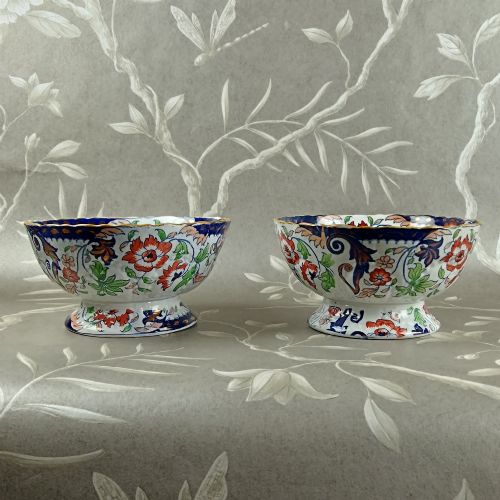
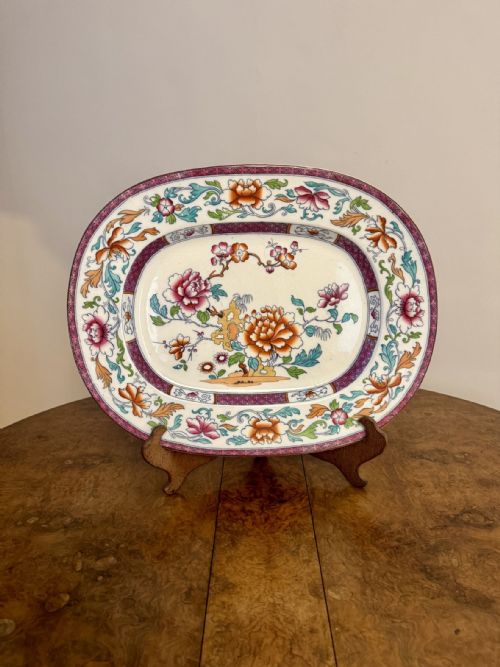
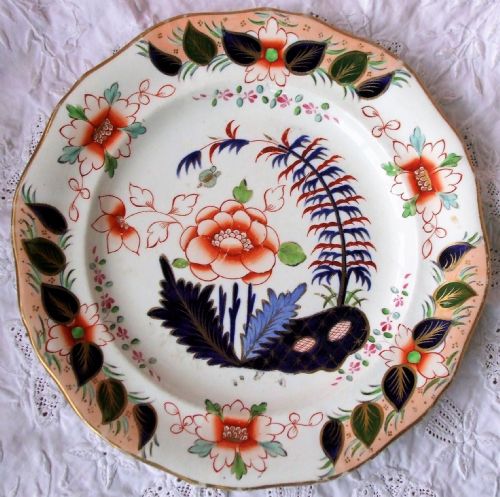
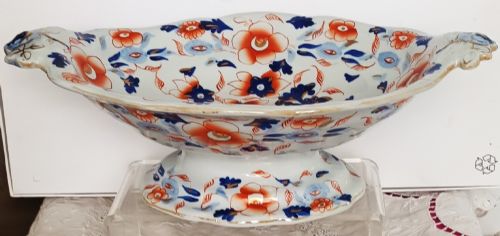
These floral ironstone dishes offer heavy, durable service in vibrant Chinoiserie and Imari patterns that bring nineteenth-century colour directly to the table.
Floral Ironstone Dishes
Floral ironstone dishes combine robust earthenware bodies with bright hand-painted or transfer-printed floral motifs, spanning George III's reign through the Victorian era. When searching for floral ironstone dishes, buyers encounter large meat platters, pedestal bowls, comports, vegetable tureens, and footed cheese dishes.
Most examples originate from nineteenth-century English manufactories, displaying styles such as Victorian Imari, Regency Chinoiserie, and traditional Japanese-inspired patterns. These practical yet decorative ceramics were designed for heavy domestic use while maintaining vibrant visual appeal across dining tables and sideboards.
What varies in quality
Quality depends upon the crispness of the enamel painting, the precision of the gilding, and the preservation of the glaze. Earlier Georgian and early nineteenth-century pieces often display deeper relief moulding and more elaborate hand-applied detail.
The sophistication of the pattern transfer or hand-painting dictates the visual depth of each plate, bowl, or tureen. Maker attribution, particularly pieces bearing factory marks from established potteries, influences the standing of individual service items.
Floral Ironstone Dishes Retail Price Guide 2026
Typical asking prices for floral ironstone dishes among the pieces listed under this phrase on Sellingantiques today, from the lower quarter to the upper quarter. They describe what is for sale here now, not the wider market.
Even nineteenth-century chickens had their own dedicated meat serving platters.
John Davenport of Longport·John Ridgway·Coalbrookdale
The Floral Ironstone Dishes Glossary
- Ironstone
- A heavy, durable type of earthenware or stoneware patented in the nineteenth century. It bridges the gap between fine porcelain and standard pottery.
- Comport
- A decorative pedestal bowl or dish raised on a foot, typically used for serving fruit or dessert. These pieces stand higher than standard plates on the table.
- Imari
- A decorative style inspired by Japanese export wares featuring characteristic iron-red, cobalt blue, and gilt floral designs. Victorian makers frequently adopted this palette.
- Tureen
- A deep covered dish used for serving soups, sauces, or vegetables at the table. They often feature matching stands or fixed bases.
- Ashet
- A Scottish term for a large meat platter or serving dish. These substantial vessels form part of traditional dining services.
Floral Ironstone Dishes: Frequently Asked Questions
How do I date my ironstone?
Dating relies upon examining the maker marks, ceramic body weight, and stylistic indicators such as Regency Chinoiserie or Victorian Imari patterns. Earlier nineteenth-century examples often display sharper moulding and heavier potting.
Changes in glaze formulation and transfer printing techniques over the course of the century provide further clues to production dates.
Can I use these dishes daily?
These robust earthenware and stoneware pieces were originally built for heavy nineteenth-century dining service. Their dense bodies handle regular placement and use remarkably well.
Hand washing protects the delicate enamel colours and gold leaf gilding from modern detergent damage.
What is the difference between ironstone and porcelain?
Ironstone is a heavy, opaque stoneware body designed for durability and mass production. Porcelain is a finer, translucent ceramic fired at much higher temperatures.
Ironstone offers greater resistance to chipping while accommodating bold transfer-printed floral patterns.
Why are some pieces marked as Japan pattern?
The term references eighteenth and nineteenth-century European adaptations of Japanese Imari porcelain designs. These patterns feature rich cobalt blue, iron-red, and gilt floral motifs.
Potters applied this descriptor widely across diverse ceramic bodies including ironstone china.