




Floral Ironstone China
Floral ironstone china brings robust nineteenth-century utility and vivid botanical decoration together on the dining table.
Floral Ironstone China
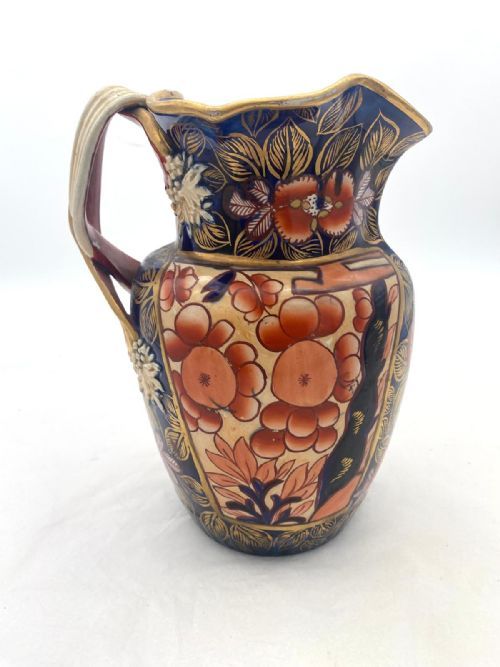
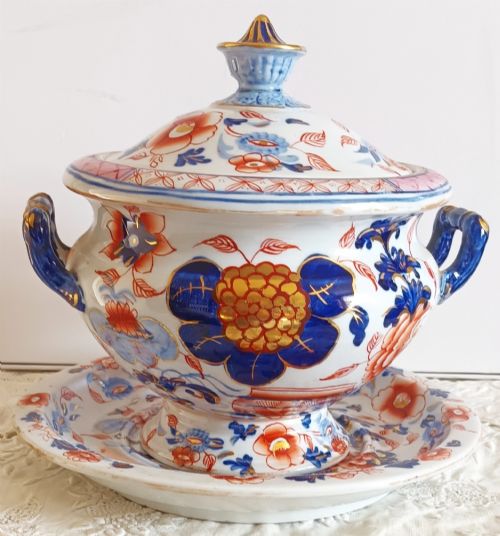
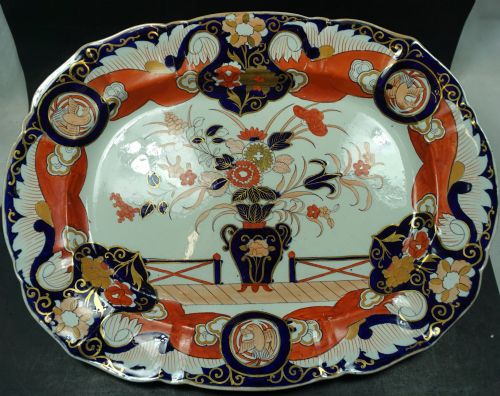
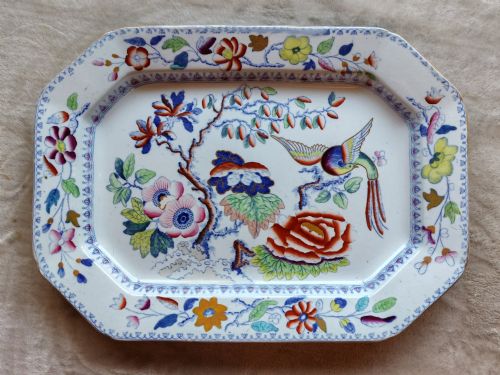
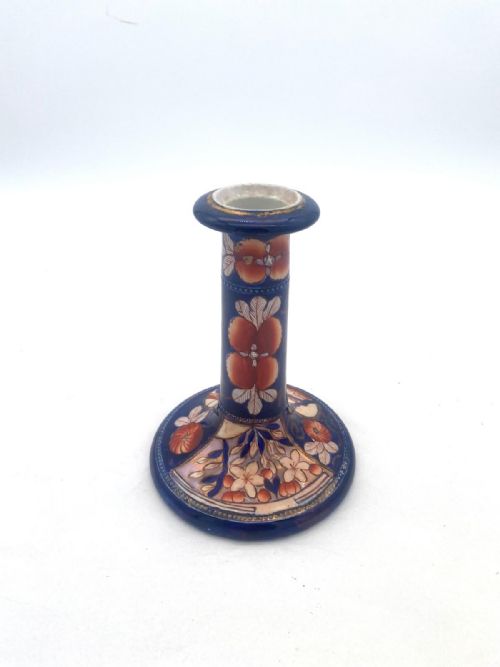
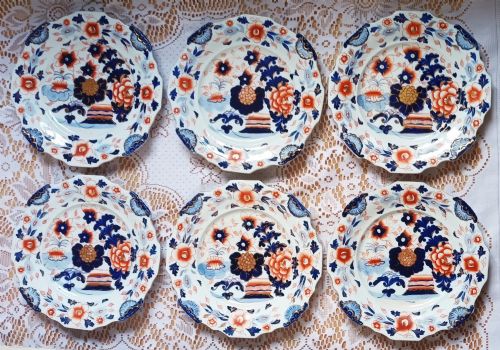
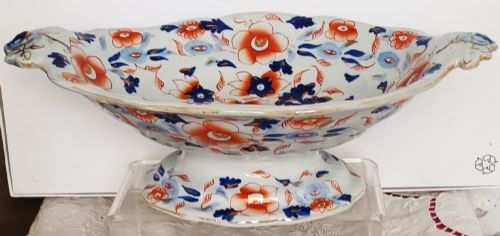
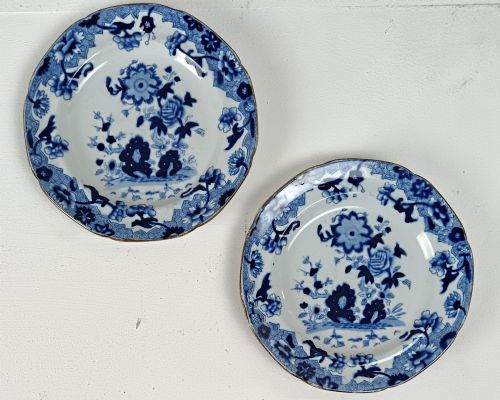
Floral ironstone china encompasses plates, jugs, tureens, comports, and large serving dishes from the nineteenth century, including Georgian and Edwardian examples. Buyers seeking these pieces encounter heavy tableware designed for daily service rather than fragile cabinet ornaments.
The nineteenth-century selection leans heavily on Mason's production, alongside Spode, Davenport, and Keeling and Co. wares. These items range from single decorative plates to extensive dinner and dessert services.
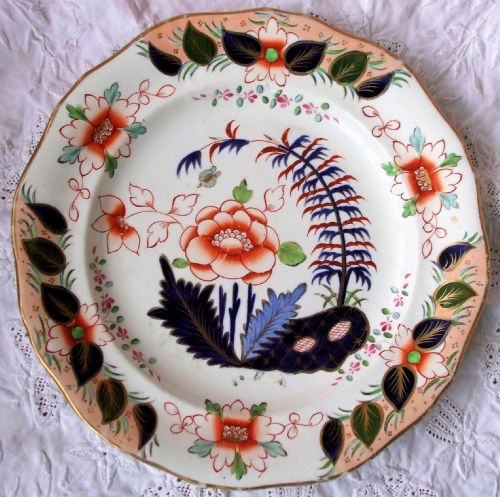
Common decorative schemes involve Japan, Imari, Schoolhouse, Tonquin, and Pagoda patterns, often pairing floral motifs with exotic birds. Such designs reflect the enduring British fascination with East Asian aesthetics applied to durable ceramic bodies.
Materials and technique
Potters formed floral ironstone china using a dense ceramic paste containing refined earthenware elements, creating a heavy body that resisted chipping far better than standard porcelain. Glaze sealed the surface while providing a smooth ground for hand-painted or transferred patterns.
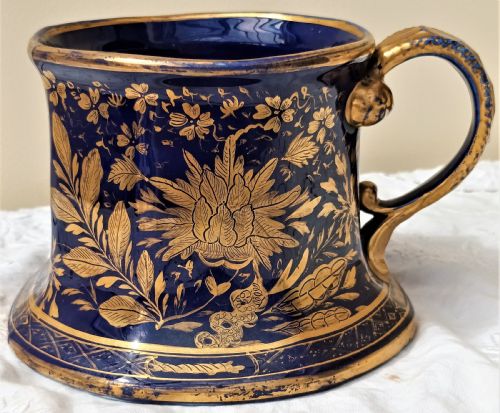
Makers applied enamel colours over the glaze, frequently enriched with gold leaf or gilt highlights to define floral petals and bird plumage. Firing fixed these pigments securely, allowing the tableware to withstand generations of handling.
Floral Ironstone China Retail Price Guide 2026
Typical asking prices for floral ironstone china among the pieces listed under this phrase on Sellingantiques today, from the lower quarter to the upper quarter. They describe what is for sale here now, not the wider market.
Listings feature ironstone pieces spanning the nineteenth century, including Georgian and Edwardian examples decorated with enamel and gold leaf.
Quality and execution
Quality rests upon the crispness of the transfer printing beneath the hand-applied enamels and the precision of the gilding. Finer pieces display carefully aligned colours that stay within the borders of the floral and avian outlines.
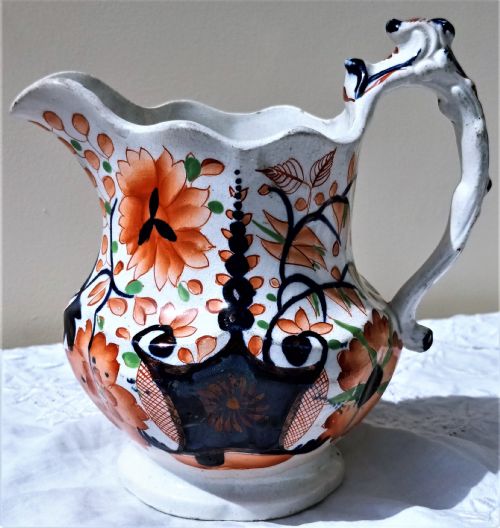
The weight, throwing of footed comports, and the modelling of specialised shapes like the Hydra jug distinguish superior production. Complete services and matching sets demonstrate greater uniformity in the glaze and colour saturation across multiple pieces.
Mason's Ironstone·Spode New Stone·John Davenport of Longport·Keeling and Co.·Coalbrookdale
The Floral Ironstone China Glossary
- Ironstone
- A dense, heavy ceramic material patented in the nineteenth century to imitate Chinese porcelain while offering superior durability. It forms the solid foundation for all floral ironstone china.
- Comport
- A raised dish or bowl used for serving fruit or dessert at the centre of a table. These pieces often feature footed pedestals.
- Hydra jug
- A pitcher characterised by a moulded serpent or dragon handle attached to a robust ceramic body. It appears frequently among early nineteenth-century tablewares.
- Ashet
- A Scottish and northern English term for a large oval meat dish or platter. These substantial vessels served joints at the dining table.
- Imari
- A decorative style inspired by Japanese export wares, utilising rich iron-red, cobalt blue, and gold. This palette frequently complements floral designs on nineteenth-century ceramics.
Floral Ironstone China: Frequently Asked Questions
What is ironstone china?
Ironstone is a heavy, durable ceramic material developed in the nineteenth century to provide an affordable and robust alternative to porcelain. It resists chipping, making it suitable for heavy household use.
Potters utilised this dense body for utilitarian vessels and formal table services alike, decorating them with rich enamels and floral patterns.
How were tureens used?
Tureens served soups, sauces, and vegetables at the nineteenth-century dining table, keeping contents warm with fitted lids. Their substantial size made them central serving pieces during large meals.
Matching stands often accompanied these vessels to protect dining tables from heat and moisture.
Can I use these daily?
These pieces were originally manufactured for robust everyday service, possessing a thick ceramic body designed to endure regular handling. Many households continue to use nineteenth-century tableware for modern dining.
Hand washing remains advisable to protect the hand-painted enamel colours and delicate gilt highlights from harsh detergents.
How do I spot Mason's pieces?
Mason's items often feature distinct factory marks stamped or impressed into the ceramic base alongside pattern names like Schoolhouse or Tonquin. Moulded shapes such as Hydra jugs and footed comports also point toward their output.
The heavy use of Imari palettes and exotic bird motifs further characterises their production.