

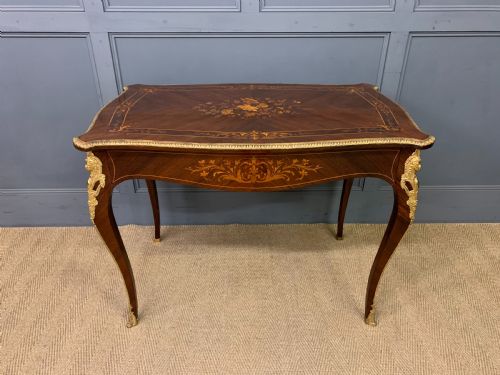
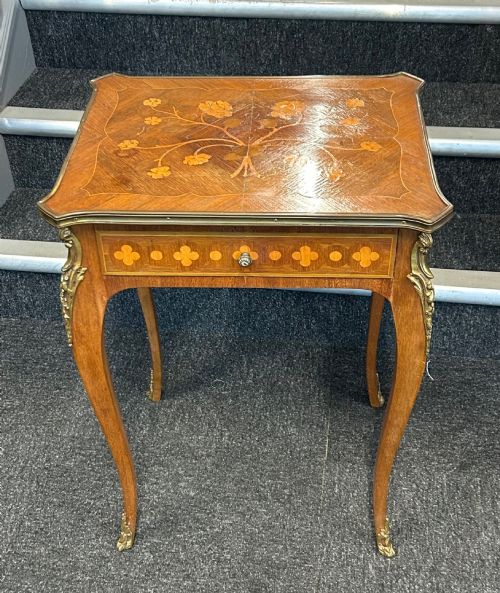
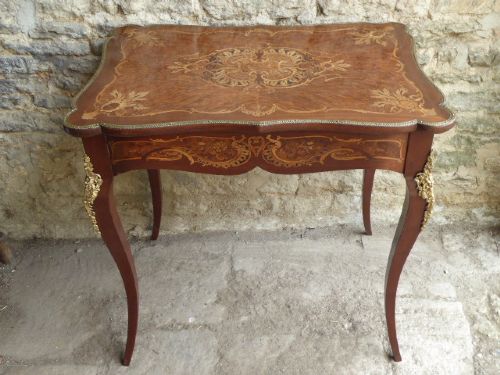
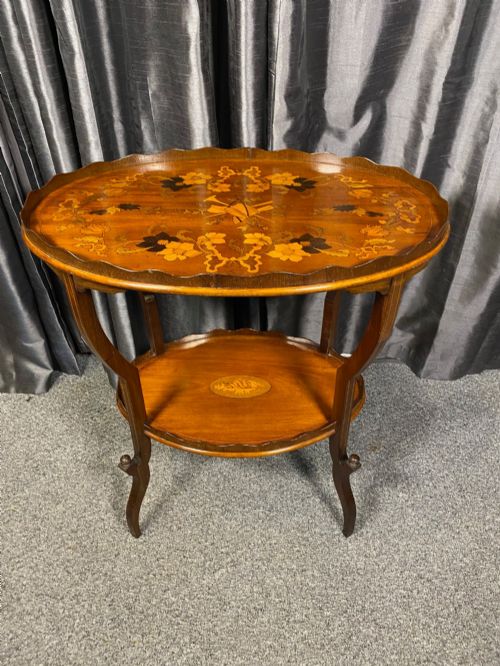
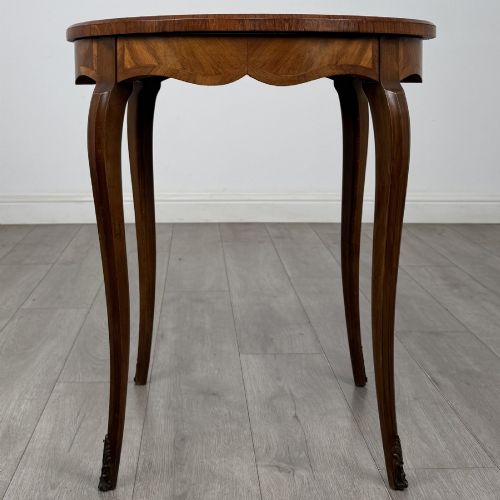
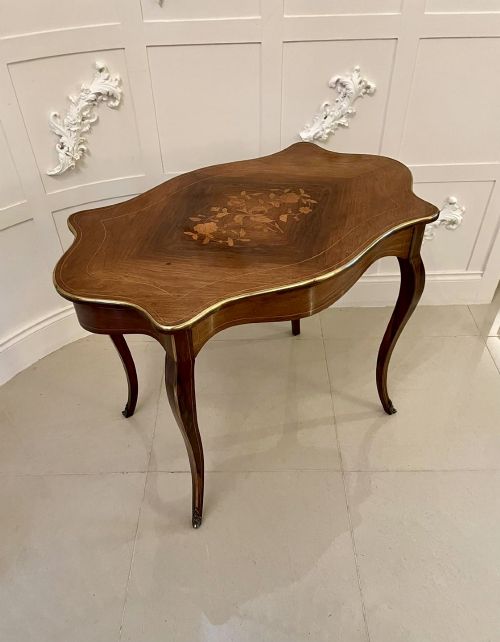

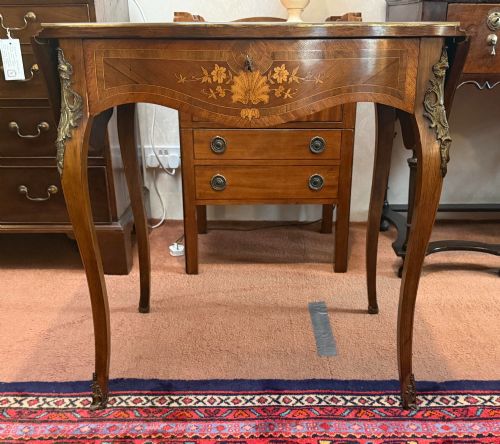
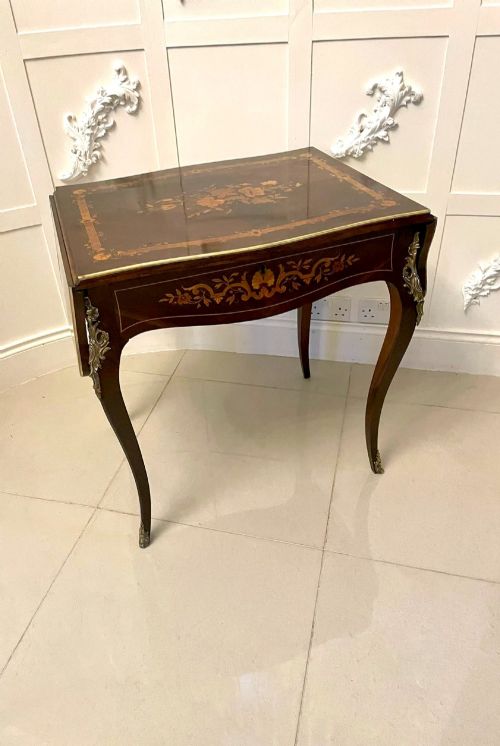

Floral Inlaid Lamp Table
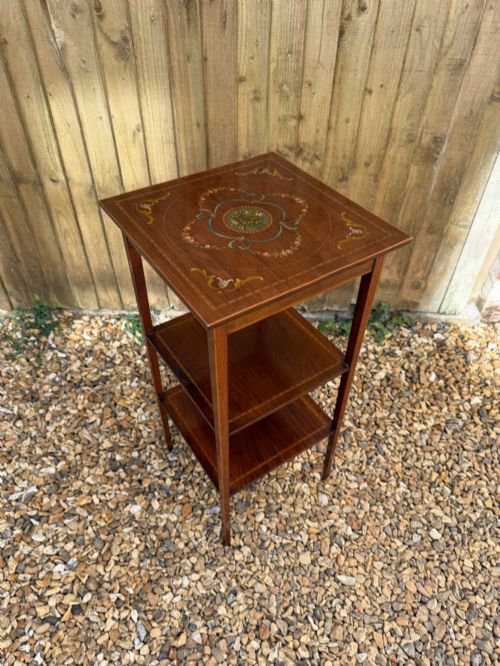
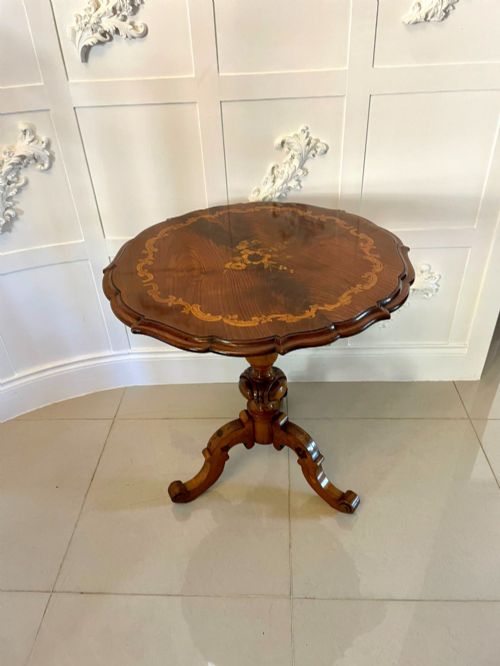
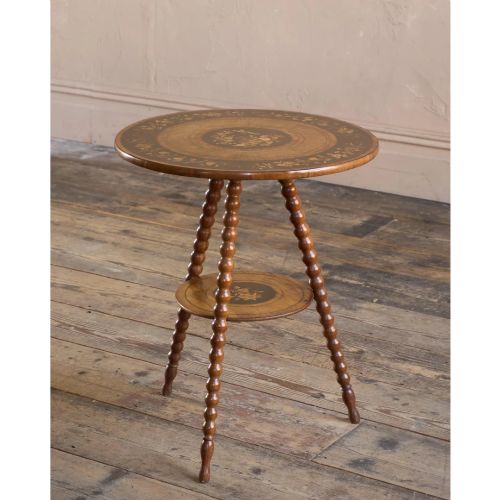
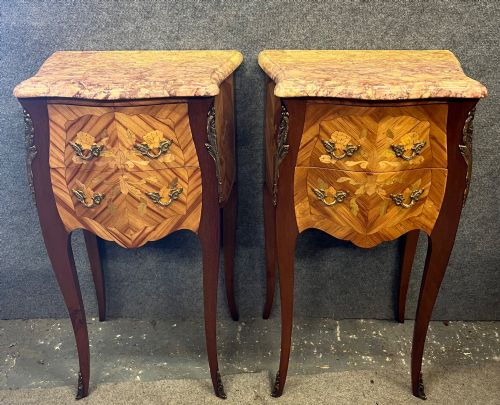
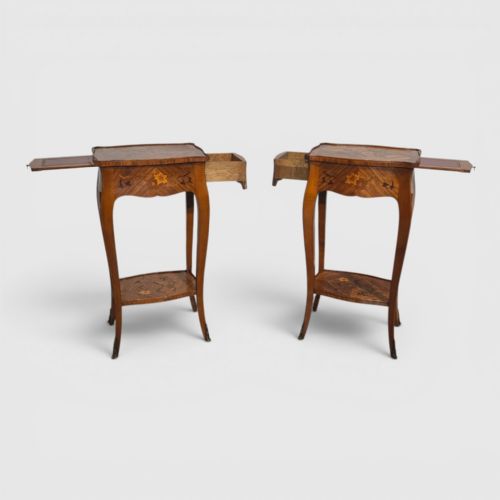
These floral inlaid lamp tables bring surface pattern and polished timber to a room, functioning as compact occasional pieces for a corner or beside a seat.
Floral Inlaid Lamp Table
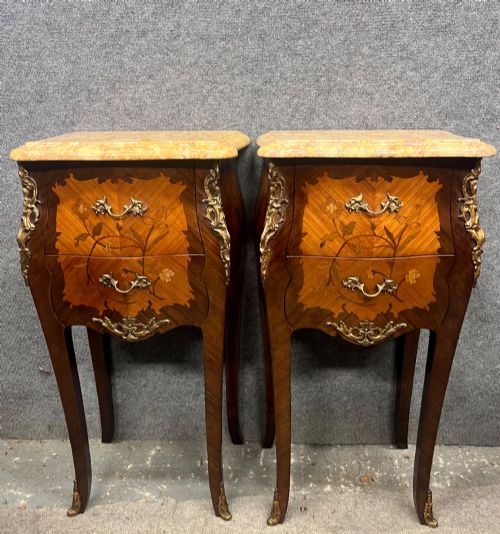
A floral inlaid lamp table combines decorative surface work with a functional resting place for lighting or small objects. The pieces appearing here span the nineteenth century, the Edwardian era and into the early twentieth century, taking forms such as occasional tables, side tables, centre tables and bedside cabinets.
The most common examples draw on French design, particularly Louis XV revival styles and French rococo revivals, alongside Victorian interpretations. Makers utilised woods like walnut, rosewood, mahogany and burr walnut as the foundation for intricate marquetry floral patterns.
How they were made
Cabinetmakers constructed these tables using solid foundational timbers and applied veneers, often shaping walnut, rosewood, mahogany or burr walnut to receive detailed marquetry inlay. Artisans cut floral motifs from contrasting woods, and occasionally bone, fitting them precisely into the surface veneer.
Many examples incorporate cast brass mounts, ormolu details or marble tops to complement the inlaid timber. Structural forms range from simple occasional frames and tripod bases to kidney shapes, two-tier designs and bedside chests with drop leaves or bobbin legs.
Floral Inlaid Lamp Table Retail Price Guide 2026
Typical asking prices for floral inlaid lamp table among the pieces listed under this phrase on Sellingantiques today, from the lower quarter to the upper quarter. They describe what is for sale here now, not the wider market.
Materials appearing across these tables include walnut, rosewood, mahogany, burr walnut, satinwood, coromandel, yew wood, brass, ormolu, marble and bone.
What varies in quality
The distinction between ordinary and superior pieces rests on the precision of the marquetry and the choice of timbers. Finer examples display crisp, intricate floral inlay across burr walnut, rosewood or kingwood, where the grain and colour of the woods work together rather than competing with the pattern.
Construction details also separate the grades, seen in the selection of secondary woods, the weight and finish of brass or ormolu mounts, and the fluidity of serpentine or kidney-shaped tops. Tables that retain harmonious proportions and crisp carving on the legs sit clearly above simpler production pieces.
The Floral Inlaid Lamp Table Glossary
- Marquetry
- Decorative veneer work forming pictures or patterns by assembling small pieces of wood, bone or other materials. This technique defines the floral surface designs seen across these tables.
- Ormolu
- Gilded bronze used for decorative mounts and accents on furniture. It appears alongside inlaid timbers on French revival pieces.
- Kidney shape
- A curved, kidney-like form typical of small occasional and side tables from the Victorian and Edwardian periods. This silhouette allows the table to fit snugly against a chair or wall.
- Etagere
- A small open shelving unit or tiered occasional table used for display. These pieces provide multiple levels for lamps or small decorative items.
- Tripod base
- A pedestal support resting on three feet. This structure is common on nineteenth-century lamp and centre tables.
Floral Inlaid Lamp Table: Frequently Asked Questions
Where should I place a lamp table?
These compact pieces fit easily beside an armchair, in a dark corner, or as a bedside surface where extra space is useful.
Their decorative floral tops mean they look effective positioned where light catches the timber and marquetry.
How do I care for polished wood?
Keep the timber away from direct heat sources and strong sunlight to prevent the veneer from drying or fading.
Apply a traditional wax polish occasionally and buff gently with a soft cloth to maintain the lustre of the wood.
What is the difference between occasional and centre tables?
Occasional tables are generally smaller and designed to be moved easily around a room as needed.
Centre tables are built to stand freely in the middle of a space, finished with decorative detail on all sides.
How do I identify a French revival style?
Look for curved cabriole legs, serpentine edges and asymmetrical floral marquetry inspired by eighteenth-century designs.
These pieces often include ormolu mounts and exotic timbers like kingwood or rosewood.