

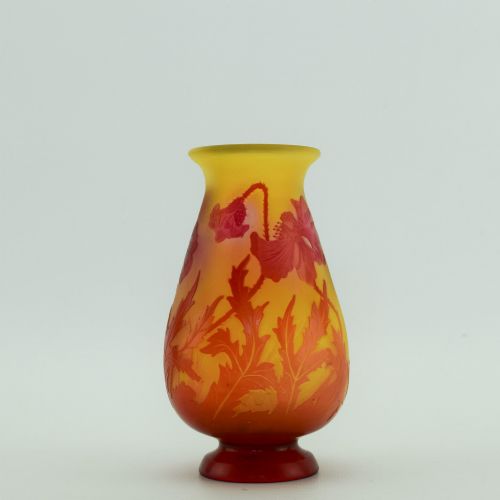


Floral Glass Vessel
A floral glass vessel brings natural forms indoors, capturing delicate blooms through cameo carving, enamel, and acid-etching across centuries of design.
Floral Glass Vessel
When you search for a floral glass vessel, you encounter a diverse range of objects designed to display flowers or stand alone as decorative art. The selection spans centuries, featuring everything from 18th-century Spanish tumblers and Bohemian decanters to robust Victorian tablewares and French Art Nouveau masterpieces.
Vases and decorative bowls dominate the available forms, alongside tumblers, decanters, and wine glasses. Art Nouveau pieces featuring naturalistic botanical motifs like lilies, poppies, and irises represent a substantial portion of the objects you will meet on this page.
Origins stretch across Europe, with notable works originating from French glasshouses, Bohemian makers, and British Victorian manufacturers. Each piece reflects the decorative priorities of its period, shifting from early engraved gilding to layered cameo techniques and colourful enamelling.
How They Were Made
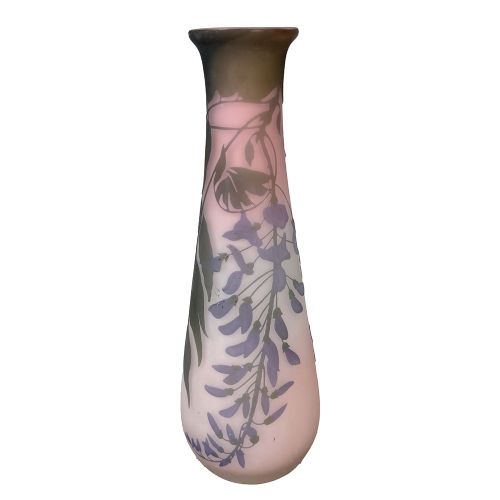
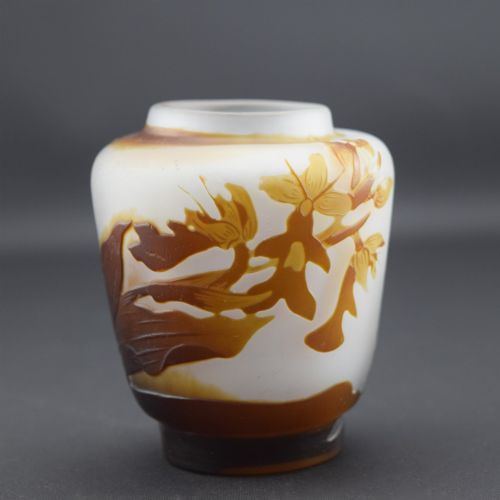
Maker's workshops employed cameo glass techniques to build contrasting coloured layers, which artisans then acid-etched or wheel-carved to reveal intricate floral motifs in relief. This demanding process allowed houses like Gallé and Daum to achieve subtle tonal gradients that mirrored natural petals and stems.
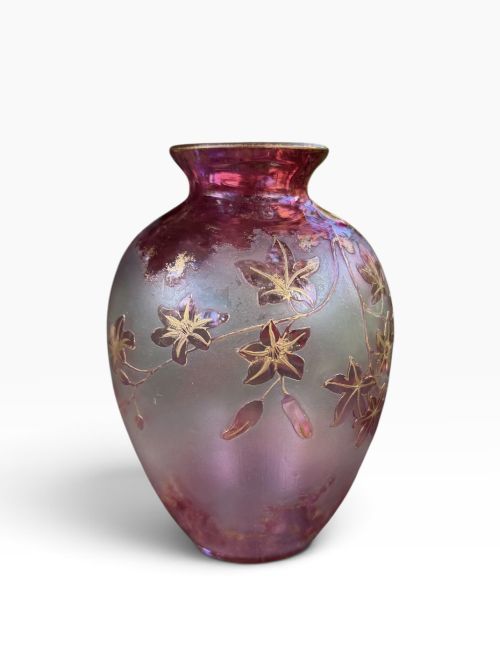
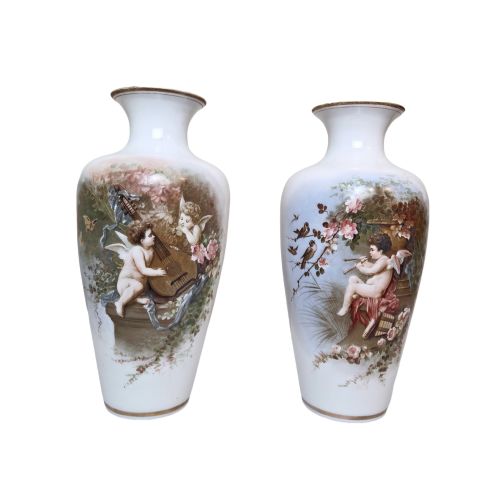
Enamelling and gilding added rich surface colour and metallic detail to clear, opaque, or coloured glass bodies. Artisans painted floral designs directly onto the surface using powdered glass pigments fired in a kiln, often supplementing the decoration with gold leaf or paste gilt highlights.
Mould-blowing and free-blowing formed the foundational vessel shapes, sometimes incorporating metal mounts, pewter overlays, or silvered elements to frame the glass. Techniques such as opalescence, frosting, and crackling further manipulated how light interacted with the botanical designs.
Floral Glass Vessel Retail Price Guide 2026
Typical asking prices for floral glass vessel among the pieces listed under this phrase on Sellingantiques today, from the lower quarter to the upper quarter. They describe what is for sale here now, not the wider market.
Listings span eight distinct periods from 1750 to the mid-20th century, highlighting centuries of evolving glasshouse techniques.
What Varies in Quality
The depth and precision of the carving separate masterworks from simpler productions. Skilled cameo work displays sharp undercut details and naturalistic depth, whereas lesser examples show flat, uniform layers with minimal hand-finishing.
The sophistication of the enamel work and the crispness of the gilding indicate the level of craftsmanship involved. High-quality pieces exhibit finely painted botanical accuracy and secure, well-bonded metallic accents that withstand close inspection.
The reputation of the maker and the harmony between the glass body and its decorative mounts heavily influence the standing of an object. Integrated designs where metalwork, such as pewter overlay or silver mounts, complements the glass form represent superior atelier production.
Emile Gallé·Daum Frères·René Lalique·Georg Adam Scheid·Karl Palda·Baccarat
The Floral Glass Vessel Glossary
- Cameo Glass
- A glass vessel formed of two or more distinct layers of different colours fused together. Artisans carve away portions of the outer layer to create raised designs.
- Acid-Etched Glass
- Glass treated with hydrofluoric acid to eat away exposed surfaces and create textured patterns or frosted floral motifs. This technique quickened production while retaining fine detail.
- Plique-a-jour
- An enamelling technique where enamel is applied in cells without a backing, resembling miniature stained glass that lets light pass through transparent petals.
- Rummer
- A large, heavy drinking glass popular in the Victorian period, often featuring engraved or etched botanical decorations around the bowl.
- Opaline Glass
- An opaque or translucent glass developed in France and Bohemia, typically found in soft white or pastel shades serving as a background for enamel paintings.
Floral Glass Vessel: Frequently Asked Questions
How do I identify Art Nouveau floral glass?
Art Nouveau pieces typically feature organic, asymmetrical lines inspired by plant stems and flowers. Look for cameo carved motifs of specific blooms like irises, poppies, or clematis combined with signature signatures from French makers.
Surface treatments often include fire-polished finishes, acid-etching, and metallic overlays that complement the naturalistic theme without rigid geometric symmetry.
What is cameo glass?
Cameo glass is produced by fusing multiple layers of contrasting coloured glass together in a furnace. An artisan then painstakingly carves away the outer layer by hand or uses acid to expose the background, leaving the floral design in raised relief.
This method requires immense skill to control the varying thickness of the glass layers and achieve natural shading in the petals and leaves.
Are Victorian glass items marked?
Many Victorian glass vessels remain unmarked by the specific manufacturer or designer. Production during this era often relied on pattern registration marks stamped into the glass or paper labels that have long since worn away.
Attribution typically depends on stylistic traits, colour palettes, and manufacturing techniques recorded in period catalogues rather than a visible signature.