




Floral Glass Table Lamp
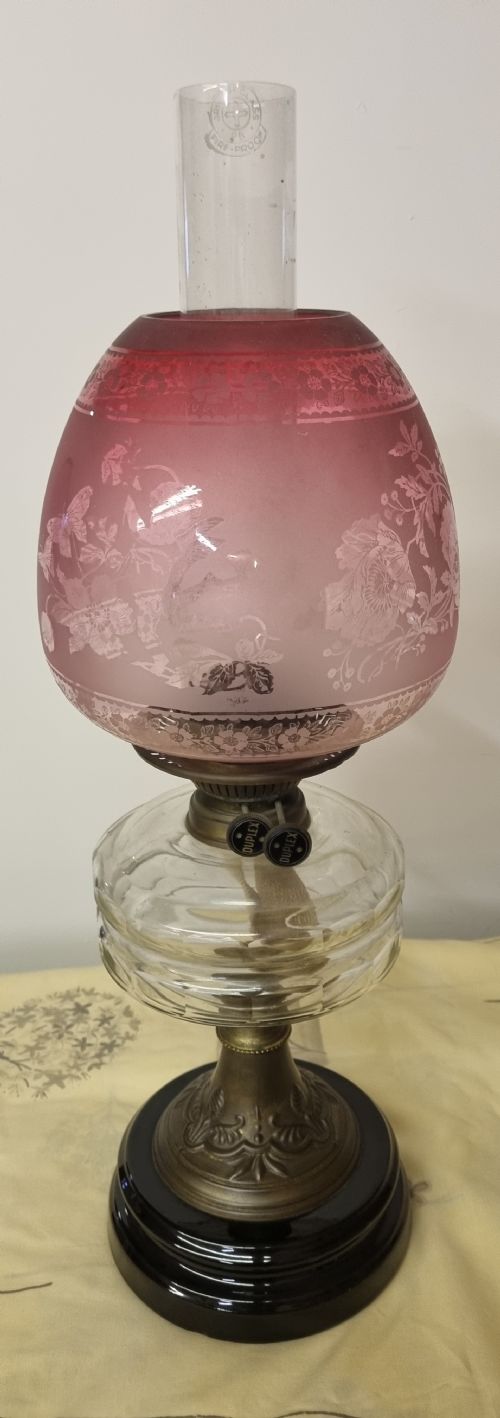
A floral glass table lamp brings nineteenth-century warmth and colour into a room through hand-painted glass fonts and decorative shades.
Floral Glass Table Lamp
A floral glass table lamp spans late nineteenth-century and early twentieth-century lighting forms, encompassing Victorian, Edwardian, Art Nouveau, and Art Deco designs. These pieces originate primarily as converted oil lamps, paraffin lamps, and candle lamps utilising decorative glass bowls and shades.
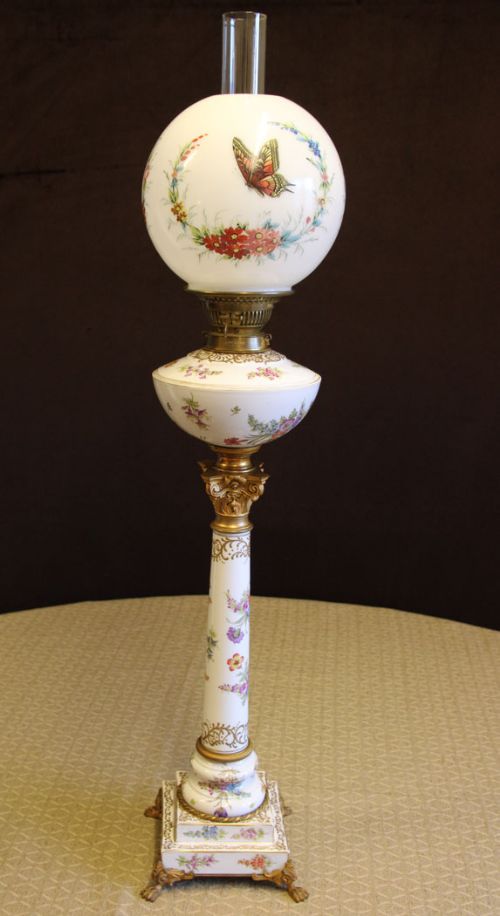
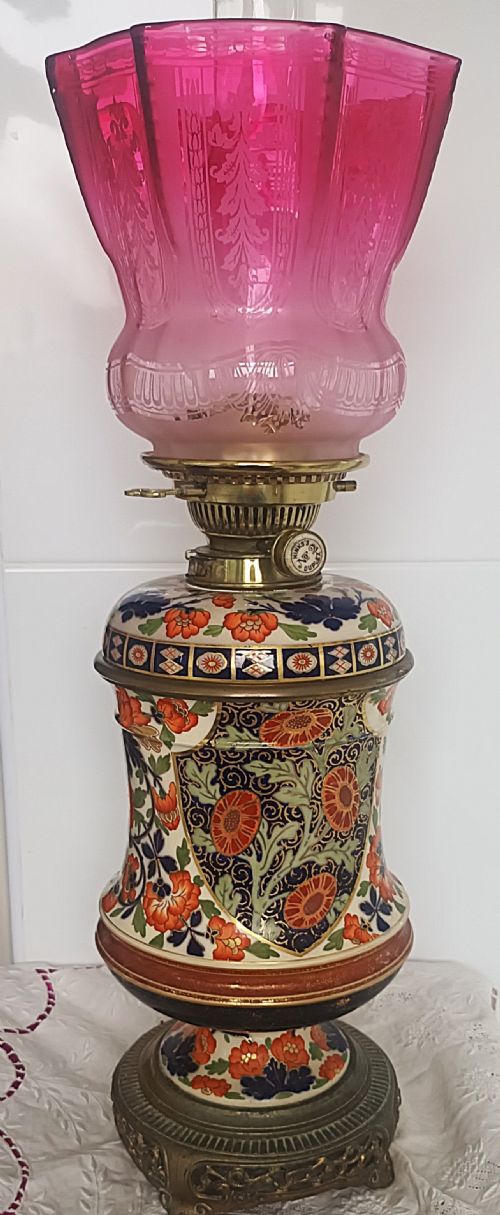
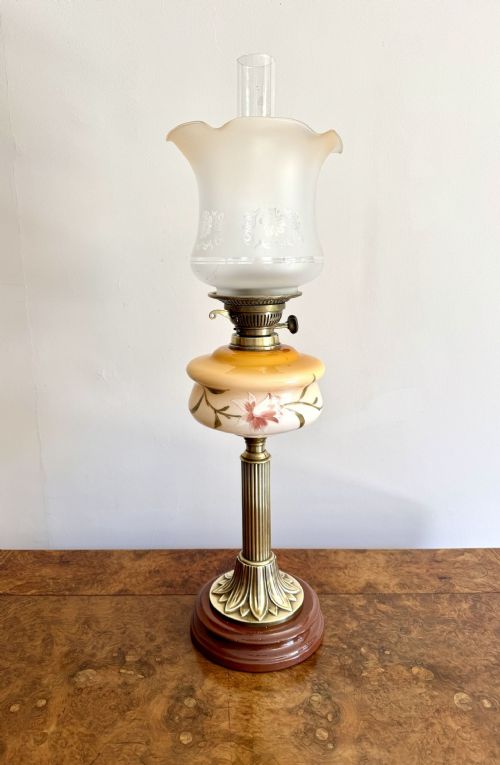
The common form on this page pairs a glass or porcelain font with brass or wrought iron mounts, often featuring hand-painted floral decoration. The selections range from straightforward Victorian examples to sculptural Art Nouveau and French Neoclassical table lighting.
Materials and construction
Makers combined blown and moulded glass, including cranberry glass, frosted glass, milk glass, and crystal, with glazed porcelain and ceramic bodies. Metal elements in brass and bronze provide structural support and weighted bases for these tall table lamps.
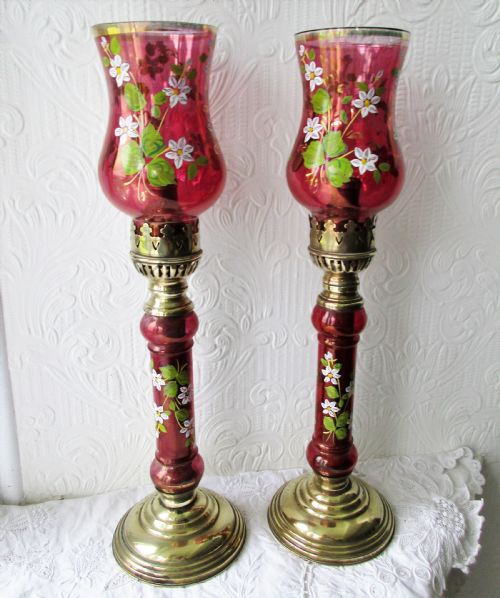
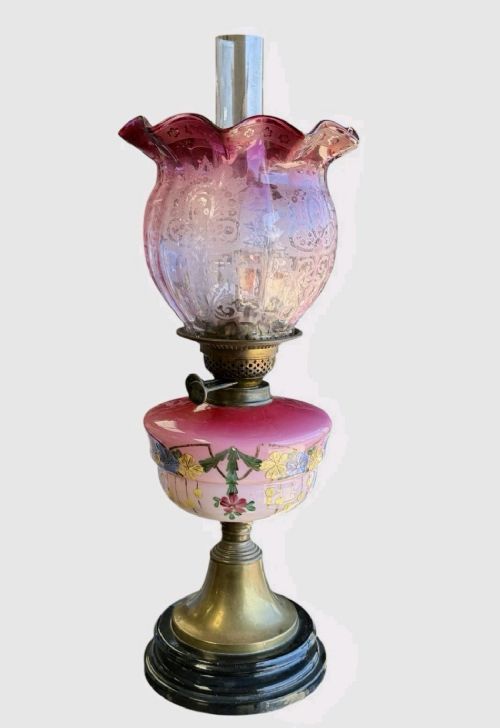
Decoration relies on hand-painted floral motifs applied directly to glass fonts and ceramic bowls, sometimes paired with enamel work and gilt detailing. Metal components are cast and turned to secure the glass reservoirs and burners.
Floral Glass Table Lamp Retail Price Guide 2026
Typical asking prices for floral glass table lamp among the pieces listed under this phrase on Sellingantiques today, from the lower quarter to the upper quarter. They describe what is for sale here now, not the wider market.
Some Victorian oil lamps retain the faint scent of paraffin after a century, a quiet reminder of their original nightly duties.
What separates the best examples
Quality rests in the execution of the hand-painted floral decoration upon the glass or porcelain and the crispness of the brass casting. The integration of the painted shade with the matching font defines the finest pieces.
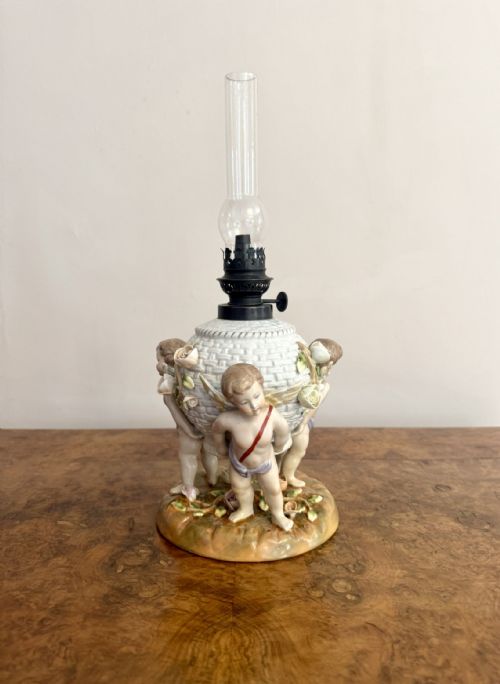
Makers such as Sitzendorf, Baccarat, and Hinks introduce sculptural porcelain figures and specialised ceramic bodies that elevate standard lighting into decorative art.
Sitzendorf porcelain·Taylor Tunnicliff·Baccarat
The Floral Glass Table Lamp Glossary
- Cranberry glass
- A rich red-pink transparent glass created by adding gold chloride to the molten batch. This material appears frequently in Victorian oil lamp reservoirs and shades.
- Font
- The oil reservoir of a lamp, usually positioned above the base and beneath the burner. In these pieces, the font typically displays hand-painted floral decoration.
- Frosted glass
- Glass treated to have a diffuse, matte surface rather than a transparent finish. It diffuses light gently in Art Nouveau and Victorian table lamps.
- Faience
- Tin-glazed earthenware decorated with painted colours and fired. It provides a dense, opaque surface for floral designs on European lighting.
- Enamel
- Opaque glassy material fused to metal or glass surfaces through heat. It creates raised, colourful floral patterns across nineteenth-century lamp bodies.
Floral Glass Table Lamp: Frequently Asked Questions
What periods do these lamps cover?
The pieces span the Victorian, Edwardian, Art Nouveau, and Art Deco eras, ranging from the 1870s through the early twentieth century.
Most examples reflect late nineteenth-century manufacturing methods, utilising traditional glass-blowing and hand-painting techniques before the widespread adoption of electric lighting.
Were these lamps originally electric?
These lamps were constructed as oil, paraffin, or candle lamps before being adapted for modern electricity.
Original burners and reservoirs remain visible on many pieces, showing how nineteenth-century homes relied on liquid fuel for illumination.
How do I identify Art Nouveau styles?
Art Nouveau examples utilise organic, flowing lines inspired by natural forms, distinct from the heavier revival styles of the early Victorian period.
These pieces frequently combine frosted glass and bronze work with stylized floral motifs characteristic of the turn of the twentieth century.
Where should I place these lamps?
These tall table lamps suit side tables, sideboards, or desks where their painted glass fonts and decorative shades catch natural light.
Their substantial height and colourful glass elements allow them to function as decorative sculptural objects even when unlit.