

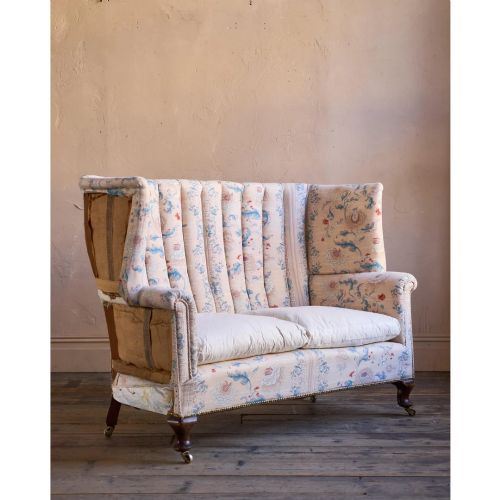
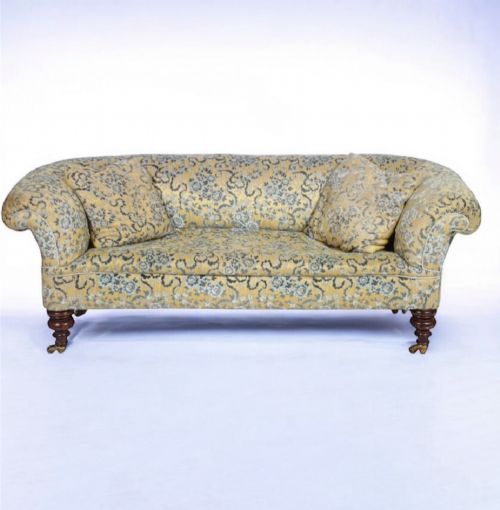


Floral Fabric Settee
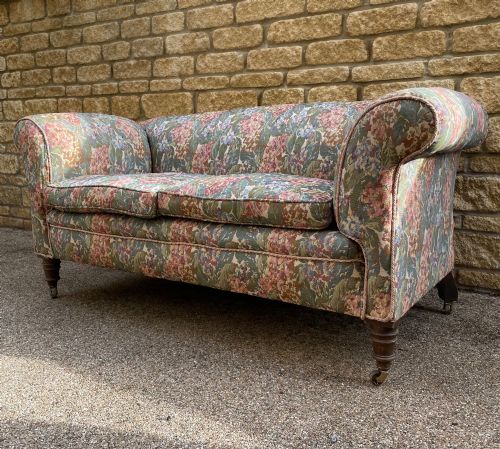
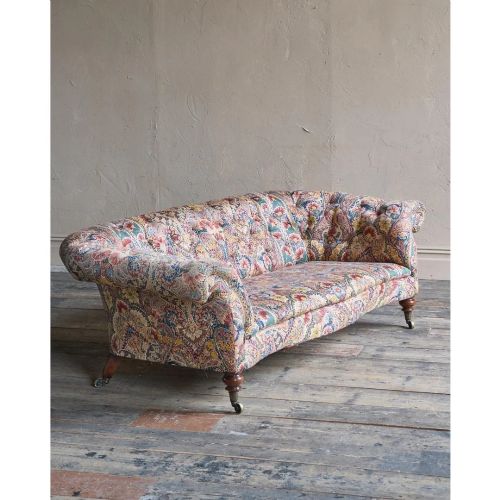
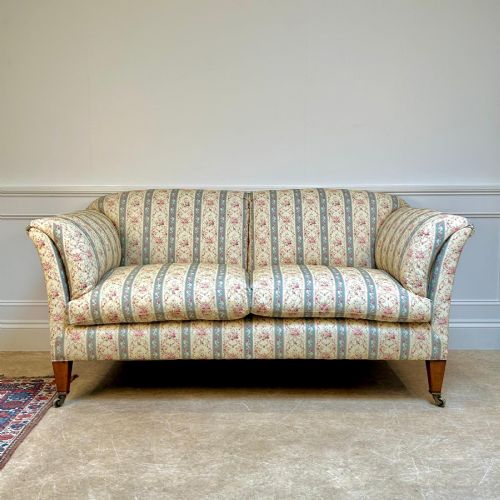
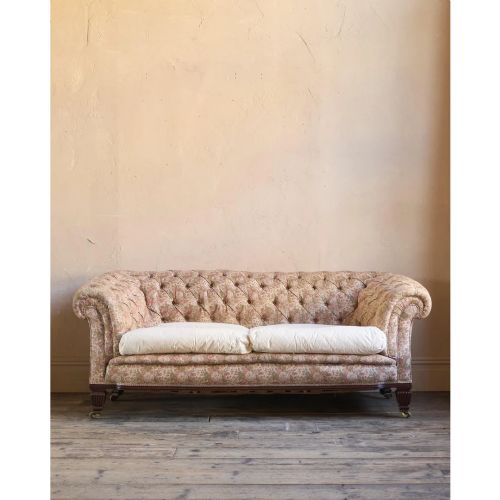
These floral fabric settee examples bring timeless seating upholstered in patterned textiles into a room.
Floral Fabric Settee
A floral fabric settee brings traditional seating into a room, offering upholstered comfort across various historical periods. When searching for a floral fabric settee, a buyer encounters forms ranging from compact two-seater settees to larger Chesterfields, Knowle sofas, and camel back designs.
The pieces listed on this page span the eighteenth century, nineteenth century, and early twentieth century, including Victorian and Edwardian examples. English country house aesthetics and formal George II styles appear alongside simpler timber-framed settees.
Most items combine timber frames with patterned textile upholstery, often featuring traditional shapes such as drop arms, fluted wings, or triple-back configurations.
How they were made
Upholstery uses various woven materials and fabric coverings, secured over padding to create structured backs, arms, and seats. Specific items retain original ticking upholstery beneath the decorative outer textile layer.
Floral Fabric Settee Retail Price Guide 2026
Typical asking prices for floral fabric settee among the pieces listed under this phrase on Sellingantiques today, from the lower quarter to the upper quarter. They describe what is for sale here now, not the wider market.
Listings feature timber frames in mahogany, walnut, and general wood, paired with various fabric upholstery options spanning the eighteenth to twentieth centuries.
What varies in quality
The standard of a settee depends upon the precision of the timber framing and the integrity of the underlying construction. Pieces built during the eighteenth or nineteenth centuries display varying degrees of cabinetmaking skill in their carved legs and structural joints.
Upholstery execution and fabric retention also differentiate examples. Surviving textiles and original stuffing materials influence how closely a settee maintains its historical form and period character.
Howard and Sons
The Floral Fabric Settee Glossary
- Chesterfield
- A traditional upholstered sofa style typically featuring rolled arms of the same height as the back.
- Knowle Sofa
- A distinct form featuring hinged or adjustable arms historically held in place by wooden finials and cord.
- Camel back
- A sofa design characterised by a serpentine, undulating curved upper back edge resembling a camel's hump.
- Drop arm
- A mechanical sofa arm that can be lowered horizontally on one or both sides using a ratcheted mechanism.
- Ticking
- A tightly woven, durable cotton or linen fabric traditionally used as an inner lining to contain stuffing.
Floral Fabric Settee: Frequently Asked Questions
How do I identify a Victorian settee?
Victorian settees date from the nineteenth century and often exhibit robust proportions with dark timber frames, rolled arms, or button-tufted upholstery. Stylistic traits reflect the revival periods popular during the nineteenth century.
Examining the construction methods and wood types helps distinguish nineteenth-century examples from later Edwardian or twentieth-century pieces.
Where should I place a settee?
Settees suit living rooms, large hallways, or bedrooms where traditional seating adds character and comfort. Their compact footprint compared to large modern sofas makes them adaptable for placement against walls or beneath windows.
Pairing a settee with complementary armchairs creates a cohesive seating arrangement in period interiors.
What is a Knowle sofa?
A Knowle sofa is a traditional seating form characterised by high backrests and distinct movable wings or arms attached by cords and finials. This historic design originated in the seventeenth century and continued to be interpreted in later periods.
Such sofas offer a formal silhouette suited to period drawing rooms and country house settings.