

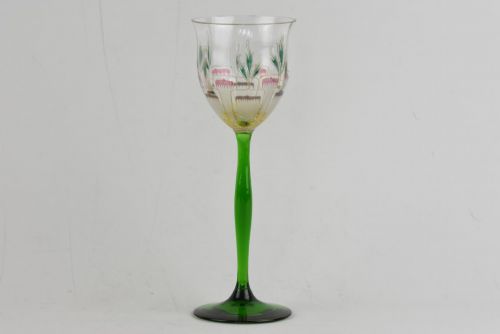


Floral Enamelled Glassware
These floral enamelled glassware pieces bring rich Victorian and Art Nouveau colour to a room, offering hand-painted botanical motifs fused onto amber, crystal, opaline or green glass.
Floral Enamelled Glassware
Floral enamelled glassware covers decorative and table items from the Victorian period through to nineteen ten, including vases, jugs, decanters, cordial glasses and wine glasses. These pieces showcase botanical decoration applied directly to the glass body, ranging from vibrant polychromatic floral scenes to delicate painted stems.
The items found on this page span several distinct design movements, most notably Victorian, Art Nouveau, Jugendstil, and Folk Art. Buyers encounter both robust Bohemian vessels and refined German works from makers such as Theresienthal and Daum, reflecting diverse European studio traditions.
Form and function vary widely across the selection, moving from large display vases and opaline pairs down to intimate cordial glasses and hock sets. Each piece relies on the contrast between the translucent or coloured glass ground and the raised texture of the enamel paint.
How they were made
The foundation of these items is blown glass, shaped into vessels like decanters, pitchers and vases using traditional glassblowing techniques before decoration begins. Artisans utilised clear crystal, amber glass, green glass or opaline glass as the canvas for their painted designs.
Makers applied opaque and translucent enamel paints by hand, often incorporating gold leaf gilding to highlight the floral motifs and rims. Certain pieces involve cameo glass techniques or multi-layered polychromatic enamel work that required precise firing to fuse the colours to the glass surface.
Floral Enamelled Glassware Retail Price Guide 2026
Typical asking prices for floral enamelled glassware among the pieces listed under this phrase on Sellingantiques today, from the lower quarter to the upper quarter. They describe what is for sale here now, not the wider market.
Materials recorded across the selection include crystal glass, amber glass, opaline glass and vitreous enamel alongside gold leaf.
What varies in quality
Quality in these items rests upon the precision and complexity of the hand-painting, where finely detailed polychromatic floral work distinguishes superior examples from simpler production. The crispness of the enamel application and the skillful integration of gold leaf gilding dictate the visual depth of each vessel.
The underlying glass form also shapes the standard of the piece, from standard mould-blown bodies to heavier crystal hock glasses and complex blown shapes. Greater skill in the initial glassblowing and the subsequent enamel firing produces cleaner lines and more durable decoration.
Theresienthal·Moser·Daum
The Floral Enamelled Glassware Glossary
- Enamel
- A vitreous composition fused to the surface of glass through heat, providing durable colour and raised texture for floral decoration. It is applied by hand before firing.
- Opaline glass
- An opaque or semi-translucent pale glass that became popular in the nineteenth century, offering a smooth pastel background for contrasting painted flowers. This material supports bright polychromatic enamelling effectively.
- Gilding
- The application of gold leaf or gold paint to accent the rims, handles and floral details of glassware. This technique adds metallic highlights to the finished piece.
- Cameo glass
- A method of creating raised designs by carving through layered glass of different colours. It appears on select decorative vases from this era.
- Hock glass
- A tall-stemmed Germanic wine glass traditionally used for white wine, frequently featuring decorated bowls and coloured glass stems. Sets often include intricate enamel work.
Floral Enamelled Glassware: Frequently Asked Questions
What is floral enamelled glassware?
These items are nineteenth and early twentieth century glass vessels decorated with hand-painted enamel flowers, foliage and gilt detailing. They include practical tableware like decanters and wine glasses alongside decorative vases.
Craftsmen across Europe produced them using blown crystal, opaline, green and amber glass grounds. The resulting objects combine traditional glassmaking with detailed botanical artwork.
How were these glasses used?
Tableware pieces such as cordial glasses, hock glasses, wine glasses and decanters served drinks during formal dining and social gatherings in the Victorian and Edwardian periods. Their colourful decoration made them prominent tabletop talking points.
Larger vessels like pitchers, jugs and vases functioned as ornamental centrepieces for displaying cut flowers or simply standing empty on sideboards and mantels.
How do I care for enamelled glass?
These pieces require gentle hand washing in tepid water with mild soap to protect the delicate enamel paint and gold leaf gilding. Harsh detergents and abrasive sponges will damage the surface decoration over time.
Store or display them away from direct sunlight and extreme temperature changes to preserve the integrity of both the glass and the fused enamel colours.
How can I tell Victorian from Art Nouveau pieces?
Victorian examples tend to feature symmetrical, naturalistic floral painting, often paired with heavy gilding and rich colours on opaline or amber glass bodies. They lean towards traditional shapes like standard decanters and rounded jugs.
Art Nouveau and Jugendstil pieces show flowing, organic lines inspired by natural plant forms, frequently associated with makers from nineteen hundred to nineteen ten. Their palettes and vessel silhouettes reflect the avant-garde design shifts of that later decade.