





Floral Club Chairs
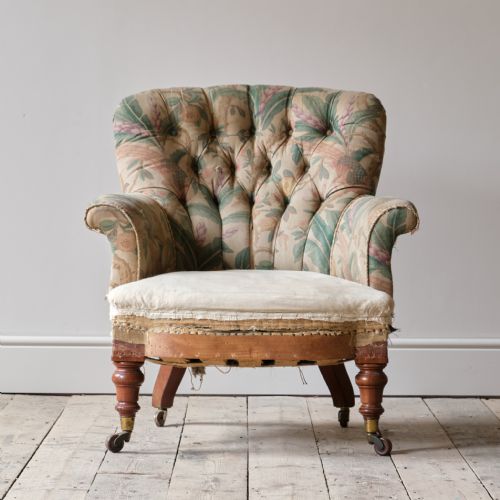
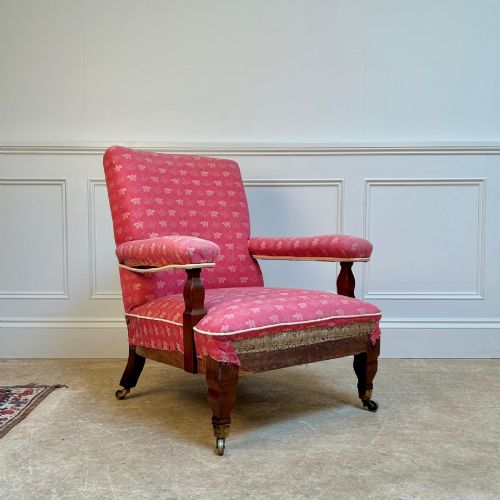
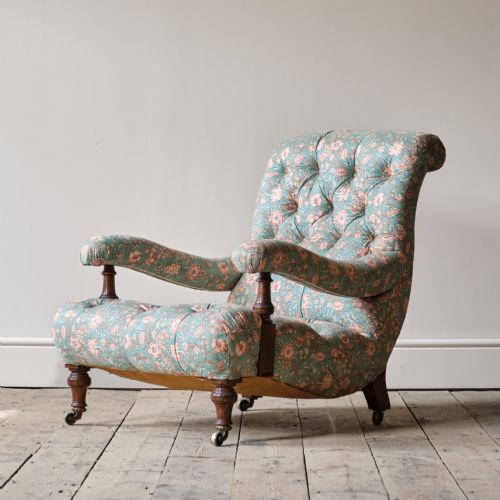
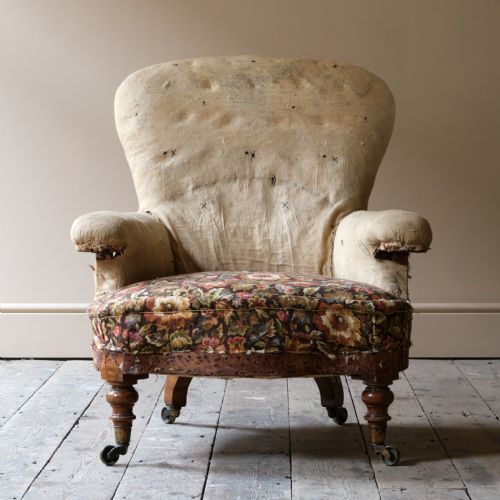
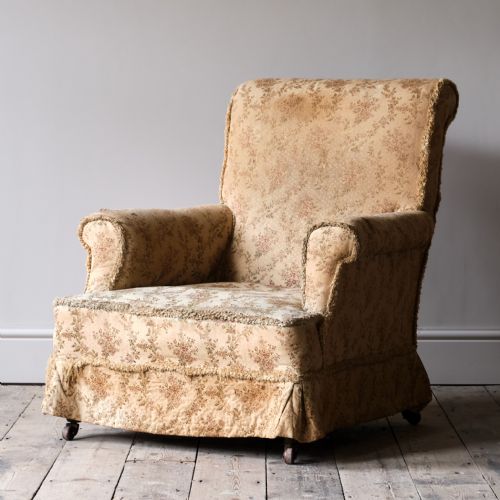
These floral club chairs bring deep, comfortable seating and classic upholstered style into a room.
Floral Club Chairs
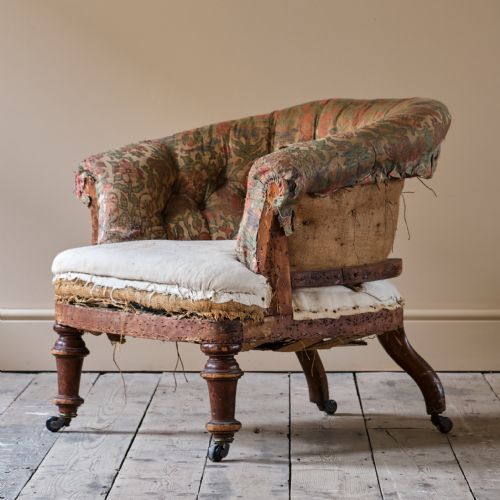
When you search for floral club chairs, you are looking at substantial upholstered armchairs designed for comfort, frequently taking the form of deep-seated country house armchairs and tub back designs. The examples found here span from the mid-nineteenth century through the Edwardian period and the early twentieth century.
The dominant styles represented in this category include Victorian, Edwardian, English Country House, Arts and Crafts, French Empire, and Jacobean Revival. Pieces often follow traditional maker aesthetics such as the Howard style or Woodstock style, offering generous proportions suited for relaxed sitting rooms.
How they were made
The frames of these armchairs are constructed from timber, wood, and mahogany, providing a sturdy structural skeleton hidden beneath layers of upholstery. Brass details sometimes appear in castors or structural hardware.
Traditional internal cushioning and support rely on materials like hessian and cotton upholstery, finished with outer layers of fabric and cotton. These textiles define the tactile and visual character of each seat.
Floral Club Chairs Retail Price Guide 2026
Typical asking prices for floral club chairs among the pieces listed under this phrase on Sellingantiques today, from the lower quarter to the upper quarter. They describe what is for sale here now, not the wider market.
Listings feature mahogany, walnut, and timber frames paired with cotton upholstery and hessian support.
What varies in quality
Quality in these armchairs rests upon the integrity of the underlying timber frame and the depth of the seating proportions. Pieces attributed to documented makers display superior joinery and cabinet-making standards.
The grade of the upholstery materials and the execution of the revival style also dictate the distinction between standard workshop production and fine cabinet work.
George Jack For Morris & Co·Holland & Sons·Howard and Sons·Maple & Co
The Floral Club Chairs Glossary
- Bergere Armchair
- An upholstered armchair featuring enclosed cane or upholstered sides. This form became popular during the nineteenth century.
- Tub Back Armchair
- An armchair with a continuous curved back and arms forming a circular enclosure. It offers a snug and supportive sit.
- Hessian
- A coarse woven fabric typically spun from jute or hemp fibres. It is traditionally used beneath outer upholstery layers for internal support.
- Open Armchair
- An armchair with open sides that expose the structural woodwork. This design contrasts with fully upholstered closed forms.
- Jacobean Revival
- A nineteenth-century design style emulating seventeenth-century English furnishings. It utilises heavy proportions and dark timber.
Floral Club Chairs: Frequently Asked Questions
What defines a country house armchair?
Country house armchairs are characterised by exceptionally deep seats and generous padding designed for long hours of relaxation. They prioritize physical comfort above formal stiffness.
These chairs often feature loose feather or down cushions and traditional upholstery techniques that allow the seat to soften comfortably over time.
How do I identify a Howard style chair?
Howard style chairs typically feature low, rolled arms, tapered wooden legs on brass castors, and deep proportions. The tailoring is precise yet relaxed.
Makers working in this manner focused on ergonomic support, creating a distinct profile that influenced generations of British upholstery design.
What is a bergere armchair?
A bergere is an upholstered armchair with a rigid wooden frame and enclosed sides. The panels are frequently caned or fully upholstered.
Originating in France, the form was adopted by British makers during the nineteenth century, blending formal elegance with comfortable proportions.
How should I care for antique upholstery?
Antique upholstery requires gentle maintenance, regular vacuuming with a low suction attachment, and protection from direct sunlight. This preserves the textile fibres.
Professional cleaning is recommended for vintage fabrics to avoid damaging the internal hessian, stuffing, and traditional frame construction.