



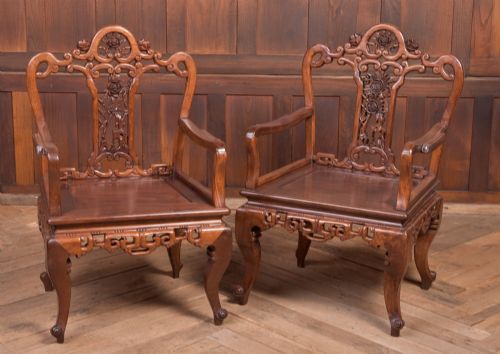

Floral Carved Wooden Chair
A floral carved wooden chair brings organic warmth and pattern into a room through carved detail and textile upholstery.
Floral Carved Wooden Chair
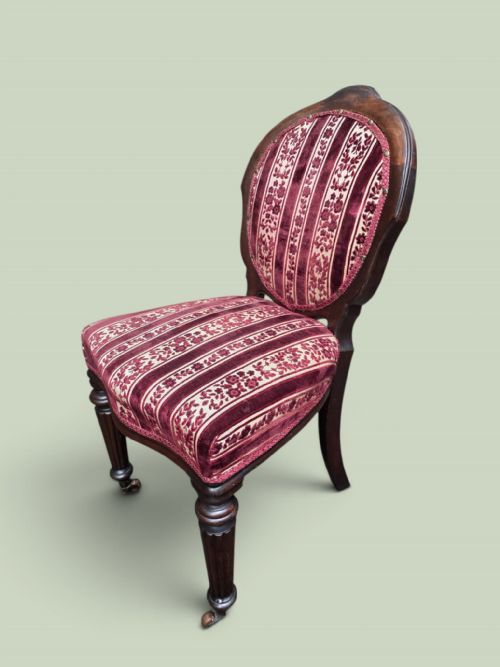
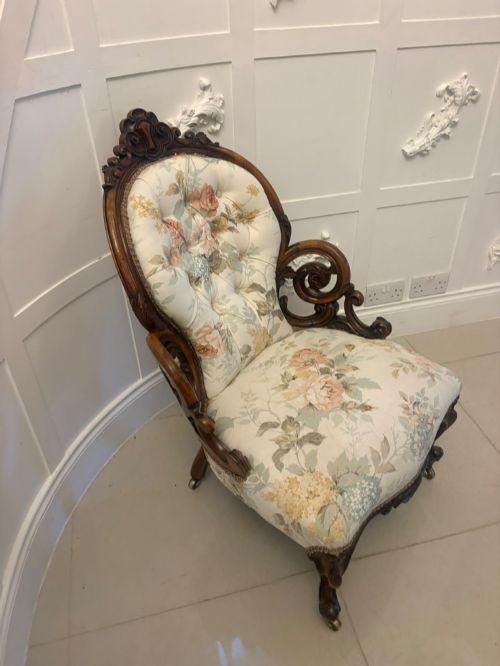
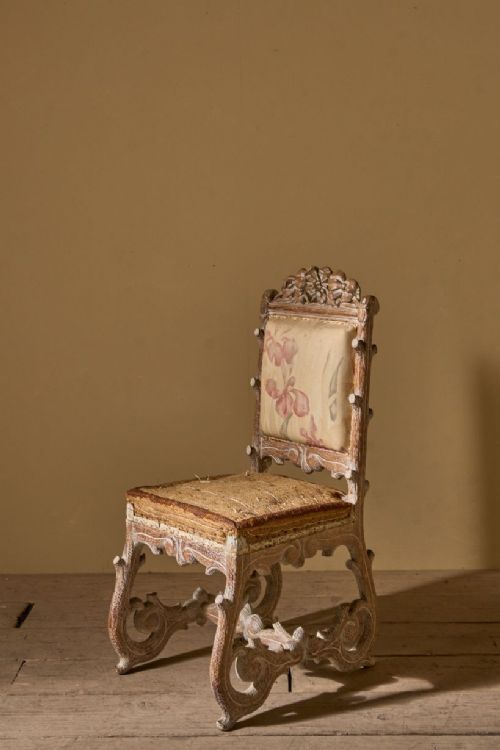
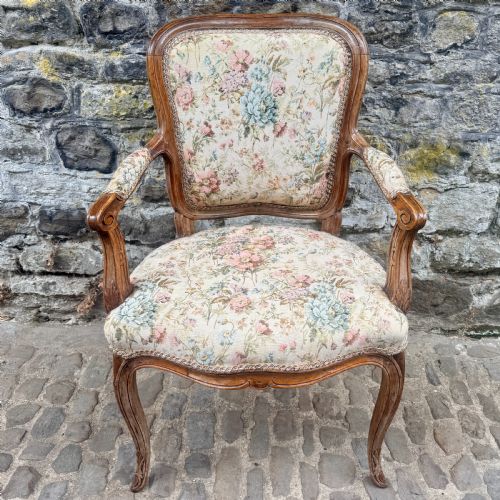
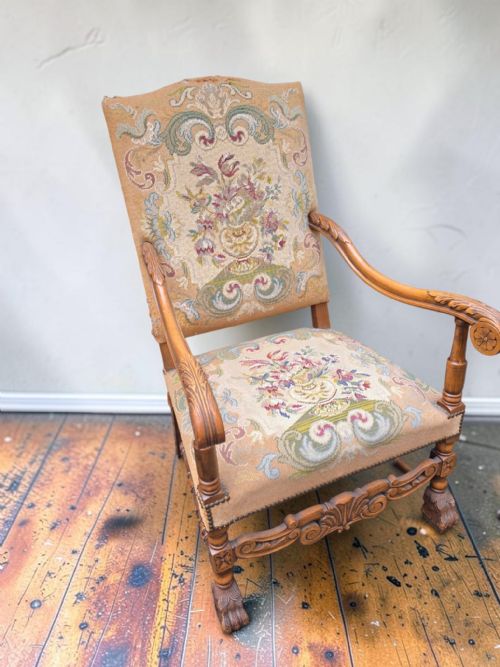
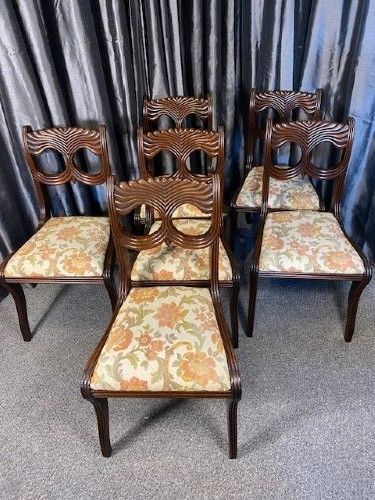
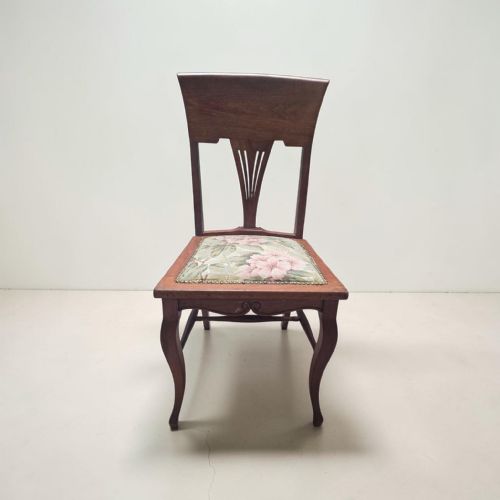
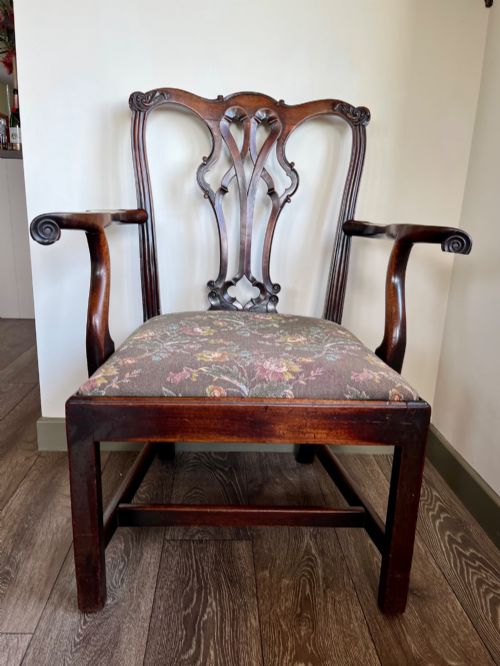
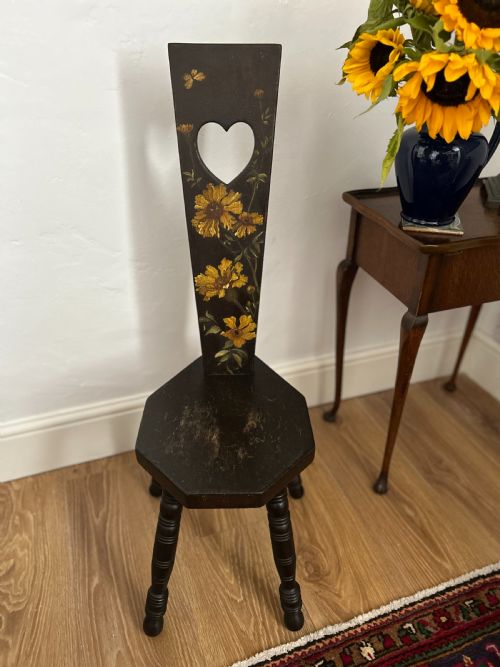
A floral carved wooden chair represents a broad tradition of seating where botanical motifs meet timber frames. When you search for a floral carved wooden chair, you encounter forms ranging from dining chairs and side chairs to substantial armchairs and rocking chairs.
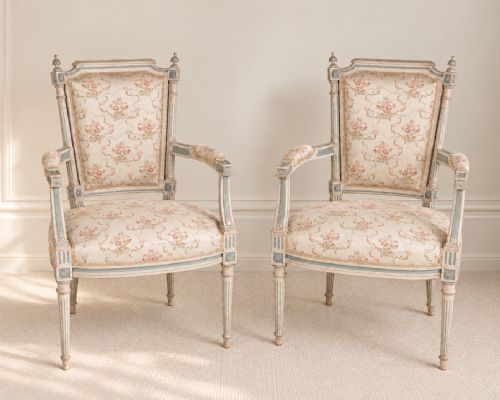
The pieces appearing here span centuries of design, drawing on periods from the seventeenth century through to the Edwardian era and the twentieth century. You will find examples rooted in Georgian, Victorian, and Art Nouveau aesthetics alongside French provincial styles.
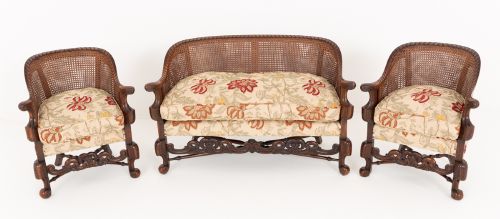
Seating arrangements vary from single occasional chairs to complete dining sets and salon suites. The core identity of these pieces rests on carved wooden surfaces paired with upholstered panels, tapestry covers, or needlepoint seats.
Materials and construction methods
Cabinetmakers built these frames from dense hardwoods including mahogany, walnut, oak, beech, and rosewood. Timber selection dictated the depth and crispness achievable in the carved floral details.
Craftsmen shaped the wood using traditional joinery before applying hand-carved botanical ornamentation directly to the frames. Surface treatments range from polished timber finishes to painted applications.
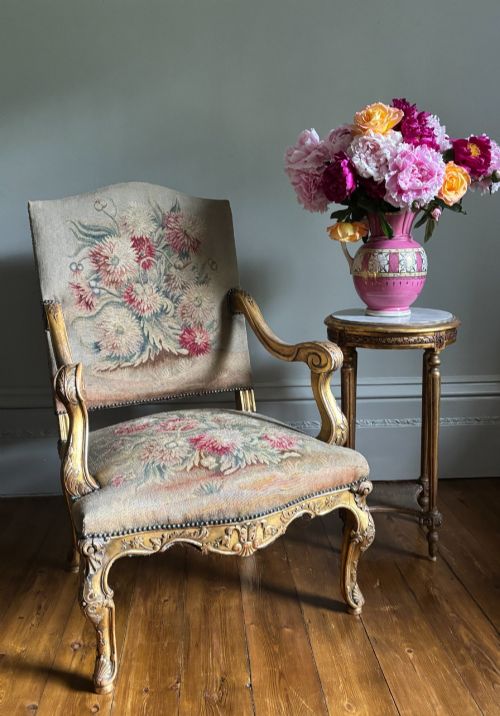
Upholstery completed the work, utilising fabric, wool, and textile panels secured with brass tacks or buttoning. Needlepoint and tapestry covers frequently incorporated floral designs to complement the carved woodwork.
Floral Carved Wooden Chair Retail Price Guide 2026
Typical asking prices for floral carved wooden chair among the pieces listed under this phrase on Sellingantiques today, from the lower quarter to the upper quarter. They describe what is for sale here now, not the wider market.
Listings feature mahogany, walnut, oak, and beech frames paired with wool, fabric, and needlepoint textiles across multiple centuries.
Distinctions in craftsmanship and design
The sharpness and depth of the carved foliage distinguish standard production from exceptional artistry. Crisp undercutting in the wooden petals and stems demonstrates superior hand-tool control by the maker.
The integrity of the timber frame and the harmony between carved wood and upholstery define the overall standard. Original textiles and needlepoint panels retained in good condition elevate the historical interest of a piece.
Louis Majorelle
The Floral Carved Wooden Chair Glossary
- Balloon back
- A rounded, oval-shaped chair back resembling a balloon, popular during the Victorian period. This form provides a smooth surface for carved wooden details.
- Needlepoint
- Embroidery stitched on a canvas mesh ground, often creating floral patterns for chair seats and back panels. It adds texture and colour to wooden framed seating.
- Splat
- The central vertical strip of wood in the middle of a chair back. Carved splats often display floral or scrollwork motifs.
- Faux bois
- A technique where wood or other materials are painted or carved to imitate the natural appearance of tree branches and bark. This style appears on rustic nineteenth-century garden and indoor seating.
Floral Carved Wooden Chair: Frequently Asked Questions
What periods do these chairs come from?
The selection covers seventeenth-century oak pieces, eighteenth-century Georgian and provincial designs, and nineteenth-century Victorian creations. Twentieth-century Edwardian and Art Nouveau examples also feature.
This chronological span brings diverse regional styles and carving techniques together under one category.
How do I identify different styles?
Look at the silhouette of the frame and the specific nature of the botanical carving. Georgian pieces emphasise refined mahogany proportions, while Victorian versions showcase heavier walnut or oak with deep relief.
Art Nouveau examples introduce flowing, organic plant lines, and French provincial pieces display painted finishes with needlepoint panels.
Were these chairs used for dining or lounging?
They served multiple domestic functions depending on their specific form. Dining chairs and side chairs equipped tables, while armchairs, rocking chairs, and nursing chairs provided comfort in parlours and bedrooms.
Larger settees and suites accommodated multiple sitters in formal reception rooms.
How should I care for wooden frames and upholstery?
Maintain the timber by keeping it away from direct heat sources and applying appropriate wax polish sparingly. Dust fabric and tapestry panels gently with a soft brush to protect delicate textile fibres.
Regular inspection of the joints ensures the structural stability of the carved frame.