



Floor Standing Shelves
Floor standing shelves range from modest oak open bookcases to tiered mahogany display units, offering practical vertical storage for any room.
Floor Standing Shelves
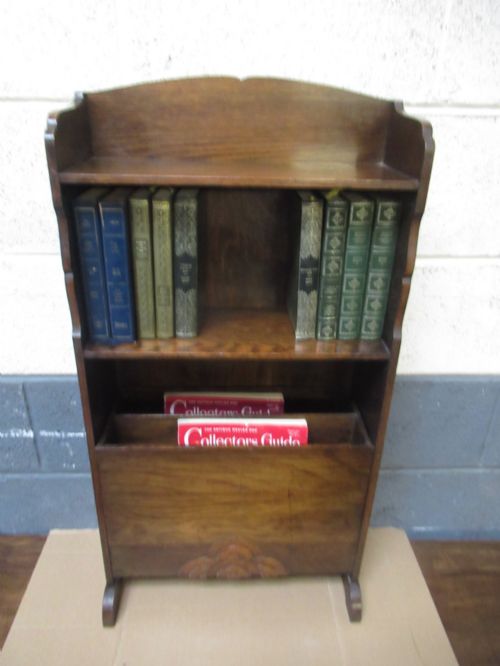
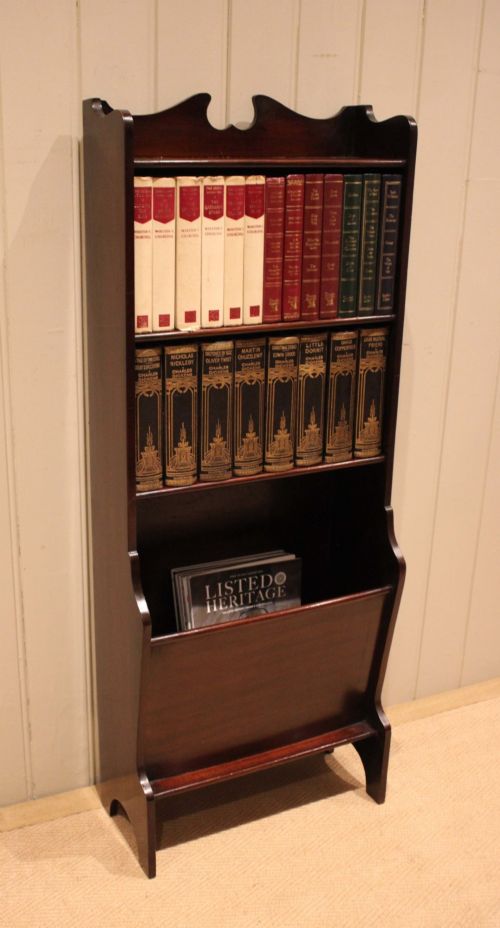
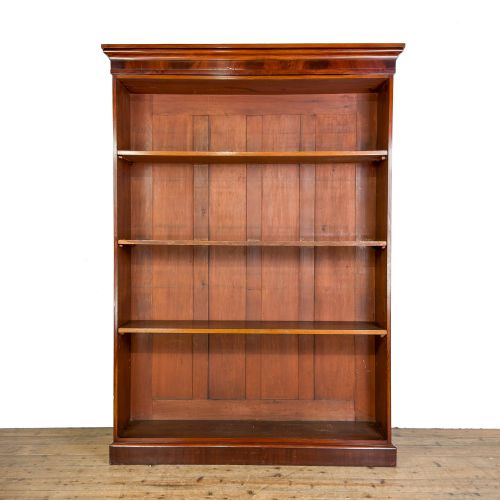
Floor standing shelves bring vertical organisation to a room, appearing in forms such as open bookcases, tiered stands, and painted display units. When exploring floor standing shelves, buyers encounter pieces spanning the Georgian, Victorian, and Edwardian eras, as well as the 1930s. Materials range from traditional timbers like mahogany and oak to painted finishes.
The selection includes compact examples of small proportions alongside taller multi-tiered pieces equipped with galleries or magazine racks. Walnut and pine also appear among the timber constructions, offering varied wood grains and tones. These sturdy pieces function primarily to hold books and display objects without taking up excessive floor space.
How they were made
Construction relies heavily on traditional cabinet-making timbers such as mahogany, oak, walnut, and pine, shaped into open bookcases and tiered shelving units. Joinery techniques secure shelves firmly to vertical uprights, creating stable structures capable of bearing weight over decades of use.
Surface treatments vary from the natural grain of polished mahogany and oak to painted finishes and parcel gilt details. Open tiered designs incorporate galleries to retain items securely, while other variants integrate auxiliary functions like magazine storage alongside standard shelving.
Floor Standing Shelves Retail Price Guide 2026
Typical asking prices for floor standing shelves among the pieces listed under this phrase on Sellingantiques today, from the lower quarter to the upper quarter. They describe what is for sale here now, not the wider market.
Listings feature items from the Georgian period through to the 1930s, constructed in oak, mahogany, walnut, pine, and paint.
What varies in quality
Quality in floor standing shelves rests upon the selection of timber and the precision of the construction. Finer examples display carefully chosen wood grains in mahogany or walnut, whereas simpler utility pieces utilise straightforward pine or oak.
The sophistication of decorative elements, from delicate painted details and parcel gilding to architectural mouldings and galleries, distinguishes standard shelving from finer period items.
The Floor Standing Shelves Glossary
- Waterfall bookcase
- A tiered set of open shelves where each level steps back from the one below it, creating a cascading profile.
- Open bookcase
- A piece of shelving furniture lacking doors, designed for immediate access to books and displayed objects.
- Gallery
- A raised decorative rail running along the edge of a shelf to prevent items from sliding off.
- Parcel gilt
- A surface treatment where specific carved or raised details are highlighted with gold leaf over a painted or timber base.
- Tiered
- Constructed with multiple levels arranged in ascending order, often used in stands and open shelving.
Floor Standing Shelves: Frequently Asked Questions
Where should I place floor standing shelves?
These versatile pieces suit studies, living rooms, and hallways, providing accessible storage for books and display items against any solid wall.
Because they stand directly on the floor without requiring wall mounting, they can be repositioned easily as room layouts change.
How do I care for antique timber shelves?
Maintain timber surfaces by dusting regularly with a soft cloth and applying a quality wax periodically to nourish the wood.
Keep shelves away from direct heat sources and strong sunlight to prevent the wood from drying out or the finish from fading.
Are these shelves suitable for heavy books?
Sturdily built timber pieces made from oak or mahogany provide strong support for substantial volumes and heavy reference books.
Smaller proportions or lighter pine constructions work best for paperbacks and decorative ornaments rather than massive tomes.
How do I distinguish Victorian from Edwardian shelves?
Victorian pieces often feature darker, heavier timbers like walnut and mahogany with substantial proportions and deep mouldings.
Edwardian examples tend towards lighter oak or simpler lines, reflecting a shift towards brighter and less cluttered domestic interiors.