

Floor Dressing Glass
Floor dressing glass brings together freestanding mirrors and cheval frames designed for full-length reflection in bedrooms and dressing rooms.
Floor Dressing Glass
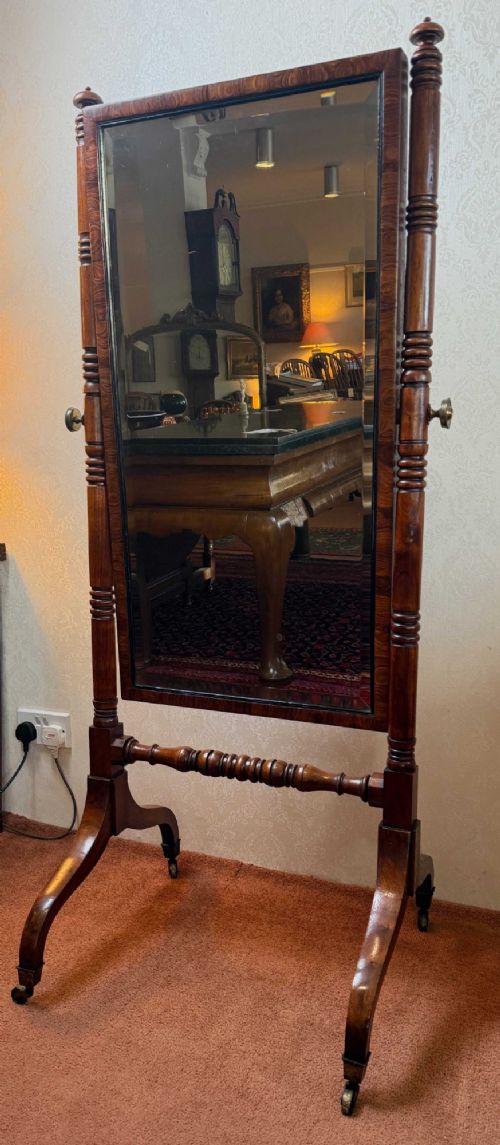
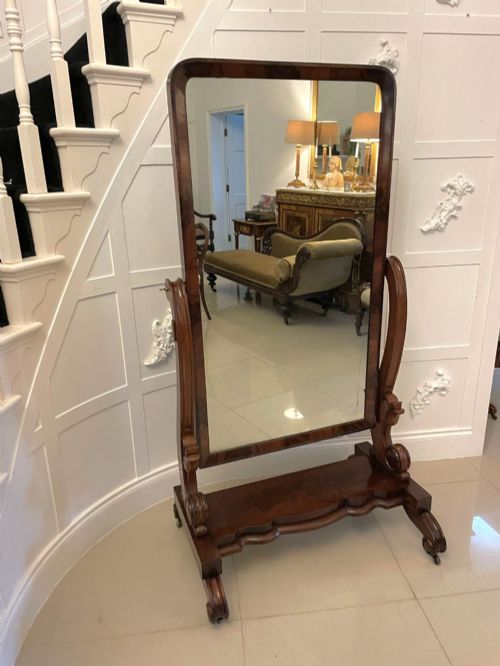
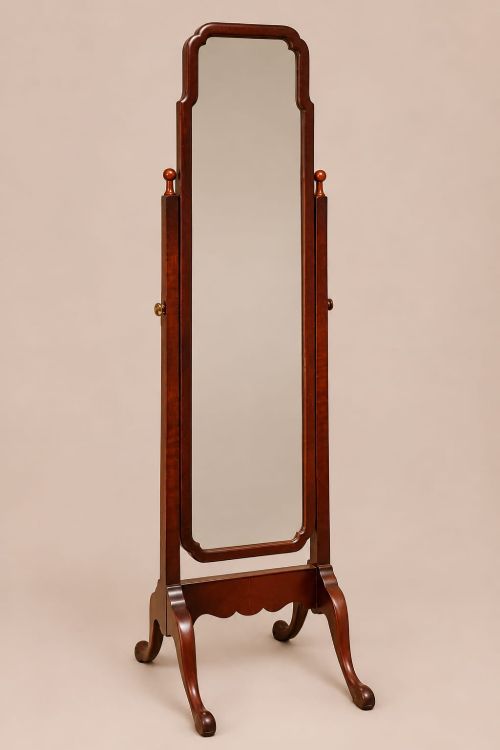
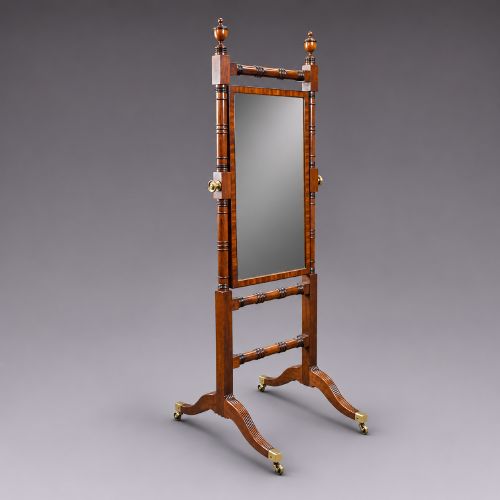
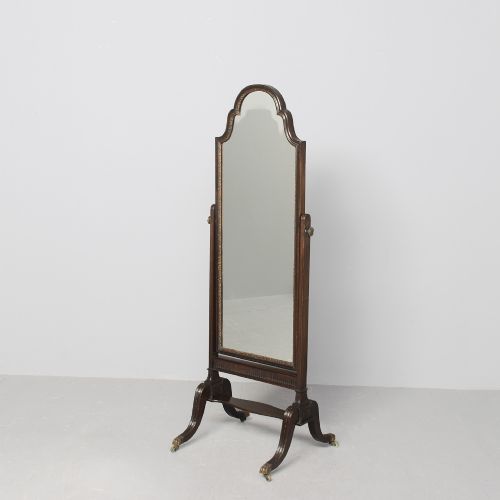
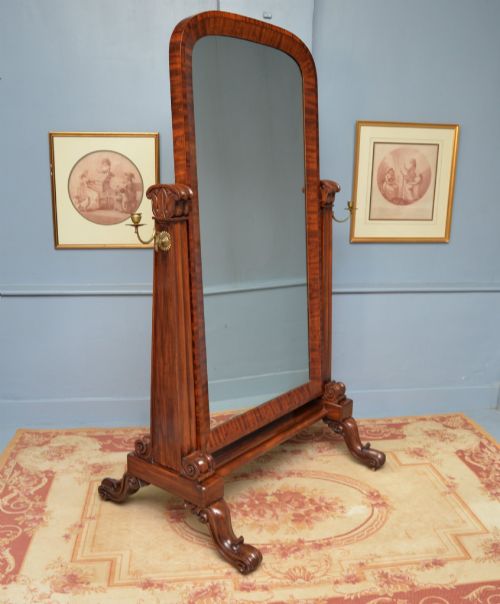
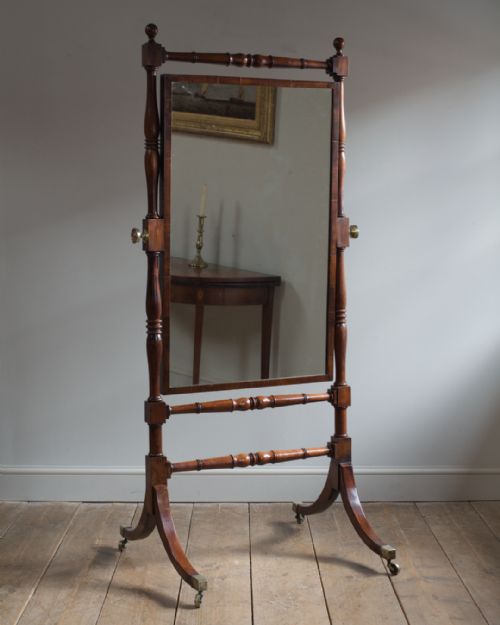
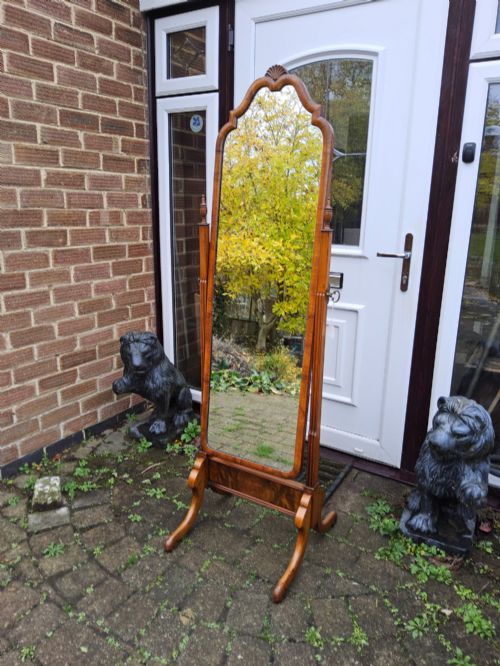
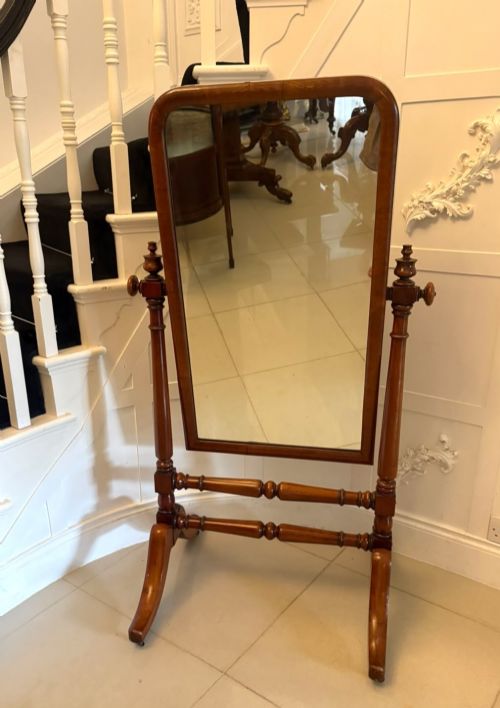
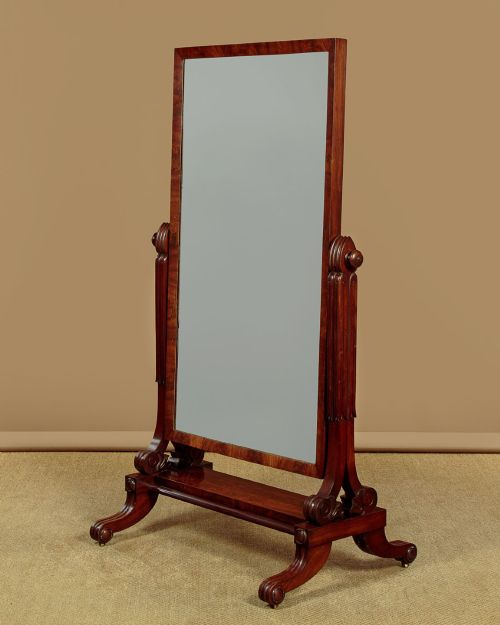
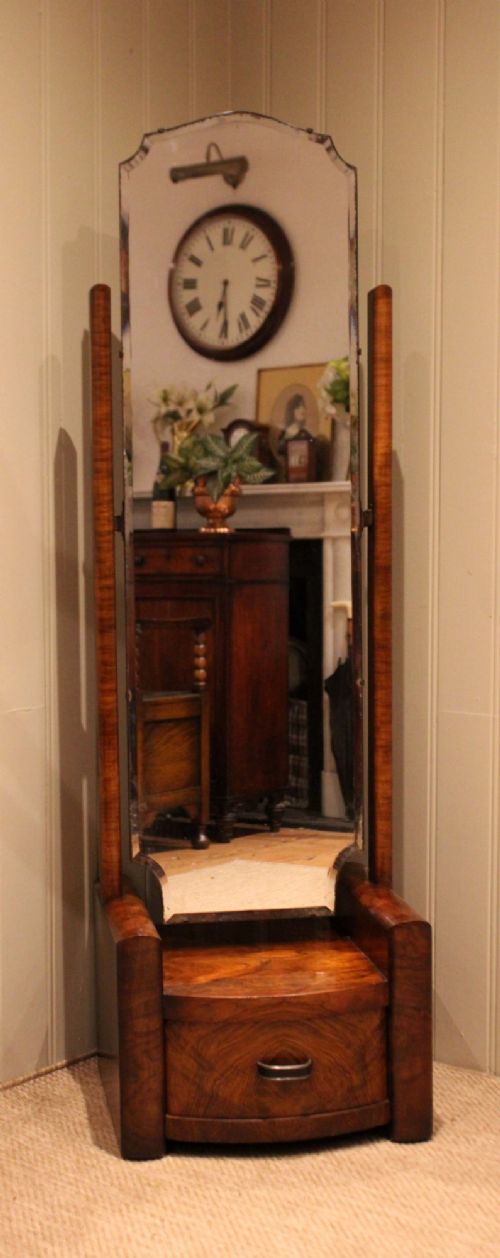
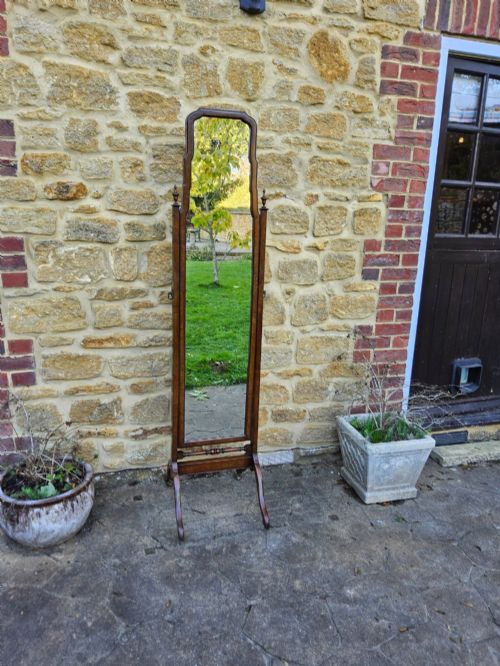
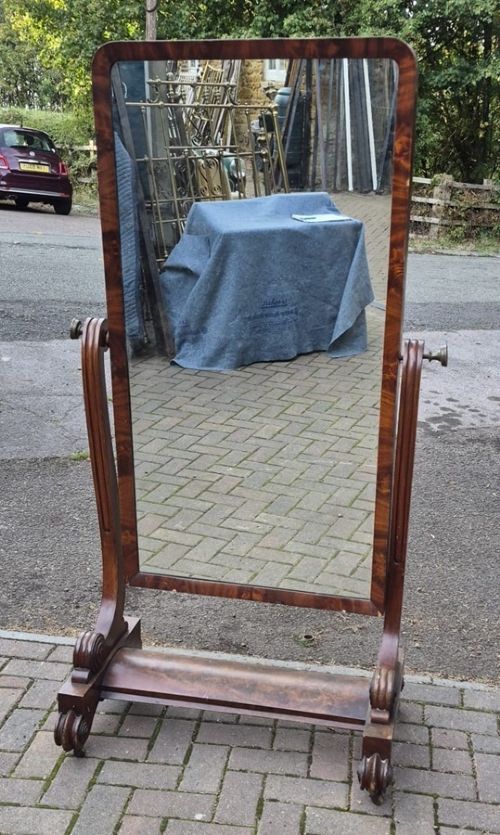
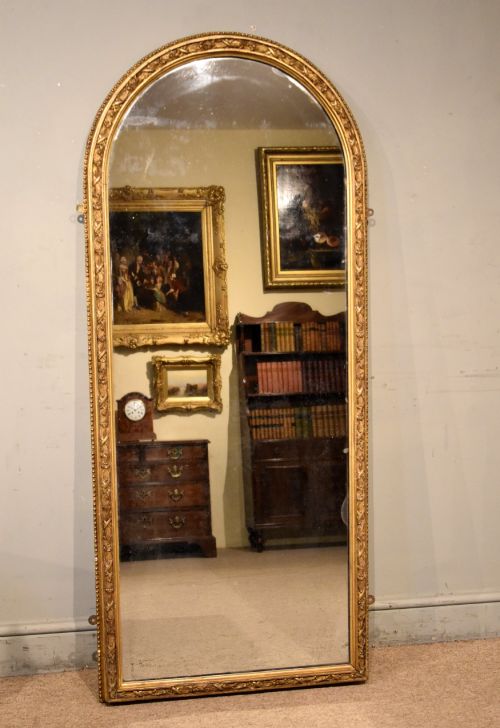
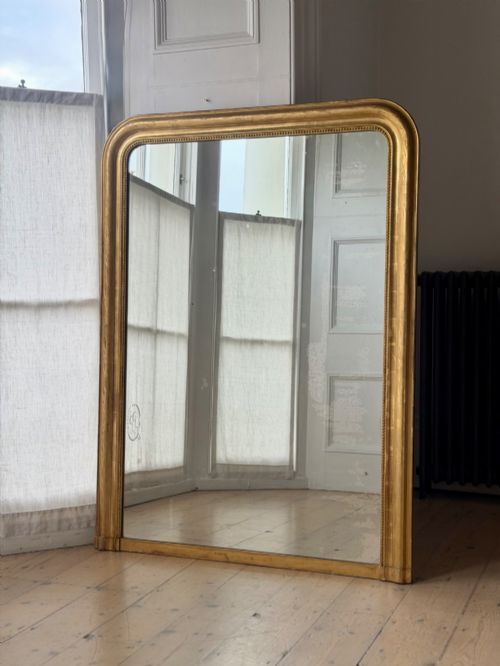
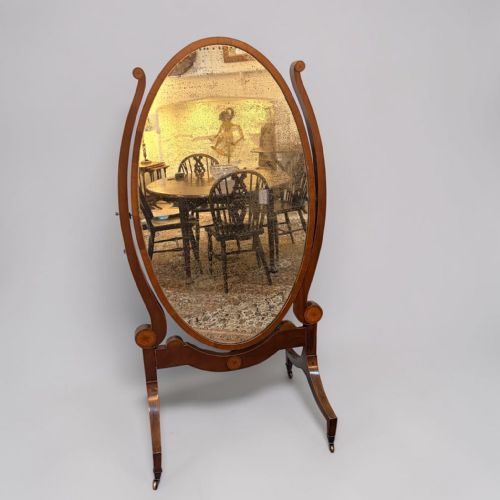
Floor dressing glass primarily encompasses freestanding cheval mirrors and large movable dressing glasses designed for full-length view. These pieces allow a person to inspect an entire outfit from head to toe before stepping out.
The examples gathered here span the nineteenth century, taking in Regency, Victorian, and Edwardian periods alongside French designs. The predominant form is the swinging plate held between two upright posts on a sturdy base.
Mahogany forms the backbone of these listings, accompanied by giltwood, walnut, and satin birch frames. Many incorporate practical details such as brass castors for movement or tilt mechanisms to adjust the angle of the glass plate.
Materials and construction
Cabinetmakers built the supporting frames predominantly from solid mahogany, walnut, or satin birch, often incorporating flame veneers on the wider surfaces. Uprights commonly rest on trestle feet or platform bases fitted with brass castors.
Mirror plates rely on traditional silvering techniques, with older examples frequently showing mercury glass or bevelled edges set within rebated wooden frames. Carved elements utilise gesso and gold leaf on giltwood variants, particularly within French styles.
Floor Dressing Glass Retail Price Guide 2026
Typical asking prices for floor dressing glass among the pieces listed under this phrase on Sellingantiques today, from the lower quarter to the upper quarter. They describe what is for sale here now, not the wider market.
Many a Victorian gentleman relied on these swinging mirrors to ensure his cravat sat straight before facing the morning calls.
Judging quality
Quality rests in the heft and stability of the timber frame, where dense mahogany and robust joints prevent the tall structure from rocking. Superior examples exhibit fine turning on the uprights or crisp hand-carving on the cresting rails.
The mirror glass itself marks the division between standard and exceptional pieces, particularly where original bevels, mercury backing, or heavy plate glass survive intact. High-grade brass mounts and smoothly functioning tilt pins further distinguish the better workshops.
Gillows
The Floor Dressing Glass Glossary
- Cheval mirror
- A freestanding full-length mirror suspended on a frame with vertical pivots that allow the glass to swing. This form became popular during the late eighteenth century for bedroom dressing.
- Mercury glass
- An early form of mirror plate created by pouring a mercury and tin amalgam behind double-walled glass. It produces a characteristic mottled, luminous reflection.
- Giltwood
- Timber that has been coated with a thin layer of gold leaf over a prepared gesso base. This finish appears frequently on French and decorative mirrors.
- Tilt dressing glass
- A smaller mirror mounted on pivots between upright supports, designed to tilt forward or backward. These sit atop dressing tables or provide adjustable full-length reflection.
- Satin birch
- A pale, lustrous timber utilised for furniture frames during the Victorian and Edwardian eras. It offers a distinct yellow-gold grain pattern.
Floor Dressing Glass: Frequently Asked Questions
Where should a floor dressing glass go?
These tall mirrors suit bedrooms, dressing rooms, or wide hallways where full-length reflection is useful. Their freestanding nature allows them to stand away from walls without permanent wall fixings.
Position the piece near natural light from a window to maximise illumination, taking care to secure the floor clearance if placed on thick carpets.
How do you adjust a tilting mirror?
Most cheval mirrors use brass thumbscrews or pivot pins set into the upright supports. Turning these gently loosens or tightens the grip on the mirror frame.
Support the weight of the glass with one hand while adjusting the fittings to prevent sudden slipping or strain on the wooden pivots.
Are these mirrors heavy to move?
Solid mahogany and giltwood frames possess considerable weight, particularly when combined with thick glass plates. Many period examples feature original brass castors to ease movement across floorboards.
Lift the base rather than the upper frame when shifting the piece to avoid putting stress on the vertical pivots.
How can I tell the period?
Construction details provide the clearest clues, such as Regency scroll supports, Victorian barley twist columns, or Edwardian satin birch finishes. The weight and backing of the mirror plate also indicate age.
Hand-cut joints in the wooden base and original brass hardware align with nineteenth-century cabinetmaking standards.