

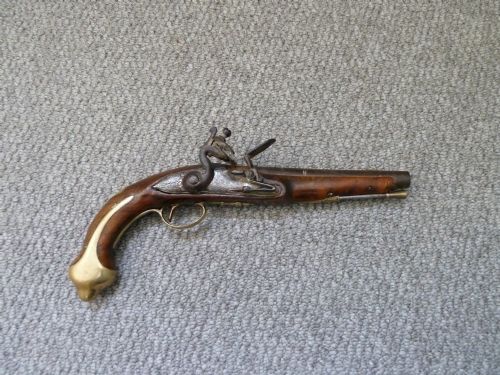


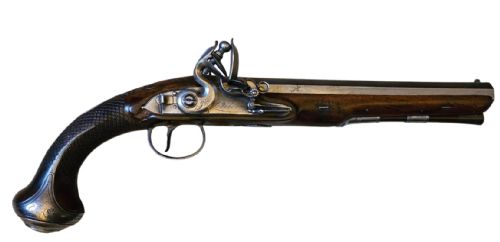


Flintlock Duelling Pistol
These flintlock duelling pistol examples are serious pieces of historic hardware that collectors prize for their crisp mechanics and precise period craftsmanship.
Flintlock Duelling Pistol
When you search for flintlock duelling pistol variants, you encounter historic firearms and militaria spanning from the seventeenth century through the nineteenth century. Most items on this page fall into the eighteenth century and the Georgian period, reflecting the era of gentlemanly disputes and military commissions.
The selection ranges from single pistols to cased pairs complete with fitted mahogany boxes and baize linings. Forms include officer pistols, smooth-bore arms, and dedicated duelling pieces by named makers.
Origins stretch across London, provincial makers in Newark and Cork, and broader British workshops. Walnut and walnut wood stocks dominate the evidence, frequently complemented by steel, brass, iron, and silver mounts.
How They Were Made
Gunmakers shaped stocks from figured walnut and mahogany, housing intricate flintlock ignition mechanisms forged in steel and iron. Many pieces incorporate brass or silver mounts, adding structural reinforcement and decorative contrast to the wood.
Master craftsmen signed their barrels and locks, applying London proof marks and bore sizes such as sixteen-bore or eighteen-bore to denote specifications. Fitted cases often lined with baize protected these precision instruments alongside their accessories.
Flintlock Duelling Pistol Retail Price Guide 2026
Typical asking prices for flintlock duelling pistol among the pieces listed under this phrase on Sellingantiques today, from the lower quarter to the upper quarter. They describe what is for sale here now, not the wider market.
Listings span the seventeenth, eighteenth, and nineteenth centuries, featuring materials like walnut, mahogany, steel, iron, brass, and silver.
What Varies in Quality
Quality rests in the crispness of the lock mechanism and the legibility of the maker's signature on the barrel or plate. Signatures from established workshops like Mortimer or Harrison elevate a piece above standard unsigned alternatives.
The integrity of the figured walnut stock and the presence of matching silver mounts or original fitted mahogany cases distinguish superior examples. Finer pieces retain clear proof marks and harmonious proportions between metal and wood.
Harrison of London·Timothy Hughes·H.W. Mortimer And Son·Barber of Newark·Dutton·A.W Spires
The Flintlock Duelling Pistol Glossary
- Flintlock
- An ignition mechanism that uses a piece of flint striking a steel frizzen to create sparks for gunpowder ignition. This system dominated firearm design before percussion caps took over in the nineteenth century.
- Bore
- The interior diameter of the barrel, often measured in gauge or bore size such as sixteen-bore or eighteen-bore. This measurement dictated the size of the lead ball the pistol fired.
- Proof marks
- Official stamps struck onto the barrel to show the firearm passed safety tests under high powder charges. London proof marks help verify the origin and legitimacy of the piece.
- Baize
- A coarse woollen material resembling felt, traditionally used to line fitted wooden cases for pistols and accessories. It protected the metal and wood finishes from scratching during transport.
- Percussion pistol
- A later firearm type utilising a percussion cap struck by the hammer rather than a flint and steel system. Several examples on this page reflect this technological evolution into the nineteenth century.
Flintlock Duelling Pistol: Frequently Asked Questions
What is a flintlock duelling pistol?
A flintlock duelling pistol is a muzzle-loading firearm designed for personal combat and officer use during the eighteenth and nineteenth centuries. These weapons relied on flint ignition mechanisms and precise barrel boring to ensure accuracy.
Today, they survive as prized items of antique militaria, valued for their mechanical complexity and direct connection to the Georgian era.
How do I date a flintlock pistol?
Dating relies on stylistic clues, barrel signatures, and official proof marks stamped into the metal. Georgian and eighteenth-century examples typically feature distinctive lock shapes and furniture designs.
Makers often signed their work directly on the lock plate or top rib, allowing researchers to place the piece within a specific active period for that workshop.
What are cased pairs?
Cased pairs are matching duelling pistols housed together in a fitted wooden box, usually made from mahogany. These sets included specialised accessories for cleaning, loading, and maintaining the firearms.
The interior was lined with materials like baize to keep the matched pistols and their components secure during travel.
How should I display these pistols?
Displaying antique firearms involves stable indoor environments away from direct sunlight and excessive humidity. Wall mounting or placement in secure glass cabinets keeps the walnut stocks and steel components safe.
Cased sets look striking kept in their fitted boxes, which protects the baize lining and preserves the complete ensemble together.