

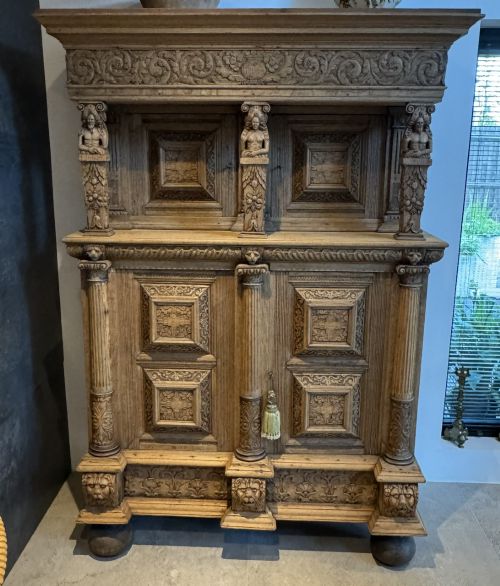


Flemish Renaissance Furniture
These pieces of flemish renaissance furniture bring sturdy joinery and deep relief carving into domestic interiors with heavy character.
Flemish Renaissance Furniture
Flemish renaissance furniture brings together substantial storage and seating forms rooted in historical continental design. Buyers searching for flemish renaissance furniture will encounter dark timbers shaped into monumental proportions for domestic use.
Cabinets and sideboards dominate the material record here, frequently accompanied by hall stands and wall shelves. These utilitarian forms carry dense decorative programs executed by hand.
The surviving selection spans several centuries, touching upon seventeenth-century origins alongside nineteenth-century revivals. Oak and walnut serve as the primary structural mediums for these architectural items.
How they were made
Makers relied on solid oak and walnut timbers, joined with traditional framing techniques to bear the weight of heavy relief carving. These woods provided a stable canvas for deep chisel work and figurative panels.
Metal elements such as brass fixtures and structural zinc appear alongside glass and stained glass inserts. Joiners integrated these contrasting materials to punctuate the dark timber surfaces.
Flemish Renaissance Furniture Retail Price Guide 2026
Typical asking prices for flemish renaissance furniture among the pieces listed under this phrase on Sellingantiques today, from the lower quarter to the upper quarter. They describe what is for sale here now, not the wider market.
Listings feature items spanning the seventeenth, eighteenth, and nineteenth centuries, executed primarily in oak and walnut.
What varies in quality
The depth and clarity of the relief carving set individual examples apart, distinguishing crisp mythological and figurative details from softer, worn execution. Better items display proportioned joinery where structural elements harmonize with sculptural ornament.
Material selection dictates longevity and visual weight, with dense oak and walnut boards holding sharper chisel edges than secondary timbers. Original hardware and intact glass panels preserve the integrity of the piece.
The Flemish Renaissance Furniture Glossary
- Revival
- A stylistic movement that imitates historical aesthetics from earlier centuries. Nineteenth-century workshops frequently drew upon sixteenth- and seventeenth-century motifs.
- Relief carving
- A sculptural technique where figures and patterns project from a flat background. This method defines the decorative surface of heavy storage forms.
- Green man
- A sculptural motif depicting a human face intertwined with foliage and vines. It appears frequently among the carved woodwork.
- Cabinet on stand
- A raised storage compartment supported by an open framework beneath. This form elevates display surfaces above the floor.
Flemish Renaissance Furniture: Frequently Asked Questions
How do I care for carved oak furniture?
Maintain stable humidity levels in the room to prevent the solid timber from splitting or warping over time. Apply a microcrystalline wax occasionally to nourish the wood without building up heavy residues.
Avoid placing these heavy items in direct sunlight, which can bleach dark finishes and dry out old joinery. Dust the deep recesses of the relief carving regularly with a soft brush.
What rooms suit large sideboards?
Spacious dining rooms and wide hallways accommodate the monumental proportions and heavy visual weight of these substantial storage units. Ensure adequate wall space and floor clearance before introducing them to domestic interiors.
Pair them with complementary timber tables and seating to create a balanced historical scheme. The dark surfaces require good ambient lighting to reveal the carved details.
How can I tell periods apart?
Examine the tool marks, timber shrinkage patterns, and structural joinery beneath the surface to gauge the manufacturing age. Seventeenth-century items typically show hand-hewn joinery and older fastener types compared to later revival pieces.
Stylistic revivals often blend renaissance motifs with Victorian proportions and machine-assisted detailing. Look closely at the hardware and glass types for clues regarding date of manufacture.
Are stained glass panels original?
Inspect the leading and glass texture closely to determine whether the coloured panes belong to the original construction. Mismatched leads or inconsistent glass wear suggest later replacement or repair work.
Original glazing sits securely within rebated wooden frames designed specifically for the cabinet doors. Handle glazed doors with care to protect fragile leaded joints.