




Flap Table Furniture
Flap table furniture offers folding leaves that adjust surface area for dining, writing, and tea.
Flap Table Furniture
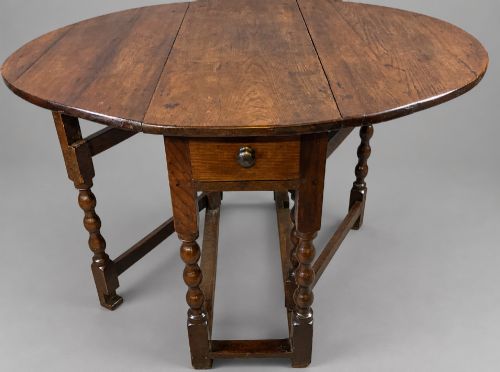
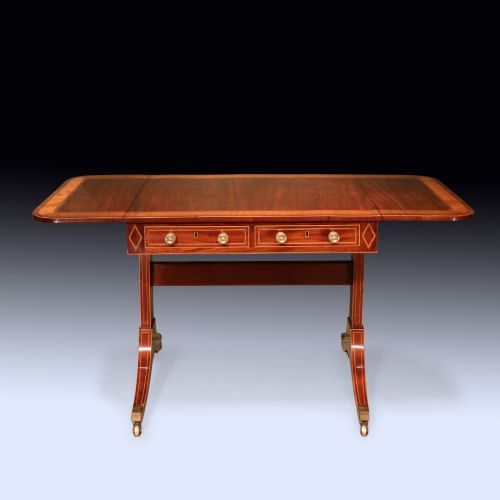
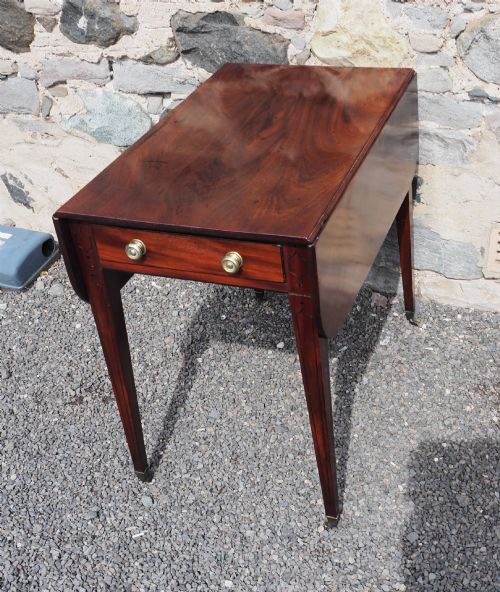
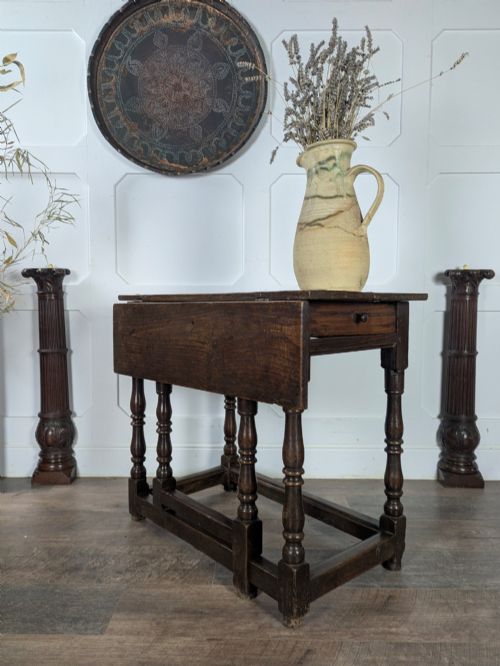
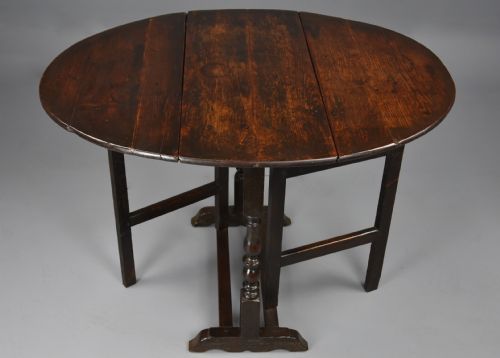
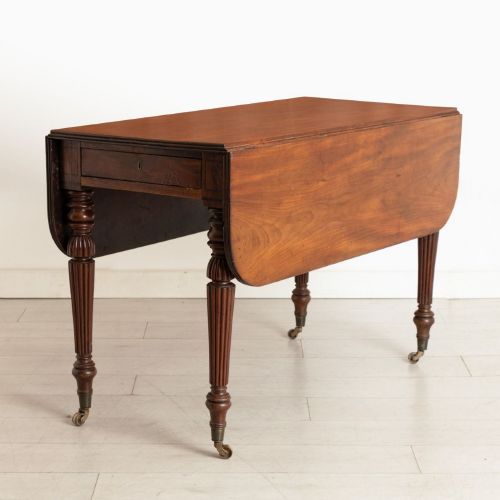
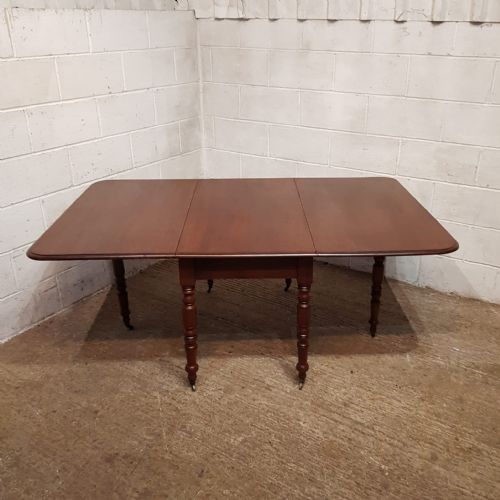
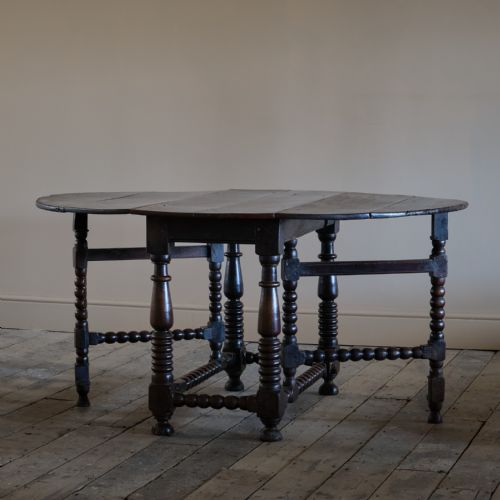
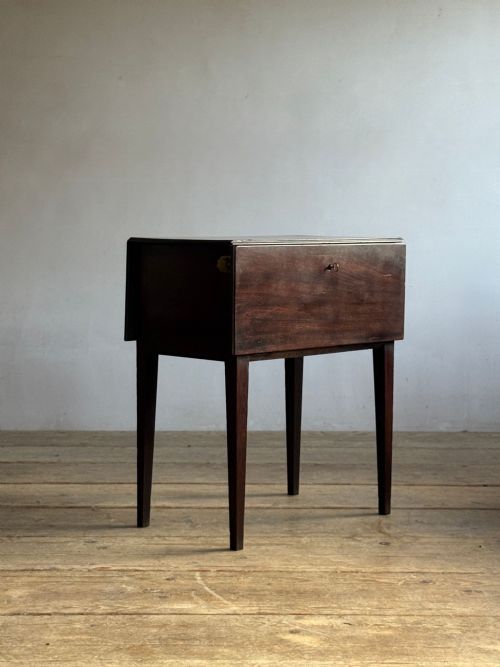
Flap table furniture encompasses pieces featuring hinged leaves that drop down or rise to be supported by swinging legs, gates, or brackets. The selection spans compact gateleg tables from the seventeenth century to refined Pembroke and sofa tables from the Georgian and Regency periods.
Materials and construction
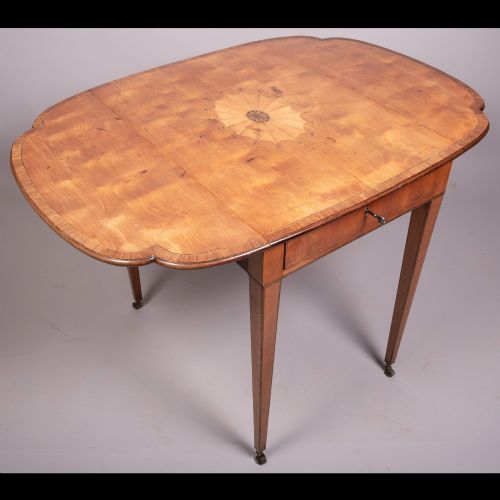
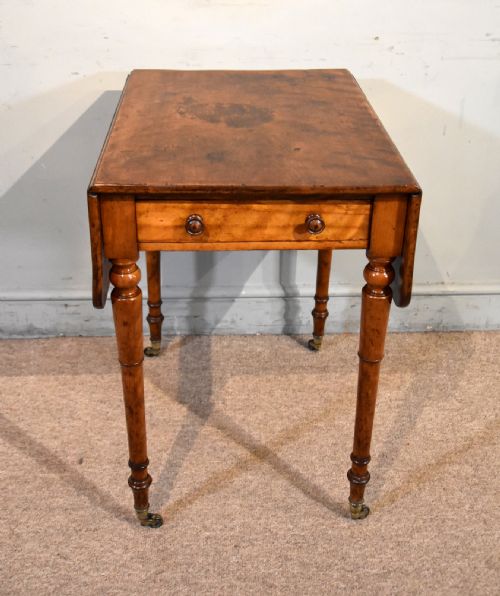
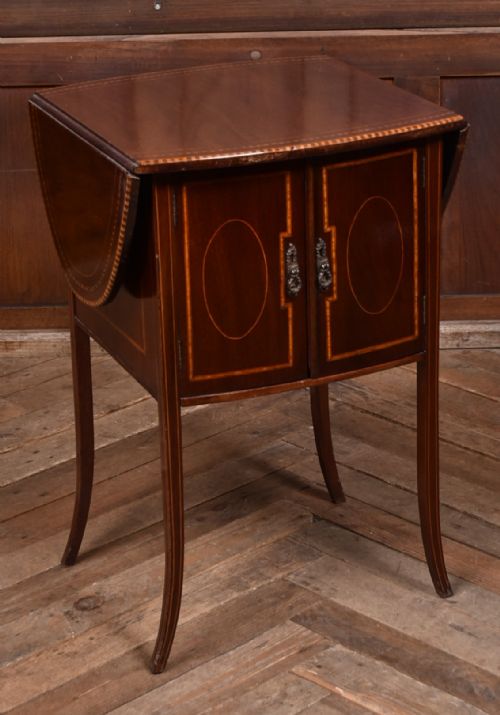
Cabinetmakers utilised solid timbers such as oak for seventeenth-century gatelegs, alongside dense hardwoods like mahogany, rosewood, and satinwood for eighteenth and nineteenth-century Pembroke and sofa tables. Crossbanding, marquetry inlay, and brass castors frequently finish the construction of these drop-leaf designs.
Joinery relies on sturdy gate mechanisms, rule joints that conceal the hinge line when the flap is raised, and turned legs featuring bobbin or cabriole profiles.
Flap Table Furniture Retail Price Guide 2026
Typical asking prices for flap table furniture among the pieces listed under this phrase on Sellingantiques today, from the lower quarter to the upper quarter. They describe what is for sale here now, not the wider market.
Listings span seventeenth-century oak, Georgian mahogany, Regency satinwood, and Edwardian ebonised pieces.
Assessing quality
Quality rests upon the selection of timber figures, such as Cuban mahogany or burr birch, and the crispness of carved details like cabriole legs and pad feet. Original brass hardware and patination preserved on seventeenth-century oak or Georgian satinwood elevate a piece.
The integrity of the rule joints and the smooth operation of the gate or swing legs indicate precision in workshop assembly.
Johnstone and Jeanes·James Mein Kelso·Gillow·Liberty and Co
The Flap Table Furniture Glossary
- Gateleg table
- A table with hinged flaps supported by legs that swing outward like a gate. This form provides a large surface area that collapses for compact storage.
- Pembroke table
- A small rectangular table with two drop leaves on opposite sides, typically fitted with a drawer. It developed during the eighteenth century for breakfast or writing use.
- Sofa table
- A rectangular occasional table designed to stand in front of a sofa, featuring drop flaps on the two short sides. These tables often possess trestle-style supports.
- Rule joint
- A moulded joint connecting a table top to its drop flap. The knuckle of the hinge is concealed within the curve to present a neat finish when open.
- Crossbanding
- A strip of veneer applied to the border of a table top with the grain running perpendicular to the centre panel. This technique frames the primary timber.
Flap Table Furniture: Frequently Asked Questions
What is flap table furniture?
Flap table furniture covers a variety of tables equipped with hinged leaves that extend the surface when needed. These designs include gateleg dining tables, Pembroke tables, and sofa tables.
Craftsmen built these pieces across multiple centuries, using timbers like oak, mahogany, and satinwood to suit domestic needs for flexible space.
How do gateleg tables work?
Gateleg tables utilise hinged legs that pivot outward from the central frame to support the drop leaves. When closed, the leaves hang down and the swing legs fold inward.
This mechanism allows a compact table to expand into a larger surface suitable for dining or gathering.
Where were Pembroke tables used?
Pembroke tables functioned as versatile furniture in Georgian and Regency homes, serving for breakfast, writing, or tea. Their drop leaves allowed them to sit compactly against a wall.
Many examples feature a small drawer for storage and castors for easy movement around a drawing room.
How to date these tables?
Dating relies on timber choice, construction methods, and stylistic details. Seventeenth-century pieces typically employ solid oak with bobbin or turned gateleg framing.
Later eighteenth and nineteenth-century examples introduce mahogany, satinwood veneers, rule joints, and refined leg turning or crossbanding.