





Flamed Mahogany Tea Table
These flamed mahogany tea table pieces combine rich grain figures with practical folding surfaces, offering both elegance and utility for any period interior.
Flamed Mahogany Tea Table
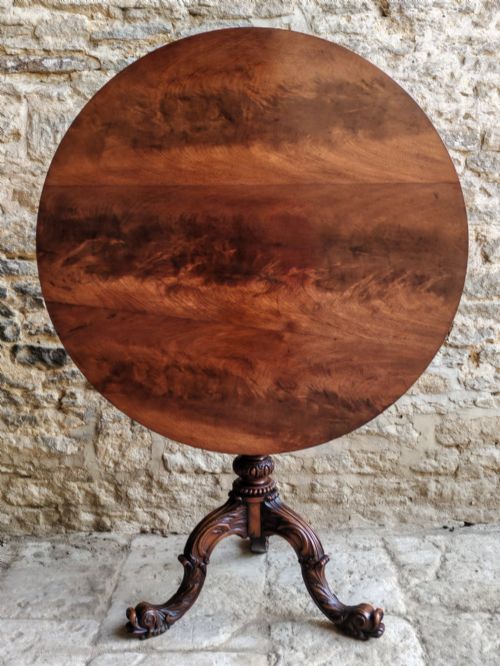
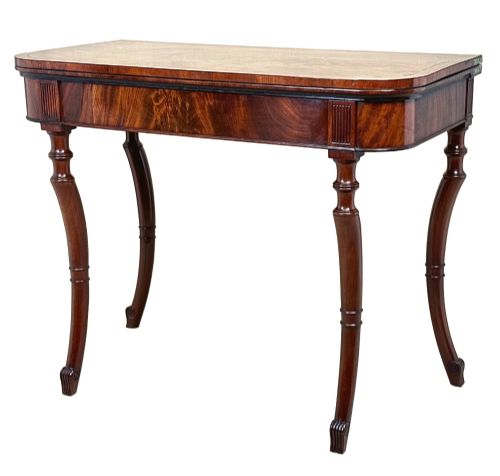
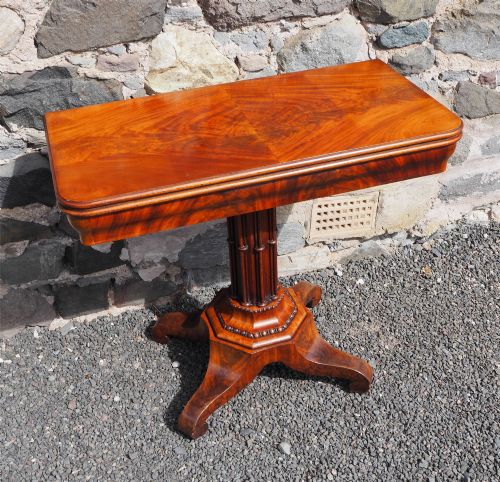
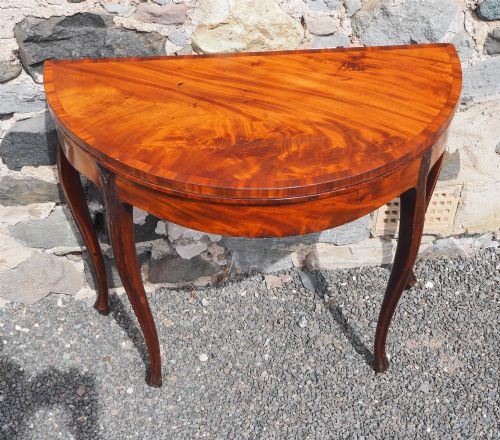
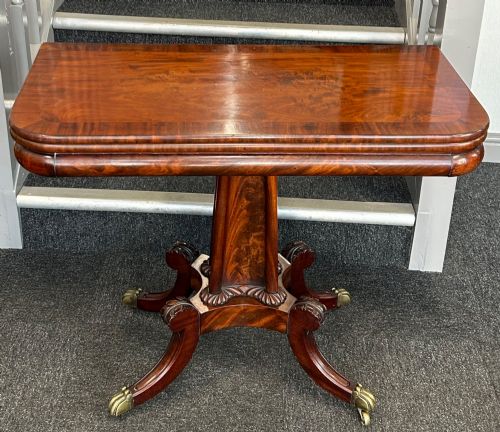
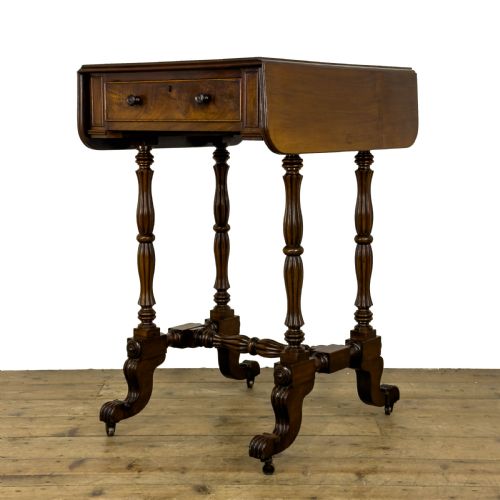
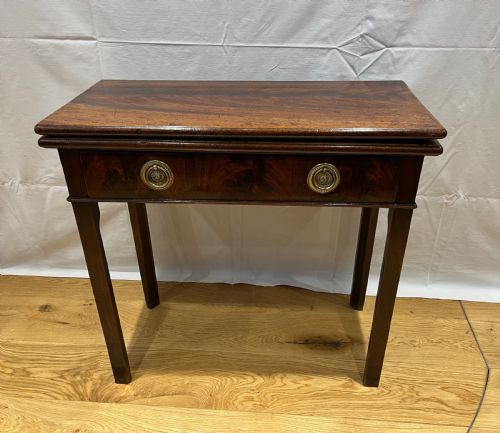
The version most commonly met on this page uses flame mahogany veneer over a solid wood carcase, often featuring a D-shape or fold-over top. Makers shaped these surfaces to sit against a wall when closed, opening to reveal a larger timber expanse for hospitality.
How they were made
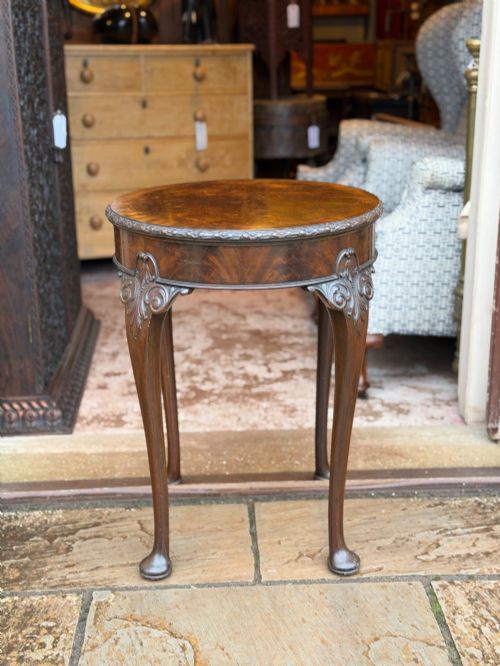
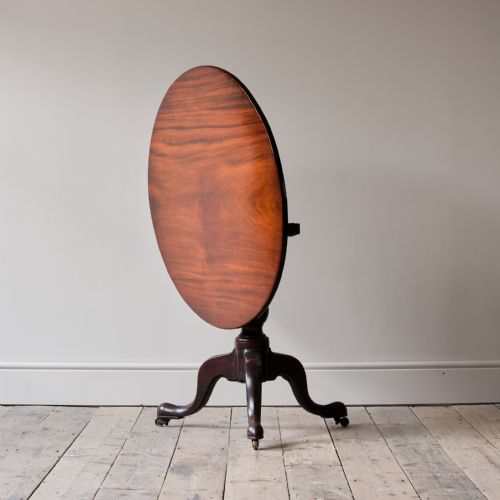
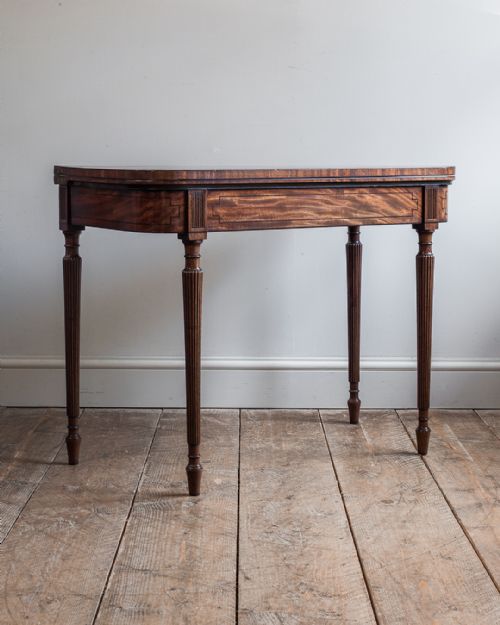
Cabinet makers selected choice cuts of flame mahogany veneer to create striking, rippled grain patterns across the primary surfaces. They laid these thin veneers carefully over stable secondary timbers to prevent warping.
Inlayers occasionally added boxwood stringing or brass details to accent the edges of the fold-over tops and pedestals. Joinery relied on precise manual cutting, securing tops with pivoting hinges and sturdy framing.
Flamed Mahogany Tea Table Retail Price Guide 2026
Typical asking prices for flamed mahogany tea table among the pieces listed under this phrase on Sellingantiques today, from the lower quarter to the upper quarter. They describe what is for sale here now, not the wider market.
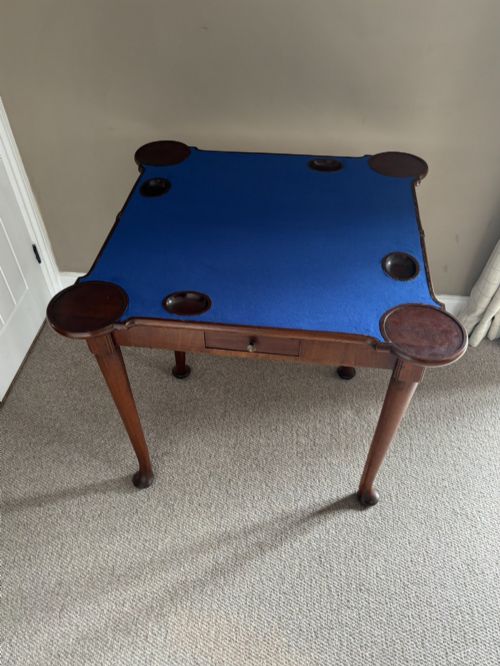
Some tables hide tiny secret wells beneath their folding tops, originally intended for storing playing cards and counters.
What varies in quality
Quality rests heavily on the depth and symmetry of the flame mahogany veneer figure across the top. Stronger examples display a vivid, undulating grain pattern that matches cleanly along the fold line.
Construction solidity and the crispness of carved pedestals or edge banding further separate finer pieces from simpler workshop productions. The smoothness of the hinge action and the integrity of the underlying wood carcase determine daily durability.
Gillows
The Flamed Mahogany Tea Table Glossary
- Flame mahogany veneer
- A thin slice of wood cut from where a branch joins the main trunk, producing a distinctive flame-like pattern. This material defines the decorative appeal of many classical tables.
- Fold-over top
- A hinged surface that doubles in area when opened flat. It allows a compact wall table to transform into a larger serving or gaming space.
- Boxwood stringing
- A narrow line of pale yellowish wood inlaid into darker timber for contrast. Makers utilised this technique to outline borders and geometric panels.
- D-shaped
- Descriptive of a top or table base shaped like a capital letter D. This outline allowed tables to fit neatly against drawing room walls.
Flamed Mahogany Tea Table: Frequently Asked Questions
How do I care for a flamed mahogany tea table?
Keep the wood away from direct sunlight and extreme radiator heat to prevent the veneer from drying out or cracking over time. Apply a microcrystalline wax occasionally to protect the finish and maintain the natural lustre of the grain.
Avoid placing damp cups or wet items directly on the polish to prevent ring marks. Use coasters and dust the surface regularly with a soft dry cloth.
Can I use these tables for daily dining?
These tables were built for serving tea or social card games rather than heavy daily family meals. The hinged mechanisms and delicate veneer require gentle handling during use.
They function well as occasional display surfaces or side tables in a living space. Opening the leaf should be done with care to support the pivot hinges properly.
How do I date a Regency tea table?
Examine the pedestal base, leg styling, and timber selection to determine the likely period of manufacture. Regency and George III examples often feature robust pillar supports, brass castors, and rich flame mahogany figuring.
Later Victorian variations tend to show heavier pedestals and slightly different proportioning in the carcase. Comparing the secondary timbers inside the frame also helps narrow down the decade.
What is the difference between a tea table and a card table?
Tea tables were designed primarily to hold porcelain service during afternoon gatherings, often featuring simpler fold-over or fixed tops. Card tables typically include lined playing surfaces and internal spaces for counters or chips.
Many antique examples served multiple social functions, operating interchangeably as side consoles, games tables, and tea surfaces depending on the room arrangement.