

Flamed Mahogany Dresser
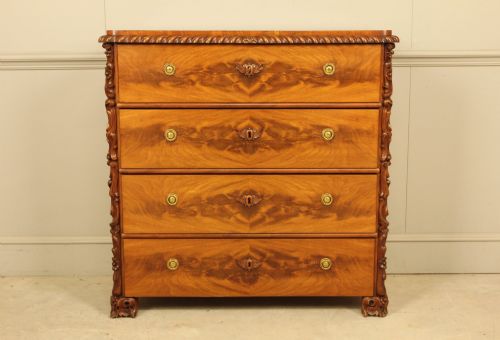
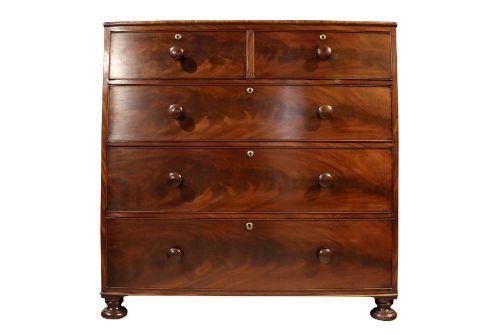
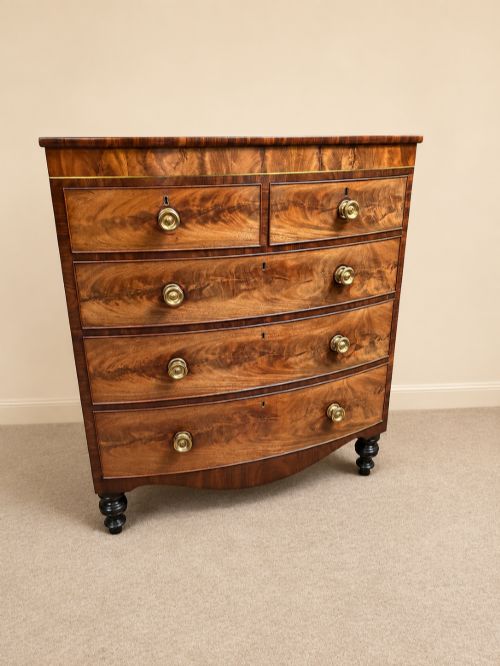
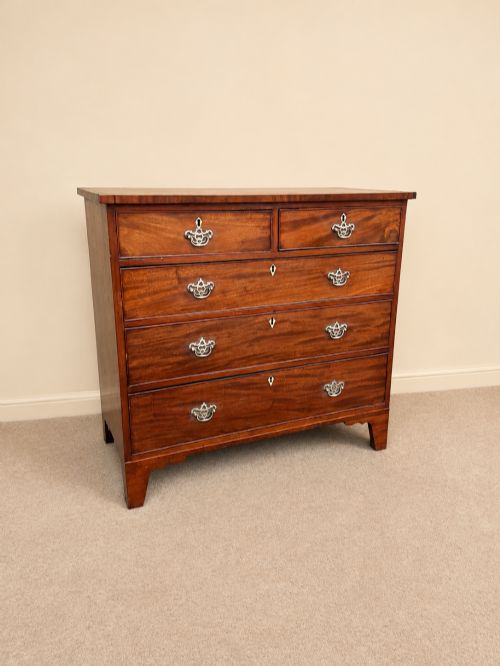
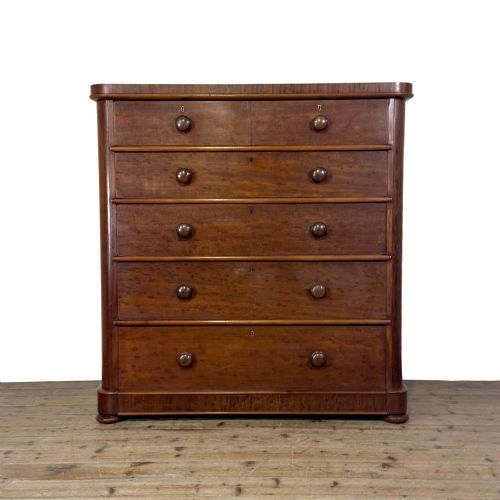
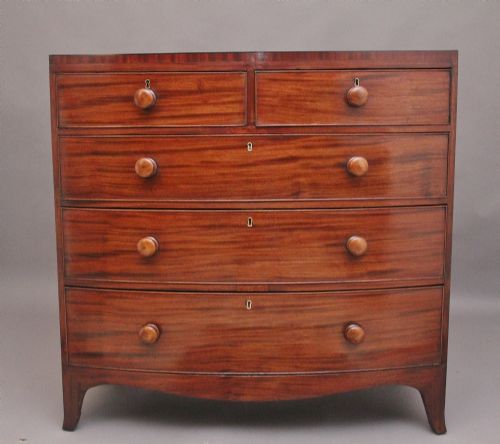
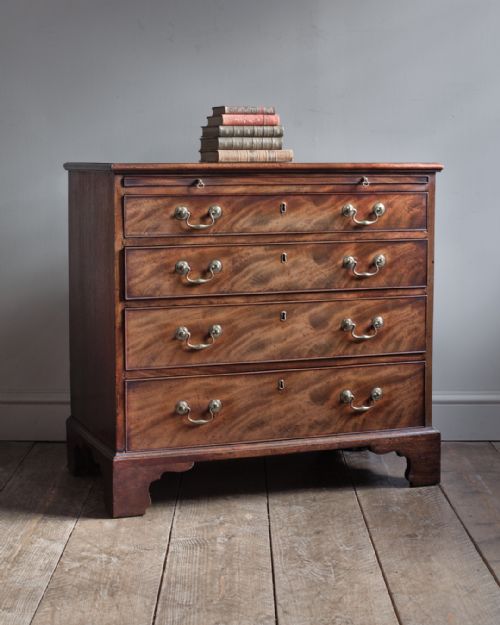
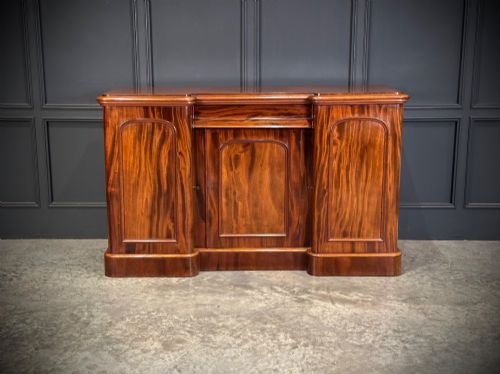
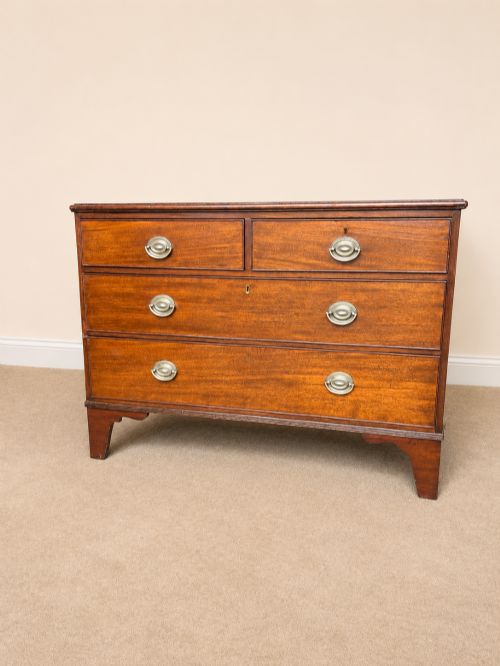
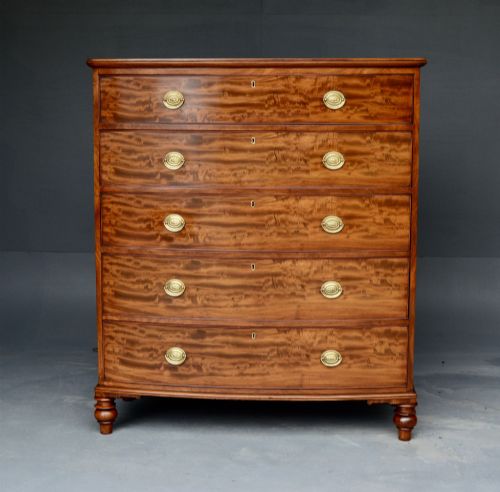
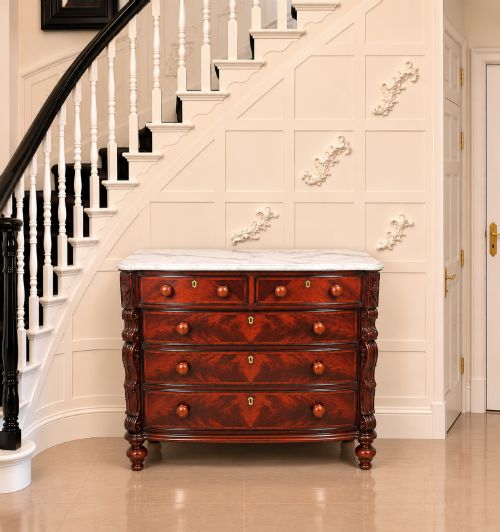
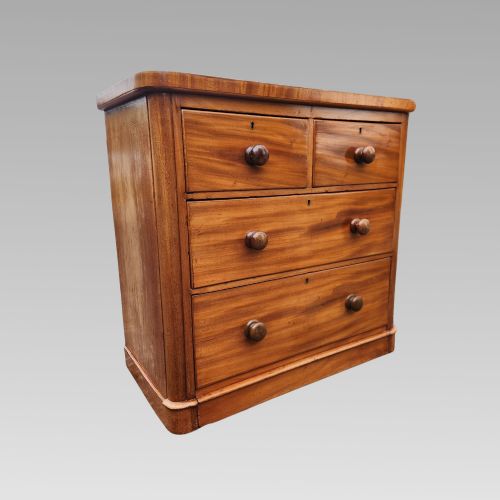
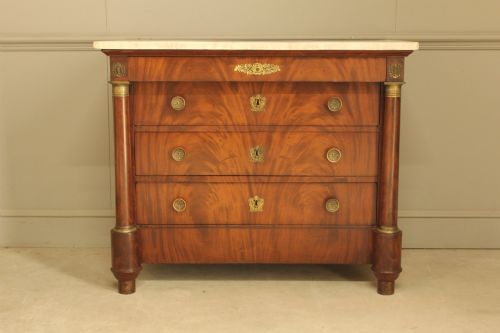
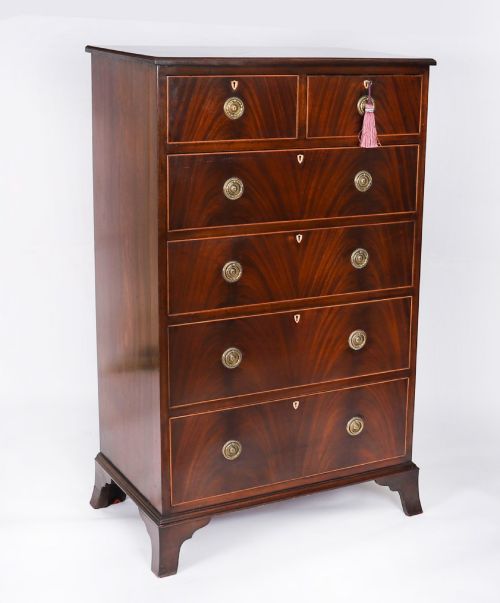
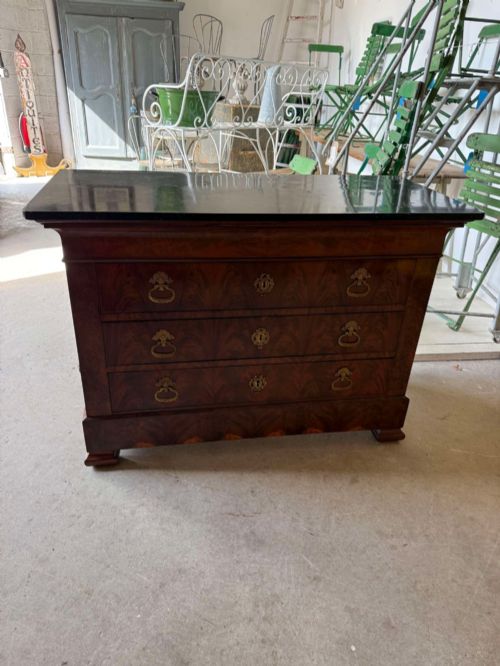
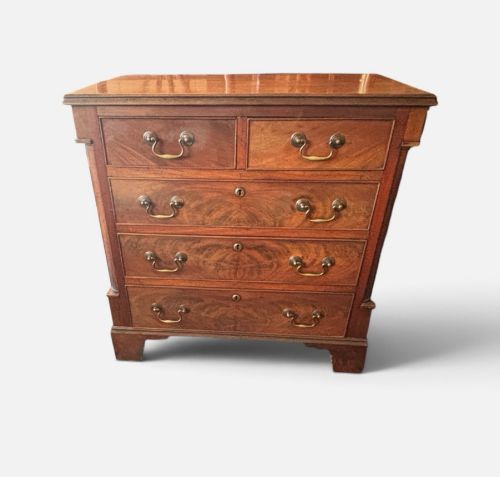
A flamed mahogany dresser brings distinctive timber figuring and robust storage to an interior, drawing the eye with rich grain patterns.
Flamed Mahogany Dresser
The selection ranges from compact small chests to large sideboards and bookcases with cabinet elements. Pieces span specific eras such as the Georgian and Regency periods, alongside later revival styles from the twentieth century. Regional variations, including Scottish and Welsh examples, add distinct structural details to the standard forms.
Materials and Construction
Cabinet makers utilised solid mahogany and flame mahogany veneer applied over secondary timbers like oak. Drawer linings frequently consist of oak, while brass handles and occasionally bone detailing provide structural and decorative hardware.
Veneers were sliced and laid out symmetrically to create dramatic flame patterns across drawer fronts and doors. Carved wooden elements, glass panels in bookcase sections, and secret drawers demonstrate the joinery techniques employed by period workshops.
Flamed Mahogany Dresser Retail Price Guide 2026
Typical asking prices for flamed mahogany dresser among the pieces listed under this phrase on Sellingantiques today, from the lower quarter to the upper quarter. They describe what is for sale here now, not the wider market.
Listings feature mahogany, oak, brass, and glass across Georgian, Regency, and Victorian periods.
Assessing Quality and Execution
Quality rests in the intensity and book-matching of the flame mahogany veneer across the drawer fronts. Finer examples display continuous grain flow and careful selection of figured timber that catches the light.
Construction details such as oak-lined drawers, original brass hardware, and precise serpentine or bowfront curves distinguish superior pieces from standard production. The crispness of carved elements and the overall integrity of the carcase determine the standing of each item.
Gillows·Whytock & Reid
The Flamed Mahogany Dresser Glossary
- Flame mahogany veneer
- A thin slice of mahogany timber cut from the fork of the tree where branches meet the trunk, producing a distinctive flame-like grain pattern. This figure is prized for its decorative impact on cabinet fronts.
- Bowfront
- A convex, curved front profile popular on chests of drawers and sideboards during the Georgian and Regency periods. This shape softens the room's geometry.
- Serpentine
- A front outline shaped with a central convex curve flanked by concave sweeps. Cabinet makers utilised this profile on high-status case pieces.
- Oak lined
- Drawer construction utilising oak for the interior sides and bottoms. This denotes robust workshop practice in better-quality furniture.
- Secret drawer
- A concealed compartment built into the carcase, often hidden behind a moulding or beneath the top surface. It provided a secure space for valuables.
Flamed Mahogany Dresser: Frequently Asked Questions
How do I date a mahogany chest?
Dating relies on architectural proportions, handle styles, foot configurations, and secondary woods like oak drawer linings. Georgian and Regency pieces show distinct construction traits compared to later Victorian and Edwardian examples.
Examining the dovetails and backboards provides further clues to the manufacturing decade, distinguishing eighteenth-century originals from later revival interpretations.
What is flame mahogany?
Flame mahogany is a highly figured veneer cut from the junction where branches meet the main trunk of the tree. The resulting grain creates a shimmering, fire-like pattern.
Cabinet makers reserved this striking timber for the most prominent surfaces, particularly drawer fronts and cabinet doors, to create visual depth.
How do I care for antique mahogany?
Keep mahogany furniture away from direct sunlight and heat sources to prevent the timber from drying out and the veneer from lifting. Regular dusting with a soft, dry cloth preserves the finish.
Application of traditional wax polish maintains the lustre of the timber without building up heavy chemical layers over time.