




Flamed Mahogany Chairs
These flamed mahogany chairs bring rich grain patterns and classical lines into any room, offering both sturdy seating and period presence.
Flamed Mahogany Chairs
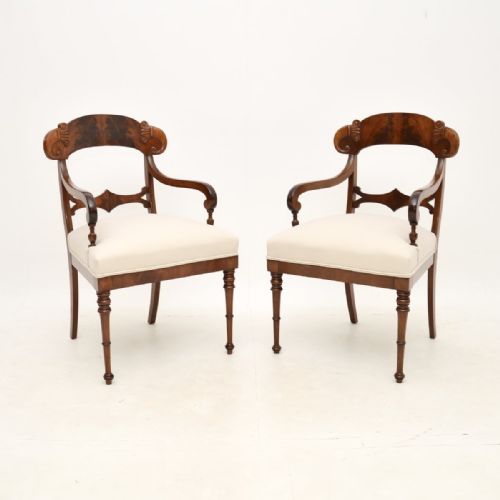
When buyers search for flamed mahogany chairs, they encounter seating fashioned from timber chosen for its dramatic, undulating grain figures. The examples here span periods from the eighteenth century through to the nineteenth century, encompassing Georgian, Regency, William IV, and Swedish Empire styles.
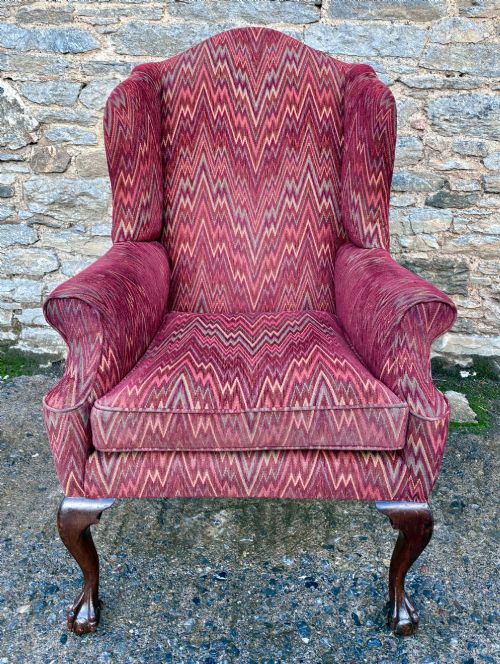
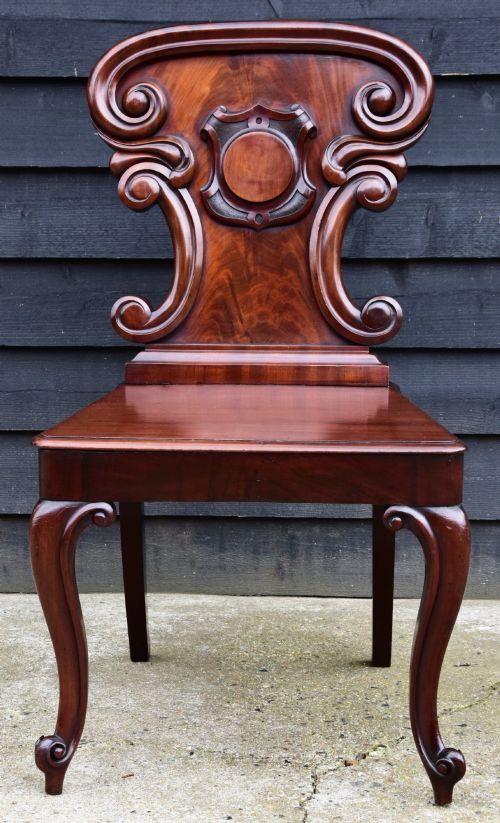
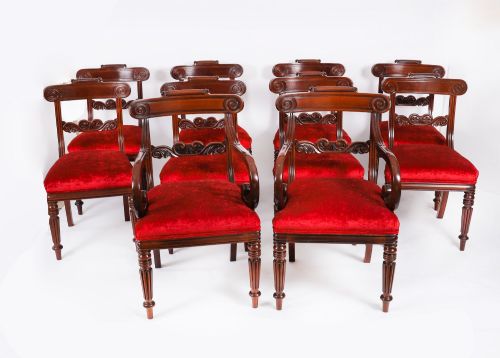
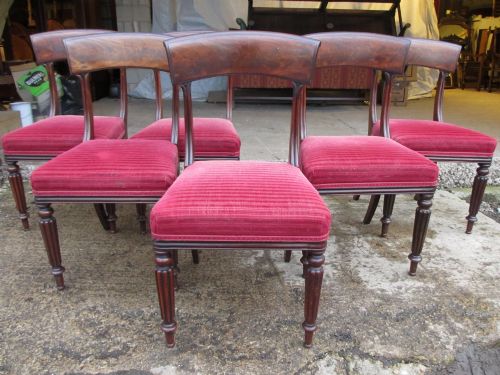
The forms on this page include dining chairs, armchairs, hall chairs, and carver desk armchairs. Buyers are most likely to meet sets of dining chairs alongside single armchairs and hall chairs originating from the Georgian and Regency eras.
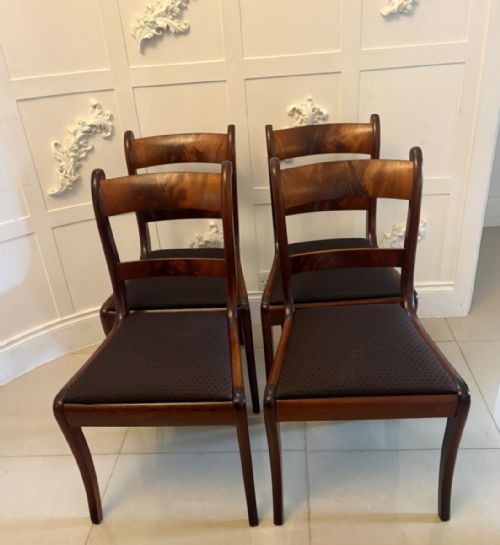
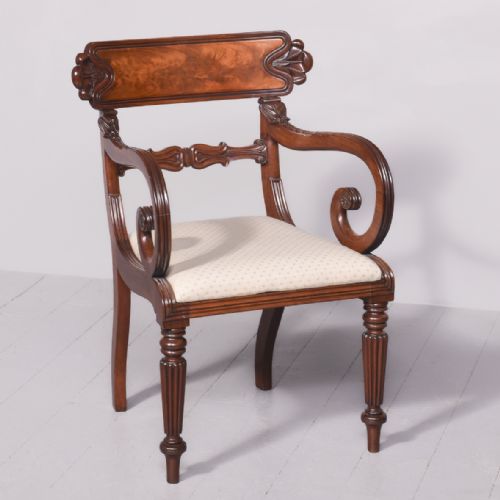
Makers shaped these pieces during distinct historical phases, producing robust forms like bar back dining chairs with sabre legs and Scottish mahogany armchairs. Each object reflects the prevailing design vocabulary of its decade, balancing practical utility with decorative impact.
How they were made
Cabinetmakers constructed these frames using solid mahogany and flame mahogany veneers, selecting timber for its natural decorative figuring. Metal details such as brass appear on selected pieces to accent the woodwork.
Upholstery fabrics, including velvet and standard textiles, complete the seats of the armchairs and dining chairs. Craftsmen applied traditional joinery techniques to build robust dining sets and individual hall chairs designed for daily use.
Flamed Mahogany Chairs Retail Price Guide 2026
Typical asking prices for flamed mahogany chairs among the pieces listed under this phrase on Sellingantiques today, from the lower quarter to the upper quarter. They describe what is for sale here now, not the wider market.
Several dining sets on this page include ten matching chairs, ensuring that even large eighteenth-century dinner parties could sit in unison.
What varies in quality
The visual strength of the flame mahogany figure dictates much of the character across different examples. Timber selected for deep, undulating patterns commands attention, while plainer boards present a more uniform surface.
Construction detail separates standard seating from finer expressions. Well-defined carving on bar backs, elegant sabre legs, and the balance of large dining sets distinguish the more ambitious pieces from simpler utility items.
The Flamed Mahogany Chairs Glossary
- Flame mahogany
- A veneer cut from the fork of the mahogany tree, displaying a distinctive, flickering grain pattern. This timber is prized for its dramatic visual movement.
- Sabre leg
- A concave, outwardly curving furniture leg that tapers toward the foot. This form is characteristic of Regency design.
- Bar back
- A horizontal top rail on a chair back shaped like a curved bar. It provides structural support while offering a clean silhouette.
- Carver arm-chair
- An armchair designed to sit at the head of a dining table or serve as a desk chair. These pieces feature integrated armrests for added support.
- Gainsborough armchair
- A wide, upholstered armchair with open padded arms and short legs. Eighteenth-century versions offer generous proportions and refined framing.
Flamed Mahogany Chairs: Frequently Asked Questions
What periods do these chairs date from?
The pieces span the eighteenth century and the nineteenth century. They include examples from the Georgian, Regency, William IV, and George IV eras.
Specific dates within the listings stretch from around eighteen hundred through to the mid-nineteenth century, capturing several decades of shifting cabinetmaking styles.
Are these chairs suitable for daily dining?
Many of these pieces are sturdy dining chairs built in large sets designed for regular use around a table.
Buyers should consider the seat height, upholstery fabric, and overall frame stability when planning to use period seating for everyday meals.
How do I identify a Regency style chair?
Regency chairs often feature classical motifs inspired by ancient Rome and Greece, including sabre legs and horizontal bar backs.
They rely on clean architectural lines paired with the rich figuring of mahogany or flame mahogany veneer to create a formal appearance.
What is the difference between a carver and a hall chair?
A carver armchair includes supportive armrests and is traditionally placed at the head of a dining table or used at a desk. Hall chairs are typically solid wood without upholstery, designed to stand in entrance halls.
Hall chairs generally feature carved wooden backs and sturdy wooden seats rather than the cushioned textiles found on armchairs.