

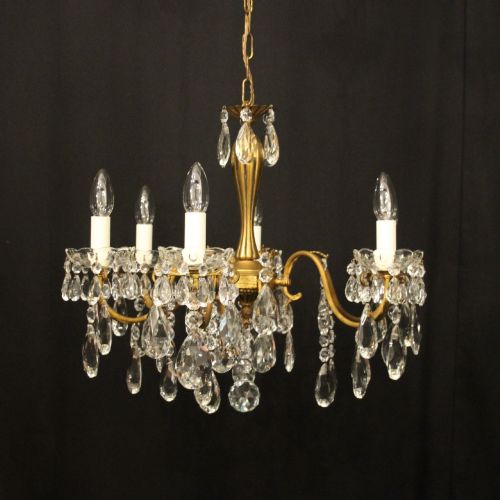
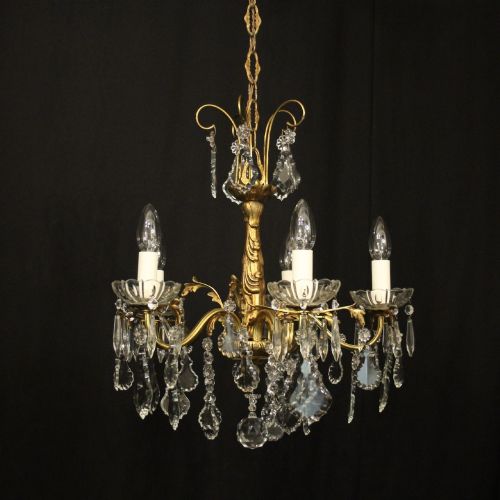
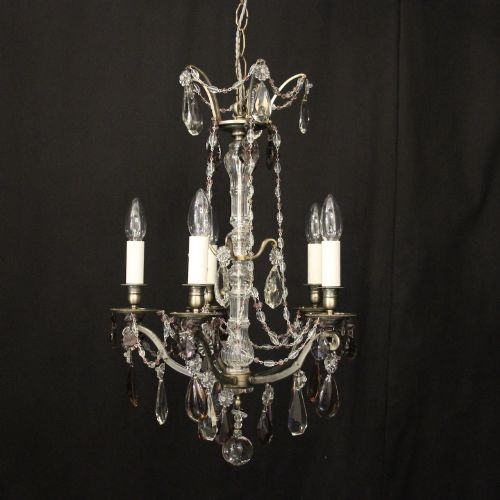
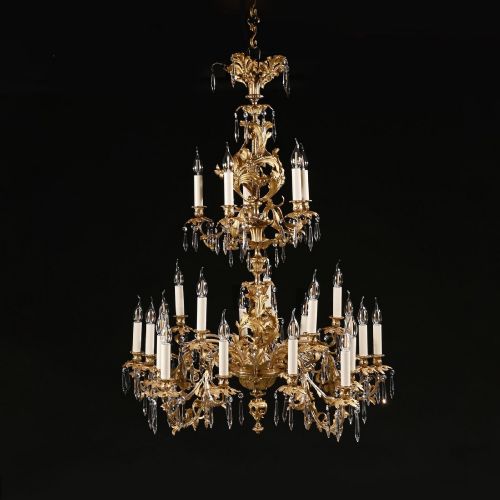



Five Light Glass Chandelier
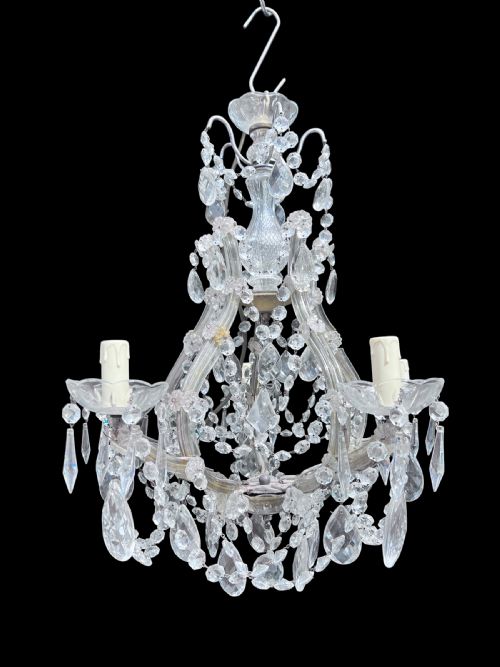
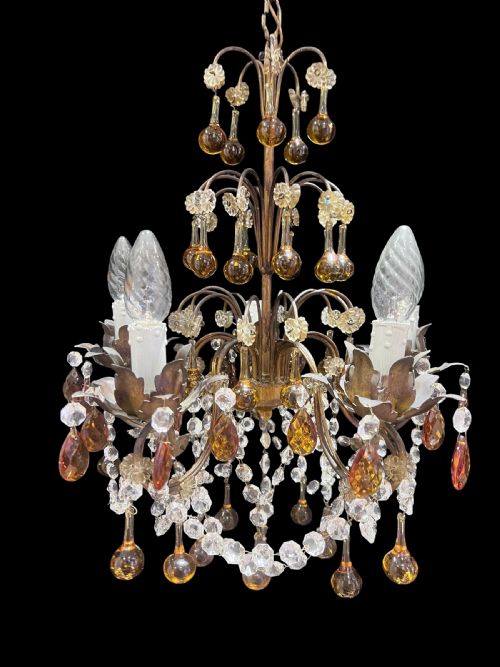
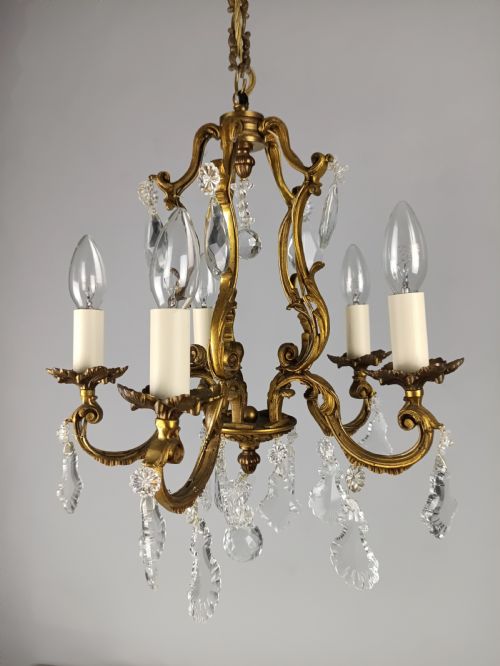
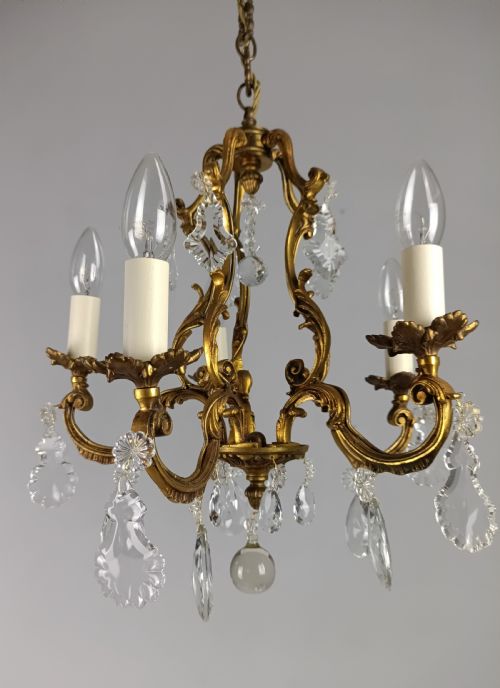
A five light glass chandelier brings a striking focal point and bright illumination to a room, drawing the eye upwards with its polished structure and hanging crystals.
Five Light Glass Chandelier
When you search for a five light glass chandelier, you encounter a curated selection of multi-arm hanging light fixtures designed to hold five distinct bulbs or candles. These pieces emerge from periods ranging from the eighteenth century through the art deco era and the early twentieth century.
Most entries are complete hanging fixtures, though the category occasionally accommodates individual components such as chandelier arms and specialised capitals. The forms span from compact early twentieth-century creations to more ornate tiered and gilded configurations.
Materials and construction
Makers constructed these fixtures using robust metal frameworks of brass, gilt brass, gilt metal, beaten copper, or bronze to support the overall weight. They then combined these metallic backbones with components of clear glass, cut glass, crystal, and frosted glass.
Surface treatments frequently involve silver gilding or traditional gold gilding applied to the metal frames to catch and reflect the ambient light. Artisans finished the glass elements through cutting, etching, and colouring, occasionally incorporating ruby glass or distinct crystal drops.
Five Light Glass Chandelier Retail Price Guide 2026
Typical asking prices for five light glass chandelier among the pieces listed under this phrase on Sellingantiques today, from the lower quarter to the upper quarter. They describe what is for sale here now, not the wider market.
Periods represented range from the eighteenth century through the Edwardian era and the art deco period.
What separates the tiers of quality
The distinction between standard and superior pieces rests upon the precision of the metal casting and the clarity of the glass or crystal components. Heavier bronze and finely chased gilt brass frameworks demonstrate greater structural ambition than simpler pressed metal alternatives.
Quality also reveals itself in the treatment of the glass elements, where hand-cut facets, etched details, and coloured crystals generate superior light refraction compared to plain moulded glass. The integration of harmonious decorative elements, such as swags, drips, and angelic capitals, elevates the overall execution.
The Five Light Glass Chandelier Glossary
- Crystal
- Glass containing lead oxide, which increases its weight, brilliance, and ability to refract light into spectral colours. This material is typically hand-cut and polished to enhance sparkle.
- Gilt Brass
- Brass that has been treated with a thin layer of gold leaf or gold paint to give it a rich, metallic yellow sheen. It provides a durable and decorative surface for fixture frames.
- Cut Glass
- Glass shaped and patterned using abrasive wheels to create sharp facets and geometric designs. These cuts maximise the reflection and dispersion of light across a room.
- Frosted Glass
- Glass that has been rendered opaque through acid etching or sandblasting to diffuse light softly. This technique reduces glare while maintaining a warm ambient glow.
- Chandelier Arm
- A curved branch extending from the central stem of a light fixture to support a candle pan and bulb holder. These arms are often shaped to match the primary style of the piece.
Five Light Glass Chandelier: Frequently Asked Questions
How do I clean a glass chandelier?
Maintenance involves dusting the fixture regularly with a soft brush and washing individual glass drops with a mild soapy solution when necessary. Support the components securely during cleaning to prevent accidental detachment.
Avoid using harsh chemical sprays directly on the metal frames or crystal elements, as these substances can damage delicate gilding and finishes.
Are these chandeliers suitable for low ceilings?
Many examples are designed with specific drop heights, and some compact pieces measure under twelve inches overall. Reviewing the listed dimensions helps determine appropriate placement.
Installing a smaller or more compact configuration prevents the fixture from dominating a restricted vertical space while still providing adequate illumination.
How do I date an antique chandelier?
Dating relies on examining the manufacturing techniques, the types of metal alloys utilised, and the specific stylistic markers of periods like the Edwardian era or art deco. Fasteners, wiring remnants, and casting methods also offer clues.
Comparing the decorative motifs, such as Baroque Palladian details or Florentine gilt framing, against known historical periods assists in narrowing down the age.
Can modern bulbs be used in these fixtures?
Most antique fixtures accommodate modern electrical fittings with appropriate professional rewiring to meet current safety standards. Low-heat LED bulbs are often chosen to replicate the warm glow of historical lighting.
Consulting a qualified electrician ensures that the vintage wiring and lamp holders are safely adapted for contemporary domestic use.