



Fitted Flatware Box
A fitted flatware box organises silver and cutlery securely, offering handsome woodwork and velvet interiors that elevate any dining room sideboard.
Fitted Flatware Box
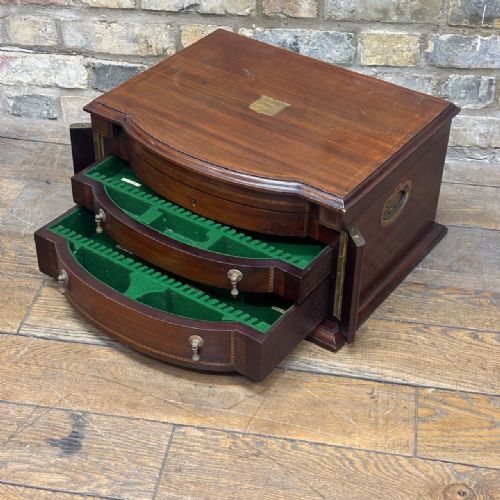
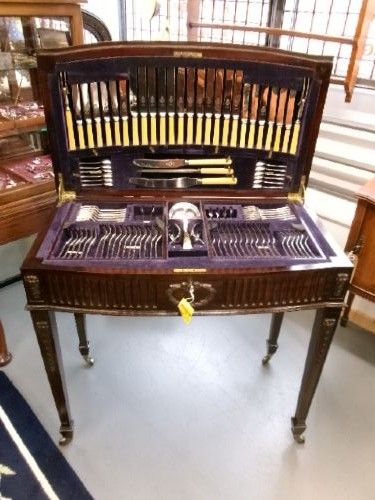
The versions you are most likely to meet on this page span from the mid-eighteenth century to the mid-twentieth century, encompassing styles from George III serpentine forms to Art Deco canteens. Makers such as Walker & Hall, Mappin & Webb, and Cooper Brothers and Sons often produced these pieces to house complete dining services.
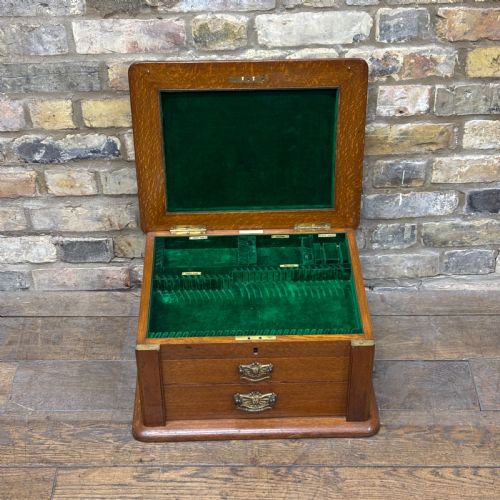
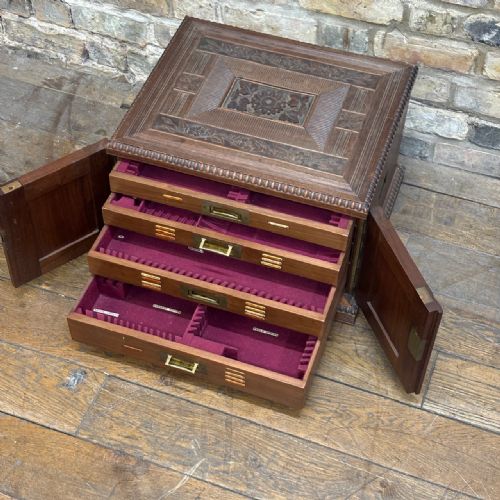
Many examples incorporate specialised interiors lined with velvet or silk, alongside brass fittings that secure the lid and drawers. Whether housing a large canteen of over one hundred pieces or a modest set of coffee spoons, each box reflects the domestic dining customs of its period.
What varies in quality
The calibre of a fitted flatware box often depends on the selection of timber and the precision of the internal joinery. Finer examples display carefully figured grain on the exterior and robust, dovetailed partitions inside that firmly secure each piece of cutlery.
Hardware and lining materials also distinguish the tiers of quality, with substantial brass fittings and high-grade silk or velvet interiors elevating the piece. Complete, original sets of flatware matching the designated slots command greater interest than empty boxes or mismatched contents.
Fitted Flatware Box Retail Price Guide 2026
Typical asking prices for fitted flatware box among the pieces listed under this phrase on Sellingantiques today, from the lower quarter to the upper quarter. They describe what is for sale here now, not the wider market.
Some Edwardian canteens still retain faint traces of pipe smoke trapped inside their velvet linings from decades spent in gentleman's studies.
Walker & Hall·Mappin & Webb·Cooper Brothers and Sons
The Fitted Flatware Box Glossary
- Canteen
- A fitted box or cabinet designed specifically to hold a complete set of cutlery and flatware. These containers ensure every spoon and fork has a designated, secure slot.
- Serpentine
- A furniture front curving inward centrally and convexly outward at the sides, often seen on finer Georgian pieces. This contour adds considerable visual movement and elegance to the wooden carcase.
- Sterling silver
- A silver alloy containing 92.5 percent pure silver and 7.5 percent other metals, usually copper, chosen for durability. Items made to this standard typically bear official hallmarks denoting their purity.
- Silver plate
- A base metal coated with a thin layer of pure silver through electrochemical or mechanical processes. It provided a brilliant appearance akin to solid silver at a more accessible cost for larger canteens.
- Flatware
- Dining utensils used for eating, such as forks, spoons, and knives, distinct from larger serving pieces. In these boxes, flatware rests neatly within custom-lined trays or vertical slots.
Fitted Flatware Box: Frequently Asked Questions
What is a fitted flatware box used for?
These boxes store and protect dining cutlery, serving spoons, and teaspoons within dedicated internal compartments. They keep silver and silver plate organised and ready for formal dining.
Historically, they sat in dining rooms or butler's pantries to maintain the condition of valuable tableware between meals.
How do I clean the interior velvet?
Gentle dusting with a soft, dry brush usually suffices to remove loose particles from the fabric lining. Avoid using liquid cleaners that might stain the textile or damage the underlying wood.
Professional restoration may be necessary for delicate silk or heavily worn velvet linings to preserve the original character.
Can I store modern cutlery inside?
Many older compartments accommodate contemporary utensils, though slot sizes vary according to nineteenth and twentieth-century dining standards. Thicker modern handles might not fit into antique partitions designed for slimmer silver pieces.
Checking the internal dimensions helps ensure your specific flatware set will slide neatly into place.
How do I identify the period?
Wood choice, hardware style, and construction methods offer strong clues to the date of manufacture. Georgian boxes often feature mahogany with serpentine fronts, while Edwardian canteens frequently utilise oak with brass mounts.
Maker marks, retailer stamps, and silver hallmarks provide definitive dates and attributions for the enclosed flatware.