

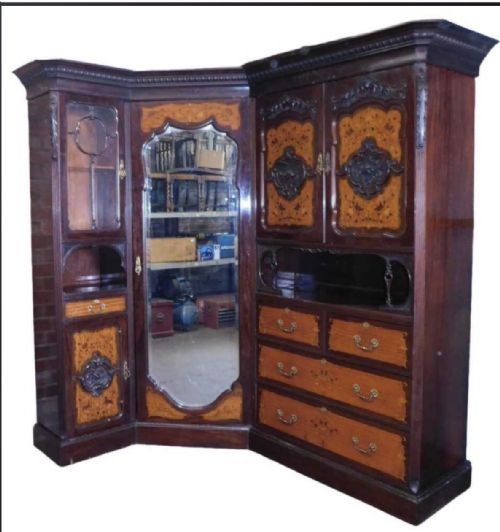


Fitted Corner Furniture
Fitted corner furniture makes clever use of awkward spaces, offering practical storage disguised as handsome woodwork from the Georgian and Victorian eras.
Fitted Corner Furniture
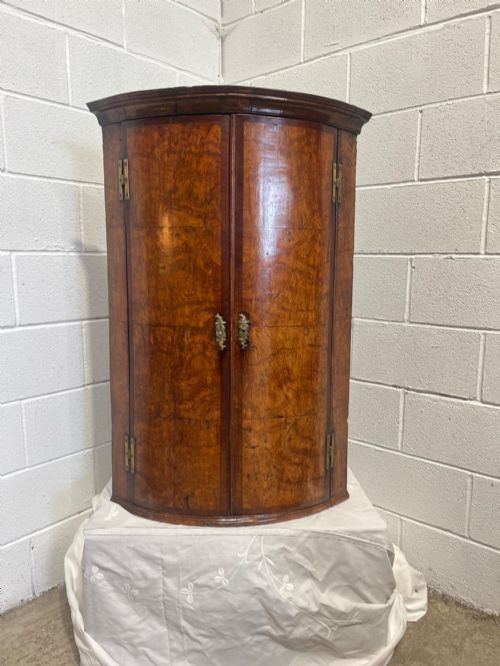
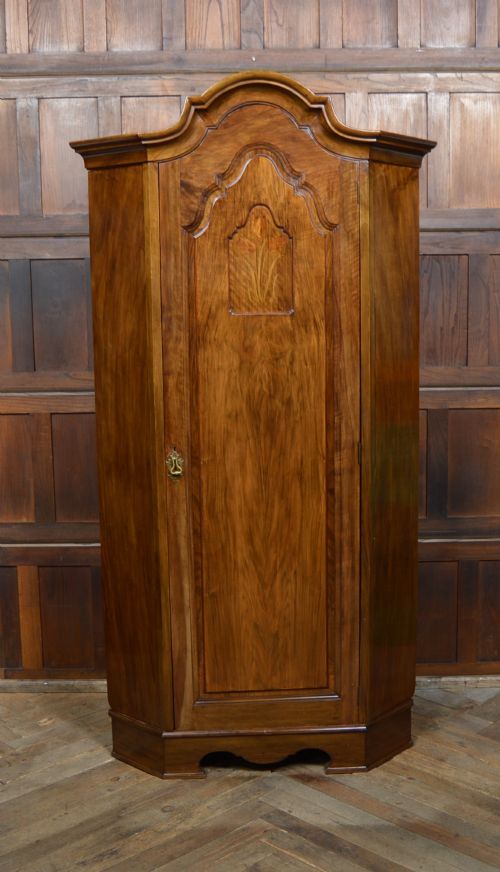
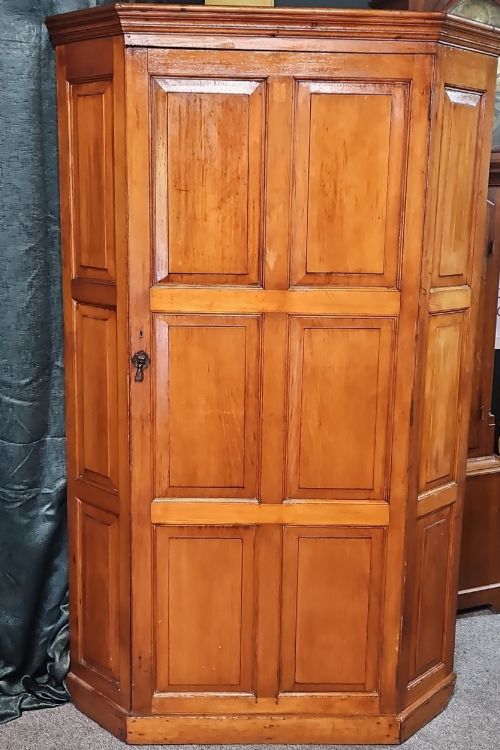
Fitted corner furniture transforms dead room junctions into functional storage, appearing here primarily as robust corner cupboards, corner wardrobes, and corner bookcase cabinets. You encounter these pieces most frequently in Georgian oak or Victorian mahogany, built to maximise room capacity without dominating the floor space.
The selection ranges from tall nineteenth-century corner robes and compactum wardrobes to smaller eighteenth-century corner cupboards. These items served domestic and campaign purposes alike, adapting traditional joinery to meet specific architectural demands of period interiors.
How they were made
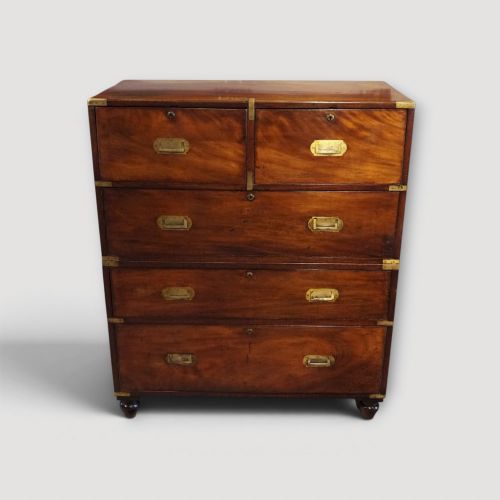
Cabinet makers utilised dense hardwoods such as mahogany, walnut, and oak, often enhancing surfaces with burr oak veneers, satinwood inlay, or intricate marquetry. Brass fittings, corner brackets, and bound edges provided structural reinforcement, particularly on pieces designed for military campaigns or frequent transport.
Joiners constructed these items to fit precise right angles, employing solid timbers alongside camphorwood and pine for internal or regional builds. Glass door panels and brass hardware completed the construction, balancing heavy timber frames with functional display elements.
Fitted Corner Furniture Retail Price Guide 2026
Typical asking prices for fitted corner furniture among the pieces listed under this phrase on Sellingantiques today, from the lower quarter to the upper quarter. They describe what is for sale here now, not the wider market.
This site's listings feature Victorian and Georgian pieces built from mahogany, walnut, oak, and camphorwood.
What varies in quality
The calibre of fitted corner furniture rests upon timber selection and the precision of the joinery required to meet a strict ninety-degree angle. Finer examples display beautifully figured grain in the mahogany or burr oak, paired with crisp marquetry and substantial brass hardware rather than utilitarian fastenings.
Constructive integrity separates standard production from exceptional cabinet work, seen in how tightly the doors close and how cleanly the timber meets the wall. Pieces bearing identified workshop stamps or integrated campaigns demonstrate a higher grade of design thought and execution.
Goodhall Lamb and Heighway of Manchester
The Fitted Corner Furniture Glossary
- Compactum
- A multi-compartment wardrobe designed to hold a wide variety of clothing in a single fitted unit. It often combines hanging space with drawers and smaller shelves.
- Campaign furniture
- Portable pieces made for military officers on the move, typically featuring recessed brass handles, reinforced corners, and dismantlable sections. These items prioritised sturdy construction and clever space-saving design.
- Marquetry
- Decorative woodwork where small pieces of veneer are fitted together to form geometric or floral patterns. This technique adorns the primary surfaces of finer cabinets and wardrobes.
- Burr oak
- Timber taken from a tree growth that produces swirling, highly textured grain patterns. Cabinet makers prized this wood for its decorative visual impact on prominent doors and panels.
Fitted Corner Furniture: Frequently Asked Questions
How do I place corner furniture?
These pieces are designed specifically to anchor into room junctions, turning unused angles into focal points. Measure your wall returns carefully to ensure the cabinet depth matches the available space.
Positioning them away from direct heat sources protects the antique timber veneers and solid joints from splitting over time.
What is a compactum wardrobe?
A compactum is a specialised fitted wardrobe that packs multiple storage functions into one footprint. It combines hanging sections with interior drawers and shelving.
This format became popular in the Victorian period for maximising clothing storage in smaller dressing rooms.
Are these pieces solid wood?
Period items employ a mixture of solid hardwoods like mahogany and oak, alongside supportive secondary timbers such as pine or camphorwood. Finer surfaces frequently showcase decorative veneers over stable core boards.
Inspect the interior construction and drawer linings to understand the material hierarchy used by the original cabinet maker.