



Fitted Clothes Cabinet
A fitted clothes cabinet offers substantial storage, combining hanging space and internal drawers within periods ranging from the eighteenth century to the twentieth.
Fitted Clothes Cabinet
A fitted clothes cabinet provides structured internal storage such as sliding trays, hanging sections, and drawers behind panelled doors. When searching for a fitted clothes cabinet, buyers encounter forms spanning wardrobes, compactums, linen presses, and armoires across multiple eras.
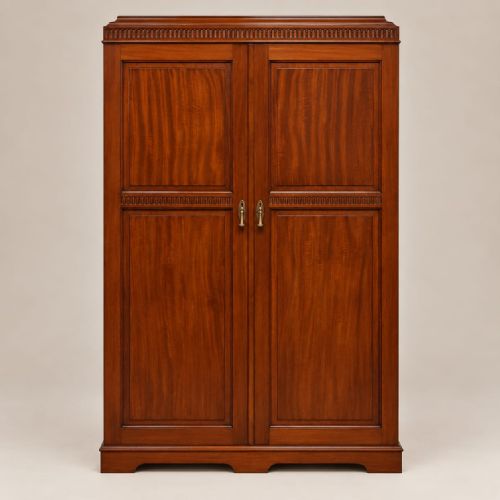
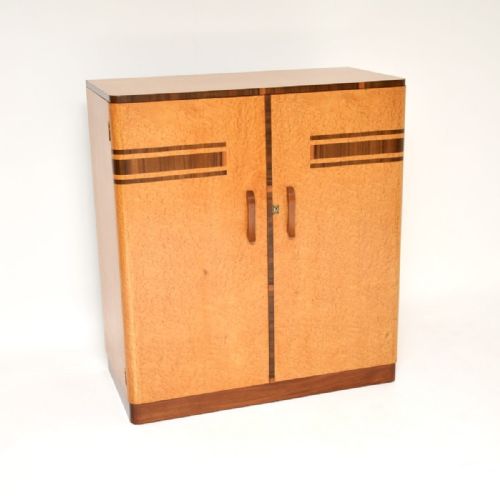
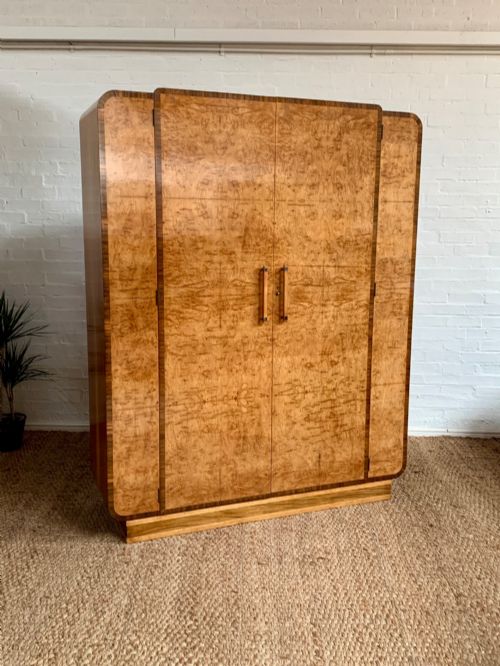
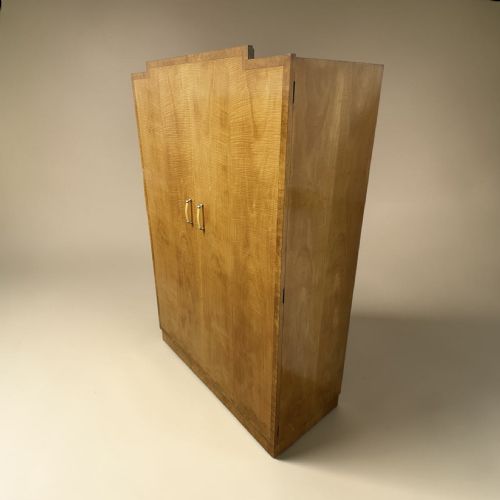
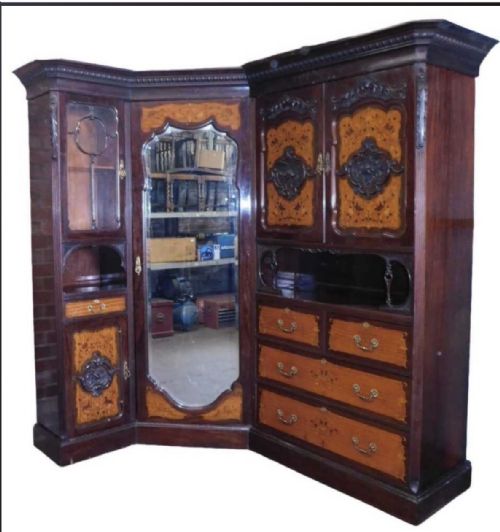
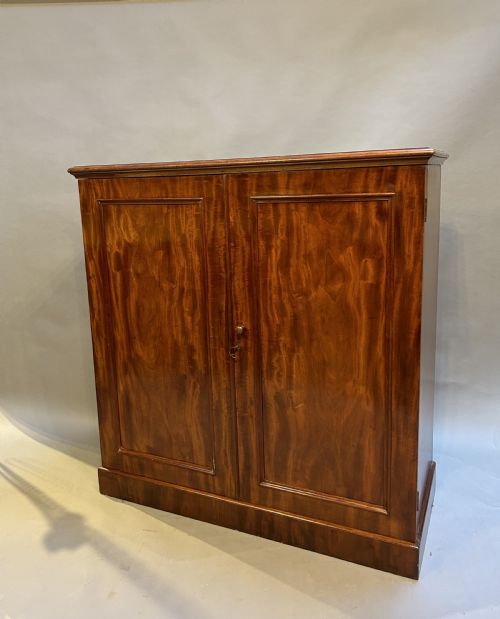
The materials and styles visible on this page range from Victorian mahogany and Edwardian satinwood to Art Deco walnut and Chinoiserie lacquer. Pieces originate from periods including the eighteenth century, the nineteenth century, the Edwardian era, and the nineteen-twenties and thirties.
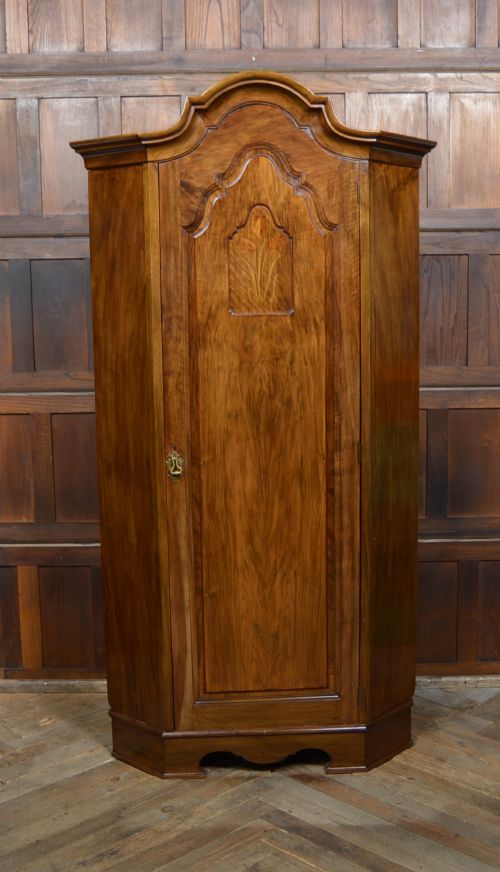
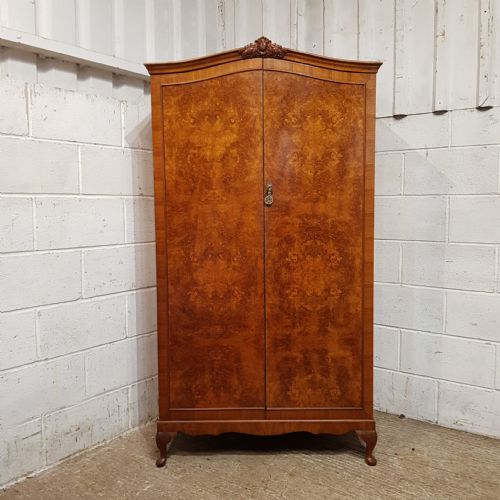
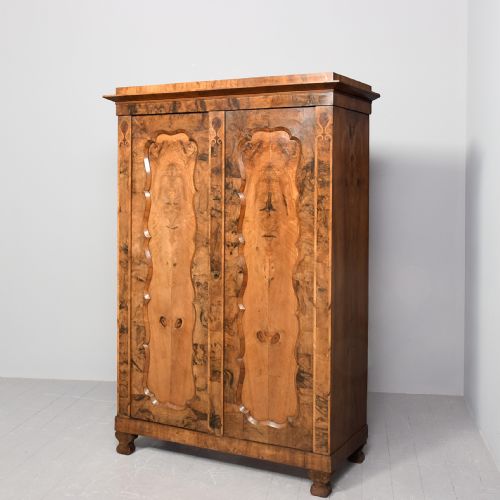
Many examples incorporate specialised internal compartments, mirror doors, and corner configurations designed for domestic utility. Cabinetmakers utilised varied timber grains like burr walnut and flame mahogany to enhance the exterior appearance of these substantial items.
How they were made
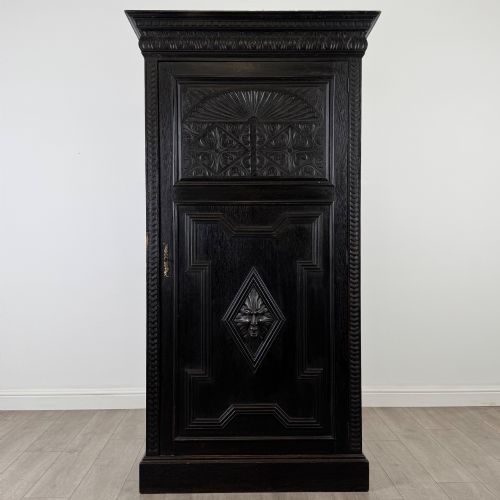
Cabinetmakers constructed these pieces using solid timbers and veneers such as mahogany, walnut, burr walnut, satinwood, and oak over sturdy carcases. Brass hardware, glass panels, and Bakelite details appear as structural and decorative elements across different periods.
Joinery techniques included frame and panel construction to accommodate large timber expanses on wardrobes and linen presses without warping. Internal components such as linen slides and drawer boxes relied on traditional dovetail joints and precise internal fittings.
Some cabinets hide their secrets behind Japanese Tansu panels or bronze display doors originating from historic Scottish castles.
What varies in quality
The selection of timber veneers, particularly figured walnut, flame mahogany, and burr walnut, dictates the visual impact of the exterior facade. Matching grain patterns across multiple doors and drawer fronts demonstrate superior craftsmanship.
The complexity of internal configuration distinguishes standard wardrobes from elaborate compactums and linen presses fitted with numerous specialised drawers and sliding trays. The integration of high-grade brass mounts and finely executed inlay work further separates individual pieces.
Maples and Co·Heals·Holland and Sons·Harry and Lou Epstein·Jenners of Edinburgh
The Fitted Clothes Cabinet Glossary
- Compactum
- A multi-compartment wardrobe featuring a combination of hanging space, shelves, and internal drawers. This form maximises storage efficiency within a single footprint.
- Linen Press
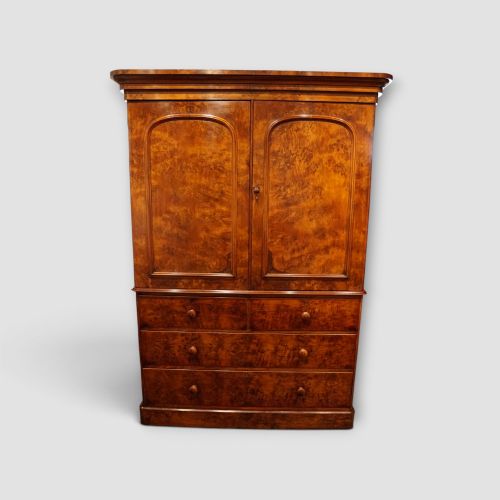
- A tall cabinet comprising upper sliding trays or shelves above a chest of lower drawers. Traditionally utilised for storing folded garments and household linens.
- Armoire
- A large freestanding cupboard or wardrobe with doors enclosing shelving or hanging space. European examples often display distinctive regional proportions and timber selections.
- Inlay
- A decorative technique where contrasting woods or materials are inserted into recesses within the primary timber surface. Edwardian and Victorian makers utilised this to create geometric or floral motifs.
- Tansu
- A traditional form of Japanese mobile storage cabinetry featuring stacked sections and specialised metal hardware. These chests offer an alternative aesthetic to European cabinet design.
Fitted Clothes Cabinet: Frequently Asked Questions
What is a compactum wardrobe?
A compactum wardrobe is a specialised cabinet designed to hold a variety of garments by integrating hanging space, shelving, and internal drawers into a single unit.
These pieces provide comprehensive organisation within bedroom interiors, reducing the need for separate chests of drawers.
How do linen presses differ from wardrobes?
Linen presses traditionally feature sliding internal trays or shelves enclosed by upper doors, sitting above a chest of lower drawers for folded items.
Wardrobes focus primarily on vertical hanging space for full-length garments, though compactum variations blend both internal layouts.
What periods do these cabinets come from?
The available pieces span multiple centuries, including eighteenth-century housekeeper cupboards, nineteenth-century Victorian presses, and twentieth-century Art Deco designs.
Each era introduces distinct architectural proportions, timber preferences, and decorative styles to the cabinet form.
How should I integrate a large cabinet into a room?
Due to their substantial height and depth, these cabinets require careful placement against a solid wall with adequate clearance for opening doors and internal drawers.
Matching the timber tone, such as mahogany or walnut, with existing room furnishings helps balance their visual weight in a modern interior.