



Fitted Canteen of Cutlery
A fitted canteen of cutlery is a purpose-built home for flatware, designed to keep silver and bone handled tools orderly and ready for the table.
Fitted Canteen of Cutlery
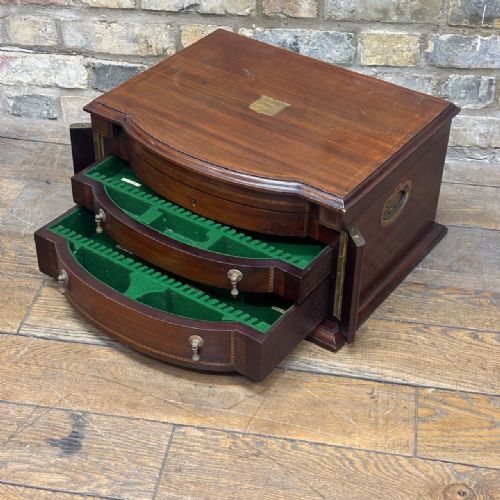
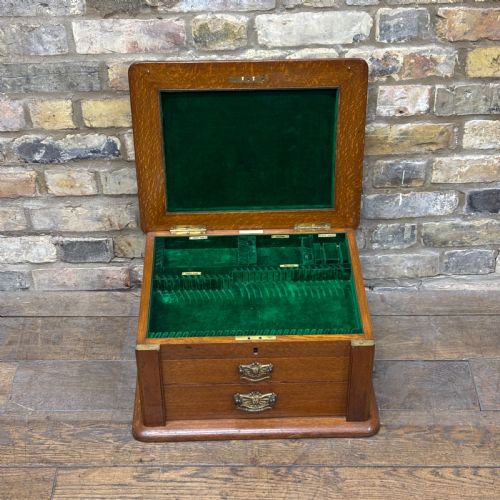
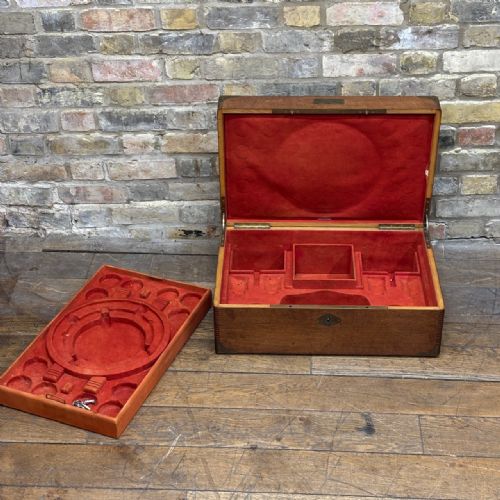
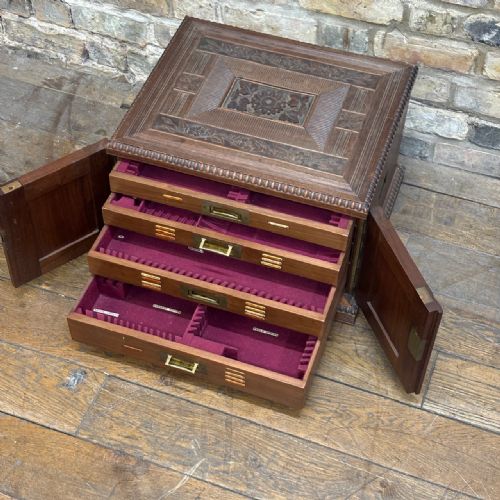
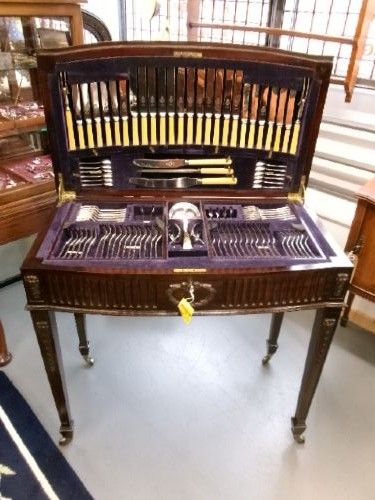
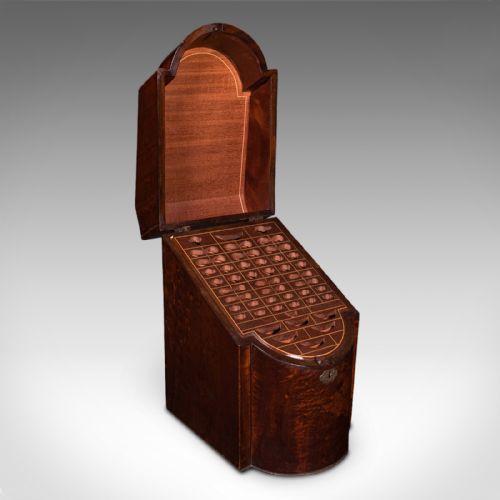
A fitted canteen of cutlery brings together designated storage and complete flatware service sets, ranging from compact knife boxes to substantial freestanding furniture. When searching for a fitted canteen of cutlery, buyers encounter examples spanning the Georgian era through to the Art Deco period.
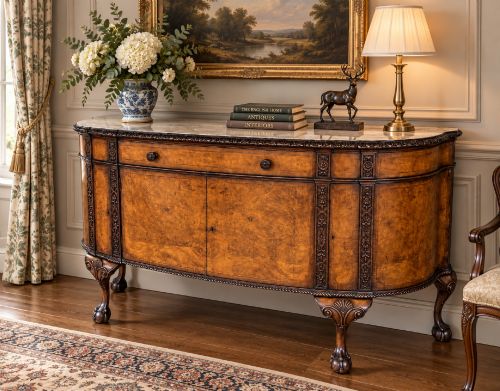
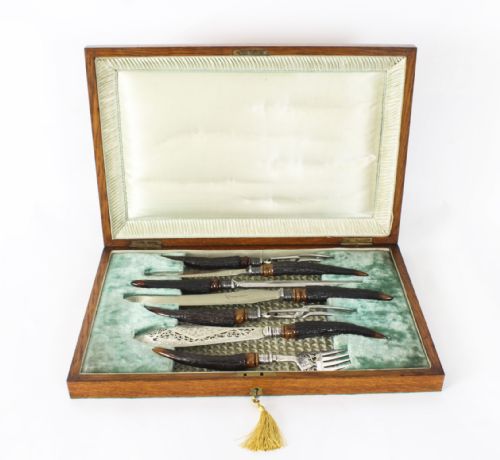
The selections available include table chests, oak and walnut cabinets, and sideboard integrations. Edwardian oak boxes and 1930s Art Deco services appear frequently among these offerings.
Originating predominantly from English workshops, these pieces combine utilitarian storage with period cabinet making. The internal fittings dictate the arrangement of forks, spoons, and carving instruments.
Materials and construction methods
Cabinet makers utilised dense hardwoods such as oak, mahogany, walnut, and burr walnut to construct the exterior chests and housings. These timbers were joined with traditional craftsmanship to withstand the heavy weight of metal flatware.
Interiors feature fitted compartments lined in velvet or felt to protect the contents from friction and tarnish. Cutlery pieces incorporate materials such as silver plate, mother of pearl, and antler horn.
Fitted Canteen of Cutlery Retail Price Guide 2026
Typical asking prices for fitted canteen of cutlery among the pieces listed under this phrase on Sellingantiques today, from the lower quarter to the upper quarter. They describe what is for sale here now, not the wider market.
Some Edwardian oak chests weighed so heavily when fully loaded with flatware that they required dedicated stands to move.
Distinctions in quality and execution
Quality rests in the precision of the internal partitioning and the selection of cabinet timber. Finely figured burr walnut and robust oak cabinetry indicate superior execution.
The completeness of the original set and the integrity of the velvet or felt lining separate standard storage boxes from high workshop output.
Walker & Hall·Mappin & Webb·Waring & Gillows
The Fitted Canteen of Cutlery Glossary
- Canteen
- A fitted box, chest or cabinet designed specifically to hold a set of cutlery. These containers often feature multiple trays and slots.
- Silver Plate
- A base metal coated with a thin layer of silver, commonly found on the flatware housed within these canteens. This technique offered the appearance of solid silver at a lower production cost.
- Mother of Pearl
- The iridescent internal layer of certain mollusc shells, utilised for decorative handles on fruit and cheese cutlery sets. It provides a smooth, tactile grip.
- Flatware
- Dining utensils such as forks, spoons, and knives that lie flat on a table. In these canteens, they rest in custom slots.
Fitted Canteen of Cutlery: Frequently Asked Questions
What is a fitted canteen of cutlery?
A fitted canteen of cutlery is a dedicated storage chest or cabinet containing specific slots and trays for an organised flatware service. These pieces range from tabletop boxes to large floor-standing furniture.
Inside, individual compartments secure knives, forks, and spoons to prevent movement and damage during storage.
How were these canteens used?
These canteens served as the primary storage method for dining silver in large households, keeping complete sets clean and accounted for between meals. Servants would transport the chest or retrieve individual trays for table laying.
They protected delicate materials like silver plate and mother of pearl from daily household wear.
How do I care for a wooden canteen?
Wooden canteens require stable humidity and temperature conditions to prevent the oak, walnut, or mahogany from warping. Regular dusting and occasional wax application preserve the timber finish.
The internal velvet or felt lining should be kept dry to protect the metal contents from moisture damage.
How can I date a canteen?
Dating relies on the cabinet style, construction techniques, and the materials used in the fittings and locks. Georgian and Victorian boxes display different proportions and joinery compared to Edwardian and Art Deco examples.
Maker marks and the style of the enclosed cutlery set also provide chronological reference points.