

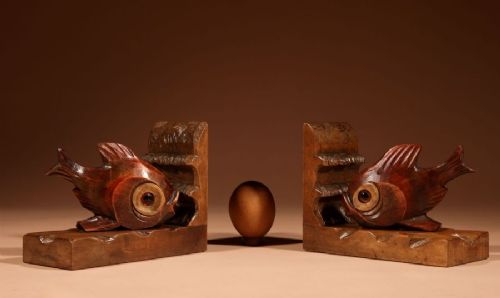


Fishing Decor
These fishing decor antique pieces bring the historic atmosphere of rivers and coasts directly into your interior with carved wooden forms, oil paintings, and maritime watercolours.
Fishing Decor
When hunting for fishing decor antique items, collectors encounter a diverse selection ranging from nineteenth-century marine watercolours to carved wooden bookends and sporting oils. These objects capture the enduring fascination with angling, coastal life, and river fish through various artistic mediums.
The pieces most frequently met on this page include nineteenth-century framed prints, coastal oil paintings depicting fishing boats, and carved animal subjects such as goldfish and flying fish. Such items serve as decorative focal points for studies, libraries, and country houses.
Originating across different eras including the Victorian period and the mid-twentieth century, these works reflect both British coastal traditions and international craftsmanship like Japanese porcelain. Each item preserves a distinct slice of maritime and sporting history.
What varies in quality
The standard of execution in painting and carving separates simpler decorative items from superior works. Finer pieces demonstrate precise brushwork in coastal watercolours and detailed anatomy in carved wooden subjects.
Material selection and preservation also influence the standing of an object. Items retaining original framing, clear signatures, and well-maintained paint surfaces hold greater visual clarity.
Fishing Decor Retail Price Guide 2026
Typical asking prices for fishing decor among the pieces listed under this phrase on Sellingantiques today, from the lower quarter to the upper quarter. They describe what is for sale here now, not the wider market.
Even fierce northern pike found themselves immortalised by Victorian artists while simply trying to finish lunch.
Edward Matthew Elliott·Jonathan Couch·W.E.Barrington-Browne·Thomas Bush Hardy
The Fishing Decor Glossary
- Victorian Marine
- Artworks and objects created during the reign of Queen Victoria that focus upon the sea, coastal environments, and maritime activities. These pieces often record harbours, shipping, and coastal communities.
- Black Forest
- A style of wood carving originating from the mountainous region of central Europe, known for realistic animal and nature subjects. Carvings in this tradition often include bears, fish, and woodland creatures.
- Newlyn School
- An art colony based in Cornwall during the late nineteenth and early twentieth centuries that painted en plein air. Artists in this circle depicted local fishermen, harbour scenes, and coastal life.
- Sporting Paraphernalia
- Equipment and decorative items associated with field sports such as fishing, shooting, and hunting. These objects include rod rests, tackle items, and sporting art.
- Meiji Period
- The era in Japanese history spanning from 1868 to 1912, characterised by the opening of trade with the West. Export pieces from this time frequently combine traditional lacquer and porcelain techniques.
Fishing Decor: Frequently Asked Questions
What subjects do these antique fishing items show?
The selections depict coastal harbours, fishing boats, and specific catches such as salmon, northern pike, and goldfish. Many pieces record maritime trades and river scenes from the nineteenth and twentieth centuries.
Artistic representations include oil paintings, watercolours, engravings, and detailed carvings in wood and porcelain.
How do I date a Victorian marine painting?
Dating relies upon examining the framing, canvas construction, pigment types, and stylistic conventions associated with nineteenth-century British art. Signatures and biographical details of the artist also provide precise chronological markers.
Subject matter often reflects the costume, maritime vessels, and coastal architecture typical of the Victorian era.
Where do these maritime watercolours originate?
Many watercolours and oil paintings originate from British coastal regions, with specific concentrations in Cornish art colonies like St Ives and Newlyn. Other pieces reflect international traditions, including Japanese decorative arts.
Artists recorded the working lives of fishermen and the topography of specific harbours around the British coast.