



Fishing Art Decor
Fishing art decor brings maritime heritage indoors through paintings, engravings, and carvings that capture coastal life and the sport of angling.
Fishing Art Decor
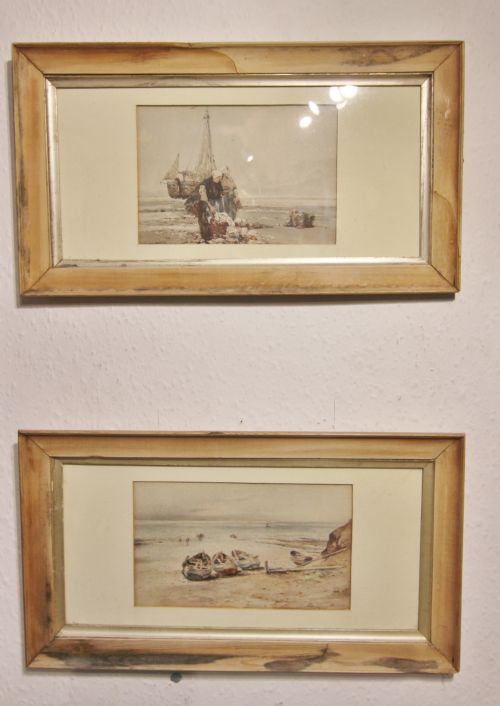
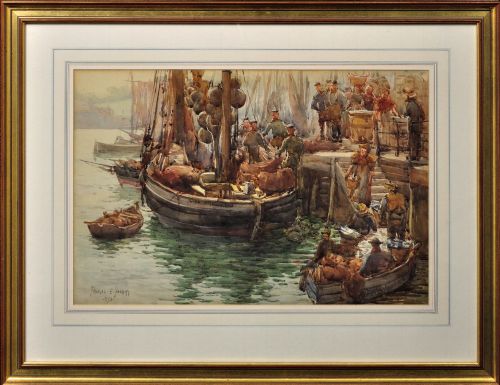
When you search for fishing art decor, you encounter a selection of pieces celebrating maritime and sporting themes, predominantly featuring oil paintings, watercolours, and engravings. The items span the nineteenth century through the mid-twentieth century, offering various interpretations of coastal scenes, harbour views, and catches.
The most common items on this page are nineteenth-century marine paintings and mid-century seascapes. These works range from detailed depictions of fish such as salmon and northern pike to harbour scenes showing fishing trawlers and beached boats.
Materials and construction
The works utilise traditional media including oil paint on canvas and watercolour on paper, alongside engraved prints and glass vases. Carvings are executed in wood, representing subjects like flying fish with meticulous hand-finished detail.
Support structures typically involve wooden framing around canvas or paper works. Embossed prints demonstrate period pressing techniques, while glass pieces like vases reflect mid-twentieth-century design methods.
Fishing Art Decor Retail Price Guide 2026
Typical asking prices for fishing art decor among the pieces listed under this phrase on Sellingantiques today, from the lower quarter to the upper quarter. They describe what is for sale here now, not the wider market.
Periods represented span the 19th century, Victorian era, 1900, 1940, 1950, and 1960.
Judging quality in fishing art
Quality rests upon the execution of the medium, distinguishing finely painted watercolours and oils from standard mass-produced prints. The precision in rendering subjects like fish anatomy and coastal light defines the upper tier of works.
Provenance and attribution to documented artists elevate a piece significantly. Creator involvement, evident in signed canvases or named engravings, separates notable works from unsigned decorative items.
Edward Matthew Elliott·Jonathan Couch·W.E. Barrington Browne·Keith Murray·Thomas Bush Hardy
The Fishing Art Decor Glossary
- Oil painting
- A work created using pigments bound with a drying oil, typically applied to canvas or wood panels. This medium allows for rich colour depth and textured brushwork.
- Engraving
- A printmaking process where an image is incised into a plate, usually metal, holding ink within the grooves to transfer onto paper. It produces fine, precise lines.
- Watercolour
- A paint consisting of pigment suspended in a water-based solution, traditionally applied to paper. It offers transparent washes and delicate tonal gradations.
- Embossed print
- A print featuring raised patterns or designs pressed into the paper surface without necessarily using ink. This technique creates tactile dimension.
- Seascape
- A work of art depicting the sea, coastal views, beaches, or marine vessels. These subjects formed a major focus of nineteenth and twentieth-century British art.
Fishing Art Decor: Frequently Asked Questions
What periods do these fishing artworks come from?
The pieces span from the nineteenth century through the mid-twentieth century, covering Victorian styles alongside later twentieth-century interpretations.
Items include Victorian marine paintings, Edwardian-era oils, and mid-century modern seascapes.
How should I display fishing art at home?
These framed paintings, watercolours, and prints suit traditional studies, living rooms, or hallways alongside wooden furniture.
Ensure placement avoids direct sunlight to protect paper and canvas from fading over time.
What subjects are common in this decor?
Common subjects include coastal harbours, fishing boats, beached vessels, and specific catches like salmon and northern pike.
Artists often focused on British coastal locations such as Cornwall and St Ives.
Are these pieces original works?
The selection includes original hand-painted oils and watercolours alongside period engravings and embossed prints.
Each listing specifies the exact medium used by the artist or maker.