



Fireside Tool
A fireside tool brings both function and period character to the hearth, offering the pokers, shovels, and stands that every traditional fireplace requires.
Fireside Tool
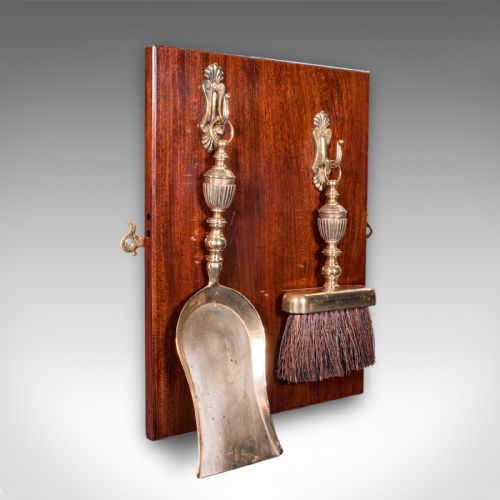
A fireside tool serves the hearth through companion sets, pokers, coal shovels, and tool rests. When searching for a fireside tool, buyers encounter everything from complete sets to individual items designed for daily use or display.
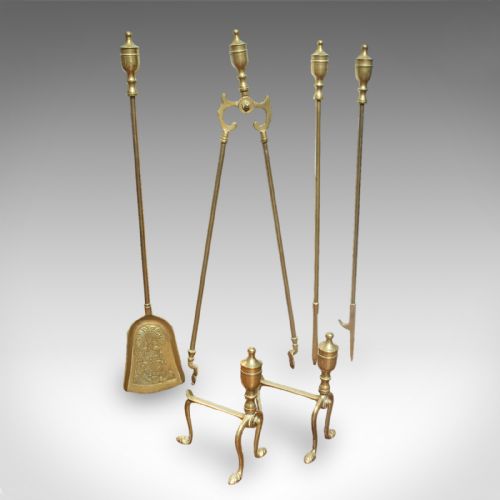
The options span periods from the Regency era through the Victorian and Edwardian periods into the early twentieth century. Common forms include companion sets, chestnut roasters, toasting forks, and fire dogs.
Makers ranged from utilitarian workshops to notable names like The Birmingham Guild. Pieces appear in French and English origins, reflecting regional aesthetic movements such as Gothic Revival, Art Nouveau, and Aesthetic Movement.
How they were made
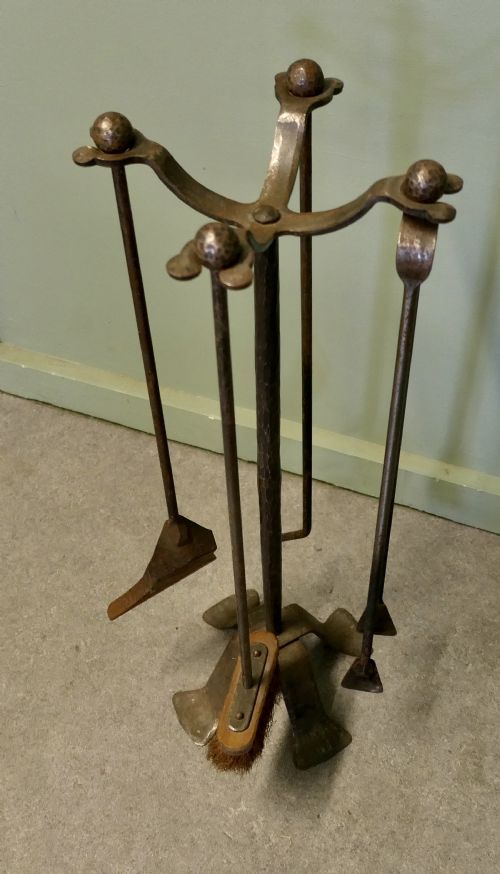
Metalworking dominates these items, utilising brass, cast iron, steel, wrought iron, and bronze. Founders and smiths cast, forged, and polished these metals to create durable hearth implements.
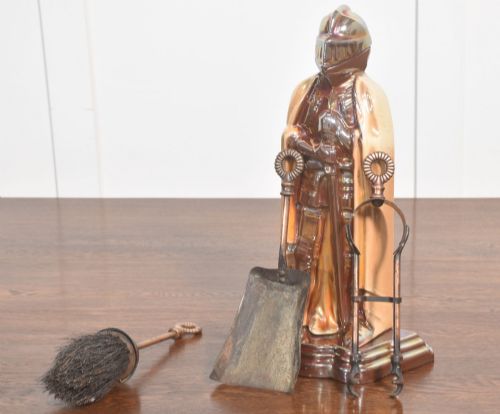
Details include painted surfaces, copper inlay, and sculptural figures such as knights or golfers. Artisans combined practical metal strength with decorative flourishes suited to the drawing room.
Several Victorian and Edwardian sets feature unusual golfer figures, proving that nineteenth-century golfers needed maintenance for their hearths as well as their handicaps.
What varies in quality
Quality rests upon the weight and integrity of the metalwork, distinguishing solid cast bronze or heavy brass from lighter fabricated alternatives. Superior examples display crisp chasing, balanced proportions, and robust construction that withstands actual hearth use.
The distinction also lies in design ambition, where standard utilitarian pokers contrast with sculptural companion sets featuring detailed figures or specific stylistic movements like Art Nouveau and Rococo.
The Birmingham Guild
The Fireside Tool Glossary
- Companion set
- A matched collection of fireplace implements, usually comprising a shovel, poker, tongs, and brush, housed on a shared stand.
- Fire dog
- A horizontal iron support used to hold logs in a fireplace, often paired with matching tool rests or andirons.
- Chestnut roaster
- A long-handled utensil with a pierced metal pan used for roasting chestnuts over an open fire.
- Toasting fork
- A long-handled metal fork designed for toasting bread or food at a distance from the hearth heat.
- Aesthetic movement
- A late nineteenth-century design style emphasising visual and compositional beauty over narrative content.
Fireside Tool: Frequently Asked Questions
What is included in a fireside companion set?
A standard set typically includes a poker for moving logs, a shovel for ash, tongs, and a brush, all arranged on a dedicated stand.
Additional pieces such as toasting forks or chestnut roasters sometimes accompany these sets depending on the period.
How do I date a brass fireside tool?
Dating relies on stylistic clues, manufacturing marks, and the specific metal finishing techniques typical of periods like the Victorian era or Art Nouveau.
Heavier cast brass and ornate Rococo revival styling often point to the nineteenth century, while cleaner lines suggest early twentieth-century manufacture.
What are fireside tool rests used for?
Tool rests hold individual pokers, shovels, or tongs off the hearth floor when not in use.
They often match the design of fire dogs and provide an organised display for the companion set.