






Fireside Fuel Bucket
These fireside fuel buckets are sturdy hearthside containers crafted to hold coal, logs, and kindling beside the fireplace.
Fireside Fuel Bucket
When you search for a fireside fuel bucket, you encounter heavy metal bins, hinged wooden boxes, and helmet-shaped scuttles designed to keep hearth fuel close at hand. The pieces listed on this page span the Victorian, Edwardian, and Art Nouveau periods, alongside Georgian and Arts and Crafts examples.
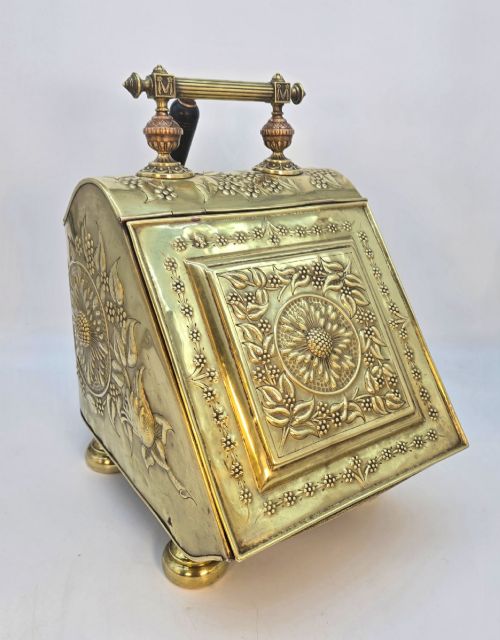
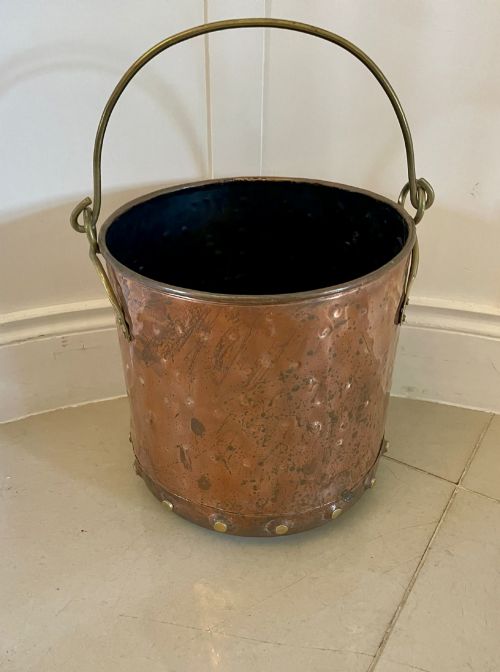
You are most likely to meet copper and brass buckets from the nineteenth century, often featuring embossed patterns, swing handles, and riveted construction. Wooden examples in oak, walnut, and mahogany appear frequently as lidded coal boxes or purdoniums.
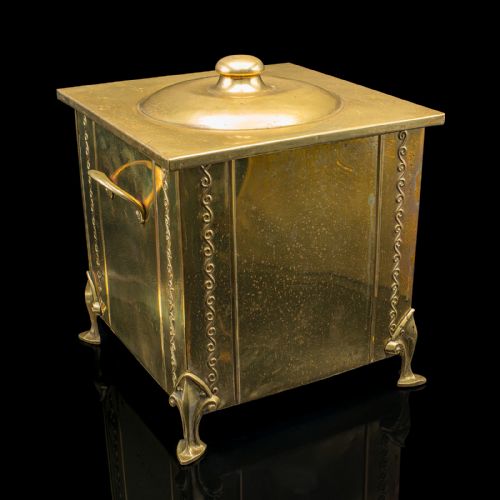
The forms range from cylindrical bins and lidded log boxes to helmet scuttles with shaped lips for pouring fuel directly onto the hearth. Each variation reflects the domestic requirements of nineteenth and early twentieth-century homes.
Materials and construction methods
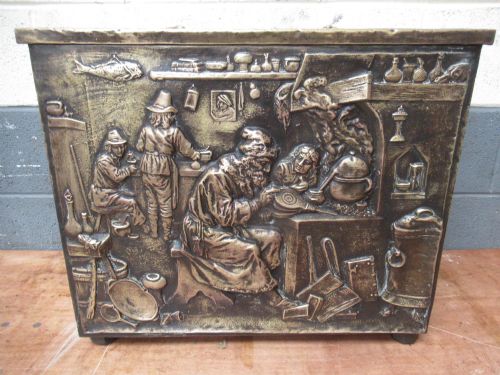
Metal vessels utilise sheet brass and copper, joined with visible rivets and shaped by hand or machine pressing. Many feature embossed or chased surface decoration, particularly those from the Arts and Crafts and Victorian eras.
Wooden boxes rely on joinery in oak, walnut, and mahogany, sometimes incorporating carved panels or inlaid details. Interior metal liners often protect the timber from moisture and coal dust.
Iron and wrought elements provide structural reinforcement, handles, and hinges that endure the daily weight of coal and logs.
Fireside Fuel Bucket Retail Price Guide 2026
Typical asking prices for fireside fuel bucket among the pieces listed under this phrase on Sellingantiques today, from the lower quarter to the upper quarter. They describe what is for sale here now, not the wider market.
Listings feature materials spanning copper, brass, oak, walnut, and wrought iron across the Victorian, Edwardian, and Art Nouveau periods.
Factors of distinction
Quality rests upon the gauge of the metal, the crispness of any hand-embossed or carved detail, and the integrity of the original joints and handles. Thicker copper and heavy brass resist denting and maintain their structural form through decades of use.
The presence of original interior liners, working hinges, and authentic maker attribution elevates certain boxes and scuttles. Patina also plays a role, with clean, undisturbed surfaces on older brass and copper signaling careful custodianship.
Petrus Ramus
The Fireside Fuel Bucket Glossary
- Coal Purdonium
- A specialised box or cabinet designed to store coal beside the fireplace, typically featuring a sloping front or an internal tip-out bin. These often include a matching shovel stored in a side compartment.
- Helmet Scuttle
- A metal container with a flared, pointed rim resembling a classical helmet, shaped to pour fuel neatly into the grate. They usually feature a swinging top handle and a fixed rear grip.
- Repoussé
- A metalworking technique where the artisan hammers the design from the reverse side to raise relief patterns on the front. This method is common on Victorian and Arts and Crafts copper buckets.
- Riveted
- Joined together using short metal pins hammered flat at the ends, common in nineteenth-century copper and brass construction. This method provided both structural strength and a decorative border.
Fireside Fuel Bucket: Frequently Asked Questions
What is a fireside fuel bucket used for?
These containers were originally built to transport and store coal, logs, and peat near the domestic hearth for easy access during cold weather. They kept fuel tidy and contained dust away from the main living area.
Today, they serve the same practical purpose for modern wood-burning stoves and open fires while adding period character to a room.
How do I clean a brass or copper bucket?
Gentle dusting and occasional wiping with a soft, dry cloth maintain the aged surface and dark oxidation that collectors value. Avoid harsh chemical polishes that strip away historical character.
If you prefer a brighter finish, use a specialised metal cream applied sparingly, ensuring you rinse and dry the surface thoroughly afterward.
Can I use an antique bucket for actual logs?
Sturdy metal buckets and lined wooden boxes handle logs and kindling without issue, provided you load them with care. Heavy impacts from large logs can dent thin antique copper over time.
Check that interior liners are intact if you intend to store damp wood or coal to protect the outer structure from moisture damage.
How can I tell a Victorian bucket from an Edwardian one?
Victorian metal buckets frequently display heavy embossing, riveted construction, and Gothic or classical revival motifs. They tend to be heavier and more ornate in their decorative choices.
Edwardian pieces and later Arts and Crafts designs often favor cleaner lines, stylized natural motifs, or simple inlaid wooden boxes with subdued elegance.