



Fireplace Ash Scuttle
A fireplace ash scuttle keeps fuel orderly by the hearth, combining daily utility with the distinct metalwork of the nineteenth and early twentieth centuries.
Fireplace Ash Scuttle
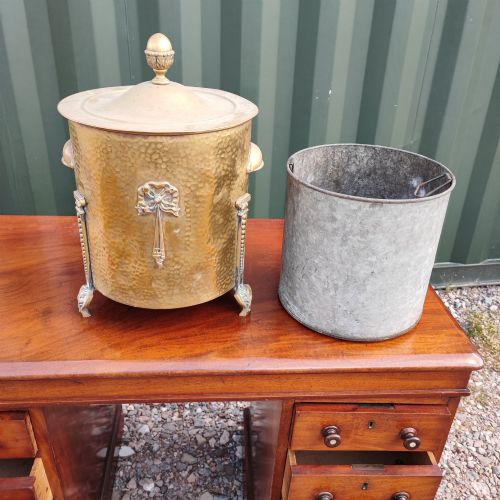
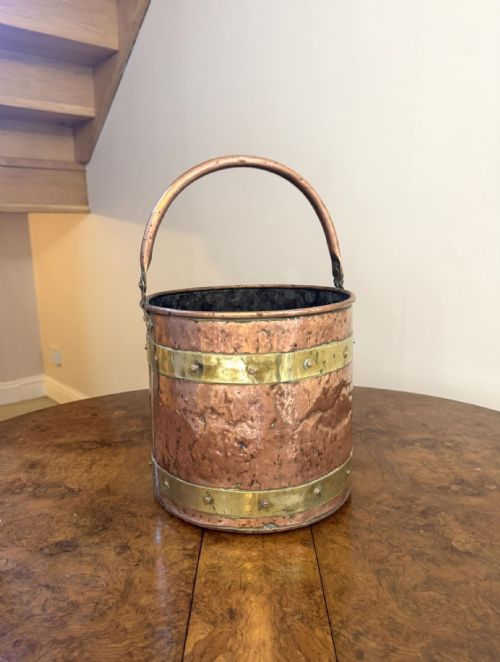
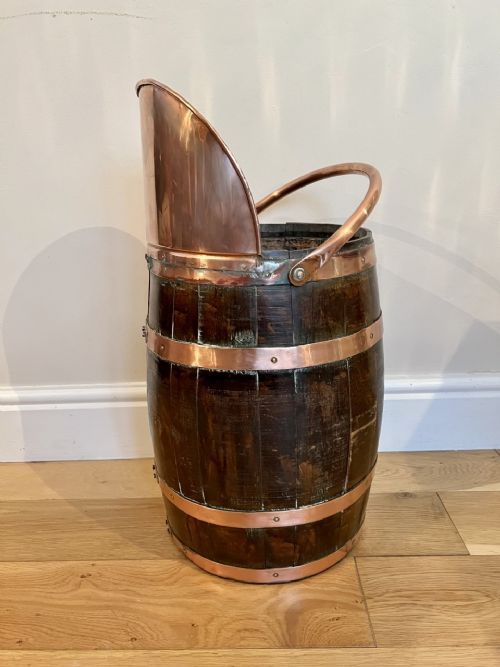
A fireplace ash scuttle serves as a practical fireside container for coal and logs, taking forms such as helmet shapes, circular buckets, and lidded bins. Pieces originating from the nineteenth century, the Victorian era, and the Edwardian period dominate the selection.
Makers produced these containers from Georgian times through to the Art Deco and Art Nouveau eras, utilising materials suited to heavy domestic service. The most frequent encounters on this page are copper and brass vessels, often accompanied by wrought iron handles or wooden accents.
Domestic interiors relied on these receptacles to transport fuel cleanly to the hearth, resulting in varied utilitarian designs ranging from plain metal pails to decorative bins. Surviving examples reflect both modest country house utility and ornate stylistic movements like Arts and Crafts.
Materials and construction
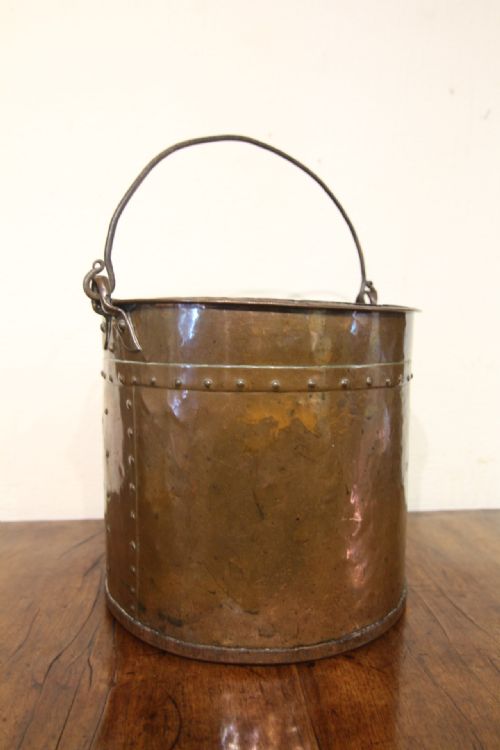
Metalwork defines the construction of these pieces, with heavy use of sheet copper and brass joined by visible rivets, handbeaten panels, and secure banding. Workshops frequently combined metals, mounting copper bodies on brass feet or pairing them with sturdy iron handles for lifting.
Timber elements appear alongside metal, utilising oak and ebony for framing, handles, or decorative banding that secured the staves. Artisans of the Arts and Crafts and Art Nouveau periods applied surface decoration such as tavern scenes and repoussé motifs directly onto the copper or brass plates.
The documented forms range from simple coal bins and planters to riveted helmet scuttles and handbeaten Art Nouveau containers.
Distinctions in craftsmanship
Quality rests in the weight of the metal, the integrity of the riveted joints, and the crispness of any handbeaten surface decoration. Heavier gauges of copper and brass indicate a vessel built to withstand rigorous daily domestic service rather than light decorative use.
Proportion and form separate standard utilitarian containers from exceptional design examples, particularly where makers integrated aesthetic movements like Arts and Crafts or Art Nouveau into the handles and body contours. The survival of original liners, matching shovels, and uncompromised structural joining elevates the standing of an individual piece.
Benham & Froud
The Fireplace Ash Scuttle Glossary
- Scuttle
- A metal bucket or container designed specifically for holding and carrying coal or logs to a fireplace. These typically feature a pivoted handle and an angled lip for pouring fuel.
- Helmet scuttle
- A traditional coal container featuring an elevated back and a flared, sloping front that resembles a classical helmet. This shape allowed fuel to be poured directly onto the fire without spillage.
- Dinanderie
- A medieval term revived to describe decorative objects made of beaten brass or copper. It encompasses vessels and containers produced by skilled metalworkers, particularly during the Art Deco period.
- Repoussé
- A metalworking technique where the artisan hammers the design from the reverse side to form a raised pattern in relief on the front. This method frequently appears on Arts and Crafts coal buckets.
- Coal hod
- A deep metal container used for storing fuel beside the hearth. It differs from a bucket by functioning primarily as a static bin rather than a pouring vessel.
Fireplace Ash Scuttle: Frequently Asked Questions
What is a fireplace ash scuttle used for?
These metal vessels served the practical purpose of holding coal, logs, or kindling beside the fireplace and transporting fuel from storage to the hearth.
They kept domestic hearths tidy by containing loose debris and offering a ready supply of fuel within arm's reach of the fire.
How do I tell Victorian from Edwardian pieces?
Victorian examples often favour heavy riveted copper construction and classic helmet silhouettes designed for utility and traditional parlour display.
Edwardian pieces frequently introduce lighter oak framing, planished surfaces, or distinct Arts and Crafts decorative motifs that reflect changing aesthetic preferences.
Are these containers safe to use for fireside storage?
Constructed from durable metals like brass, copper, and iron, these receptacles were engineered specifically to withstand the rigours of solid fuel storage.
Many surviving pieces retain their internal liners, making them entirely practical for holding logs or kindling in modern living spaces.
What materials are most common in these pieces?
Copper and brass predominate among surviving examples, frequently shaped into helmets or cylindrical bins with contrasting iron or wooden handles.
Some variations incorporate oak bodies bound with metal bands or utilise galvanised iron for purely utilitarian service in country houses.