



Fine Ruby Jewellery
Fine ruby jewellery brings together deep red stones and precious settings across Victorian, Edwardian, Art Deco and mid-century designs.
Fine Ruby Jewellery
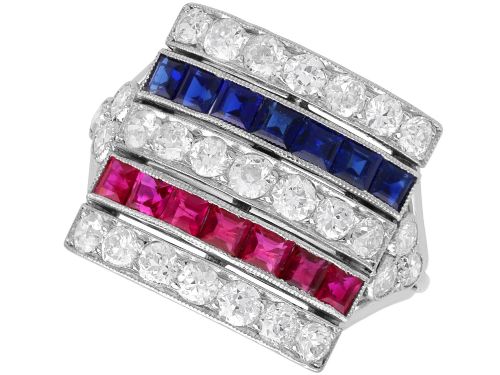
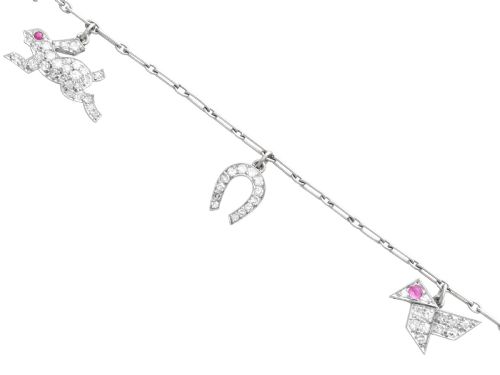
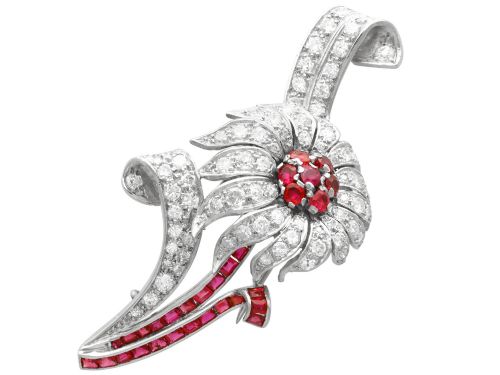
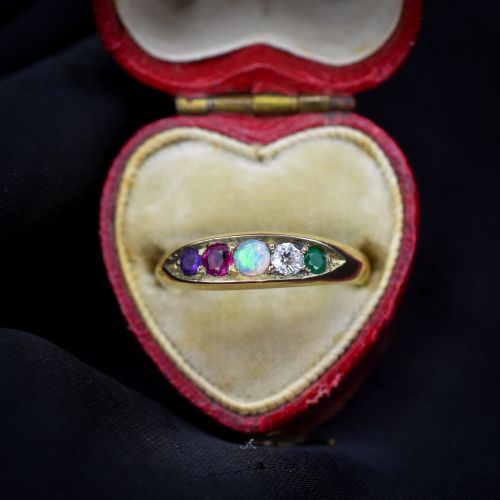
Fine ruby jewellery encompasses rings, brooches, necklaces, pendants and bangles set with natural rubies alongside diamonds and sapphires. Pieces span distinct periods including Victorian, Edwardian, Belle Epoque, Art Deco and the 1950s and 1960s.
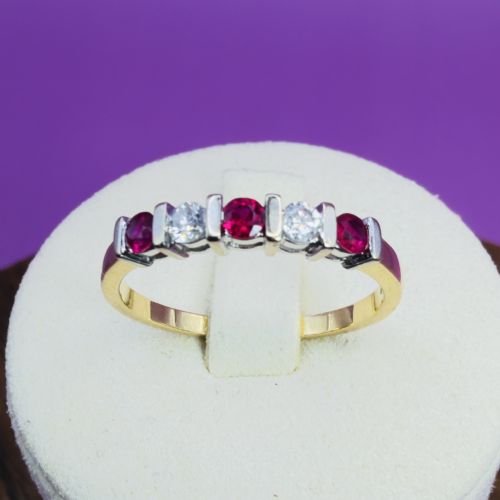
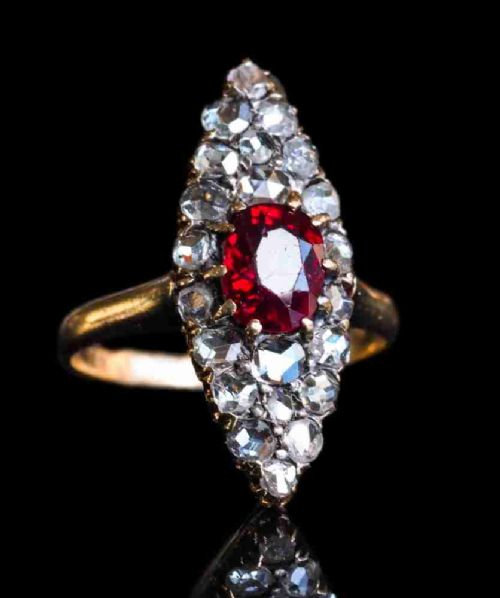
Buyers frequently encounter cluster rings, bar brooches and multi-gem set cocktail pieces amongst the selection. These items range from delicate antique navette rings to substantial mid-century designs incorporating pearls and citrines.
The objects originate from various European workshops and British assay offices, reflecting shifting aesthetic preferences across more than a century of craftsmanship.
How they were made
Goldsmiths utilised 18ct yellow gold, 18ct white gold and platinum to construct secure settings for rubies and diamonds. Precious metals were shaped into robust band rings, intricate navette frames and flexible bangle structures.
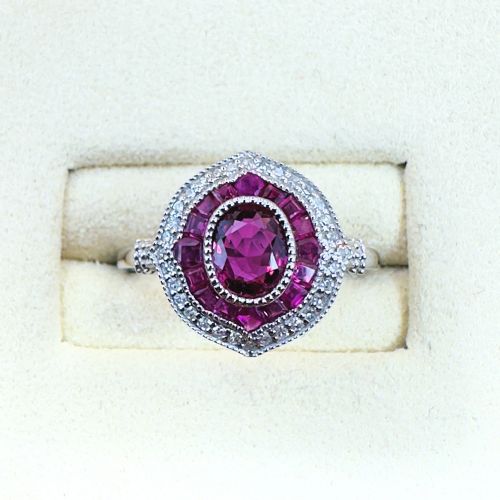
Gemstones including oval cut rubies and baguette cut diamonds were hand-set into cluster arrangements and geometric bar configurations. Pearl strands and multi-gem stones were integrated using traditional claw and bezel mounting techniques.
Fine Ruby Jewellery Retail Price Guide 2026
Typical asking prices for fine ruby jewellery among the pieces listed under this phrase on Sellingantiques today, from the lower quarter to the upper quarter. They describe what is for sale here now, not the wider market.
Listings feature items from the Victorian, Edwardian, Belle Epoque, Art Deco, and mid-century periods.
What varies in quality
The standard of fine ruby jewellery depends on the depth of colour within the rubies and the precision of the surrounding diamond work. Master gem-setters balanced stone sizes thoughtfully within platinum and 18ct gold frameworks.
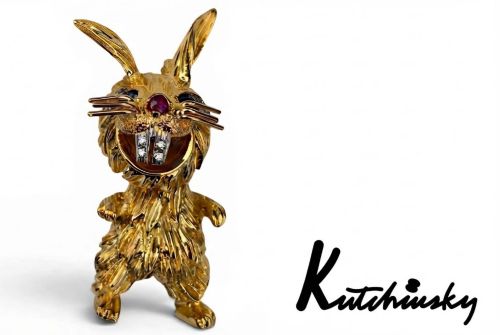
Signatures from notable makers and verifiable hallmarks from assay offices like London and Chester elevate the distinction of a piece. The integration of supporting stones, such as natural pearls or sapphires, determines the overall execution.
Kutchinsky·Gubelin
The Fine Ruby Jewellery Glossary
- Navette
- A boat-shaped ring setting featuring tapered ends that elongate the finger. This silhouette was popular during the Victorian period.
- Cluster ring
- A central gemstone surrounded by a border of smaller stones, typically diamonds framing a prominent ruby. This arrangement maximises visual impact and brilliance.
- Bangle
- A rigid circular bracelet that slips over the wrist or fastens with a clasp. Antique examples often incorporate intricate gem-set hinged fronts.
- Baguette cut
- A step-cut rectangular gemstone shape characterised by straight parallel facets. It is frequently utilised to accent central rubies in mid-century designs.
- Belle Epoque
- A design period spanning the late nineteenth and early twentieth centuries known for light, platinum-supported garland motifs.
Fine Ruby Jewellery: Frequently Asked Questions
How do I date a ruby ring?
Dating relies on hallmarks, metal types, and stone-cutting styles visible in the setting. Victorian and Edwardian examples often feature distinct geometric or organic motifs.
Mid-century pieces from the 1950s and 1960s frequently employ heavy 18ct gold constructions and bold cluster formations.
What metals are used in these pieces?
Makers predominantly utilised 18ct yellow gold, 18ct white gold, and platinum for fine ruby mounts. 9ct gold also appears in specific pendant configurations.
White metals became particularly favoured during the Belle Epoque and Art Deco eras to enhance diamond brilliance alongside red stones.
Are rubies combined with other gems?
Rubies are frequently paired with diamonds in cluster rings and bar brooches. Sapphires, emeralds, pearls, and citrines also appear in multi-gem cocktail pieces.
These mixed gemstone designs reflect the decorative tastes of the mid-twentieth century and earlier antique periods.
How should I care for antique jewellery?
Store precious items individually in soft pouches to prevent metal friction and stone scratching. Regular gentle cleaning maintains the lustre of gold and platinum settings.
Professional inspection helps ensure that claw settings holding rubies and diamonds remain secure over time.