



Fine Art Pencil Sketch
These fine art pencil sketch works capture figures and motion through direct hand-drawn draftsmanship on paper.
Fine Art Pencil Sketch
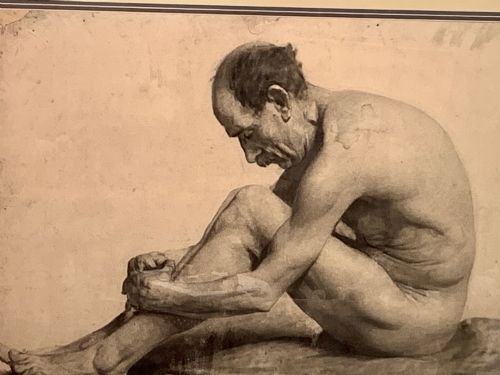
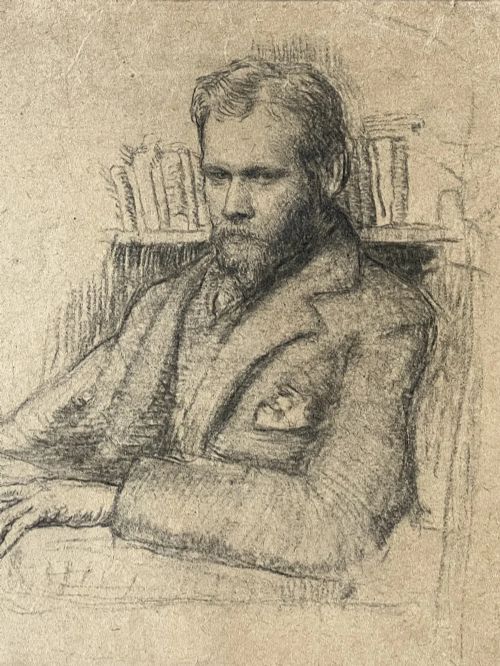
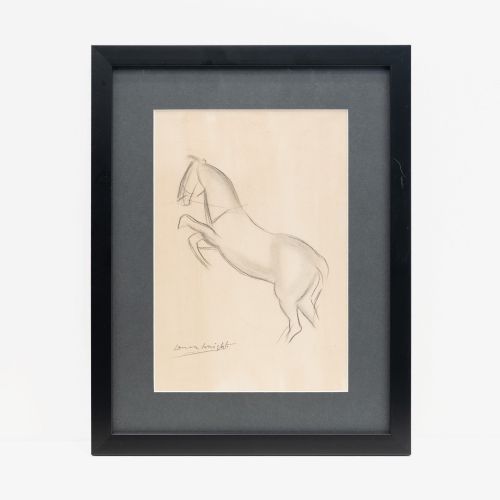
A fine art pencil sketch brings together original portraiture, figure studies, and anatomical drawings spanning from the eighteenth century through the mid-twentieth century. Buyers searching for a fine art pencil sketch encounter academic studies of the male nude, detailed equestrian subjects, and characterful portraits rendered by recognised British artists.
The most common examples on this page date from the nineteenth and early twentieth centuries, encompassing Edwardian and 1930s periods. These works include both finished gallery pieces and intimate preparatory studies preserved behind glass within wooden frames.
The scope extends from Georgian portrayals through to Modern British art, reflecting diverse stylistic movements such as Academic Realism and Orientalism. Drawings range from large-scale charcoal sheets to focused graphite portraits on paper.
Materials and technique
Draftsmen relied primarily on graphite pencil, charcoal, and ink applied directly to various grades of paper support. Many pieces incorporate supplementary media such as watercolour alongside pencil lines to add tone and depth.
The physical handling demonstrates academic training through careful line weight, cross-hatching, and tonal shading. Finished presentation typically involved securing the sheet within a protective wooden frame behind glass to shield the paper from environmental degradation.
Fine Art Pencil Sketch Retail Price Guide 2026
Typical asking prices for fine art pencil sketch among the pieces listed under this phrase on Sellingantiques today, from the lower quarter to the upper quarter. They describe what is for sale here now, not the wider market.
The inventory spans drawings from the 18th Century through the 1950s, utilising graphite, charcoal, and watercolour on paper.
Determinants of quality
Quality rests upon the sureness of the draftsmanship and the expressive capability of the line work. Superior pieces demonstrate anatomical precision and confident proportions, particularly evident in academic nude studies and complex portraiture.
The reputation and skill of the executing hand heavily influence the standing of each work, alongside the historical significance of the sitter or subject. Conservation state and the integrity of the paper support also play pivotal roles in distinguishing primary works from minor sketches.
Augustus John·James Stroudley·Dame Laura Knight·Raoul Millais·Reginald G. Eves·Ernest Borough Johnson·Sir William Charles Ross·Cecil CP Lawson
The Fine Art Pencil Sketch Glossary
- Graphite
- A form of crystalline carbon used as a drawing medium in pencils. It allows for a vast range of tonal values from hard silver-greys to deep blacks.
- Charcoal
- A lightweight carbonaceous material made from slowly burned wood used for bold, expressive lines. It appears frequently in large-scale studies requiring deep contrast.
- Academic Realism
- A style of painting and drawing produced under the influence of European academies of art. It emphasises precise anatomical accuracy, classical composition, and detailed observation.
- Triptych
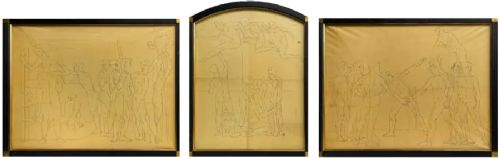
- A work of art divided into three sections or panels. In drawing collections, this refers to three distinct sheets presented together as a single thematic composition.
- Watercolour
- A painting method in which the pigments are suspended in a water-based solution. Artists frequently combined this medium with pencil to tint monochrome drawings.
Fine Art Pencil Sketch: Frequently Asked Questions
How do I display a pencil sketch safely?
Pencil and charcoal works require protection from direct sunlight to prevent the paper from yellowing and the graphite from fading. Framing behind UV-resistant glass preserves the delicate medium against environmental damage.
Position the artwork away from moisture-prone areas such as kitchens and bathrooms. Stable indoor humidity ensures the paper support remains flat within its wooden frame.
What is an academic sketch study?
An academic sketch study is a rigorous drawing executed by an artist to master human anatomy, proportion, or lighting. These exercises formed a core component of traditional artistic training in the nineteenth and early twentieth centuries.
Such drawings often focus on specific body parts or full-figure poses like the male nude. Artists valued them for their raw draftsmanship rather than as finished commercial portraits.
How can I tell the period of a drawing?
Dating relies heavily on costume details, framing styles, and the specific watermark or texture of the paper. Signatures and documented exhibition histories also provide reliable chronological markers for works from the eighteenth to twentieth centuries.
Stylistic shifts, ranging from Georgian portraiture conventions to Mid-Century Modern abstraction, help contextualize the execution date. Comparative study with known works by the same artist confirms the timeline.
Are these drawings original works of art?
The pieces listed are unique, hand-drawn original artworks rather than mass-produced prints or mechanical reproductions. Each line represents the direct physical touch of the artist using pencil, charcoal, or ink.
Preparatory studies and finished portraits alike carry distinct individual character through minor corrections and hand-applied shading. This originality distinguishes them from commercial art prints.