



Figured Wood Chest
A figured wood chest brings striking grain patterns into a room, offering both practical storage and a strong decorative presence.
Figured Wood Chest
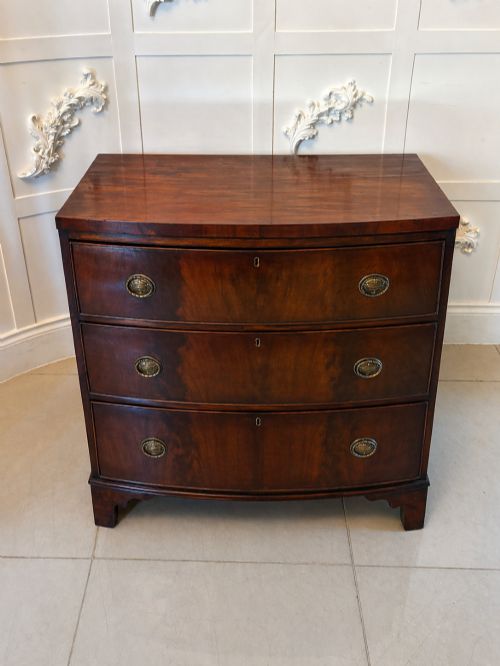
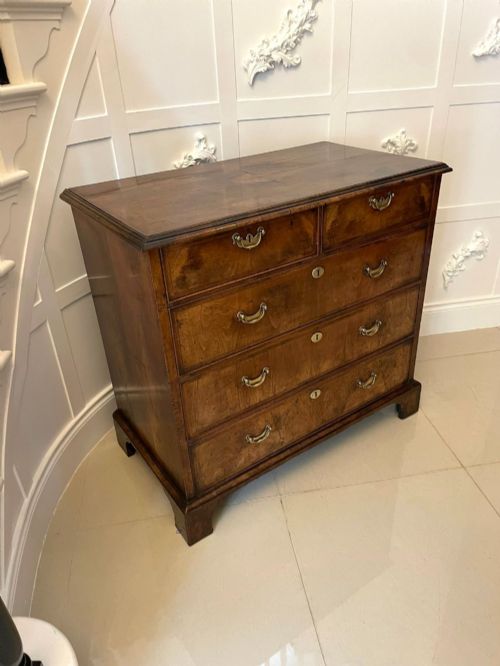
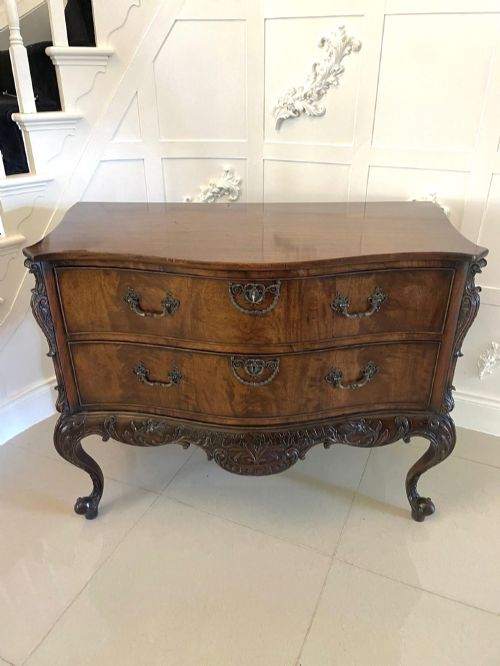
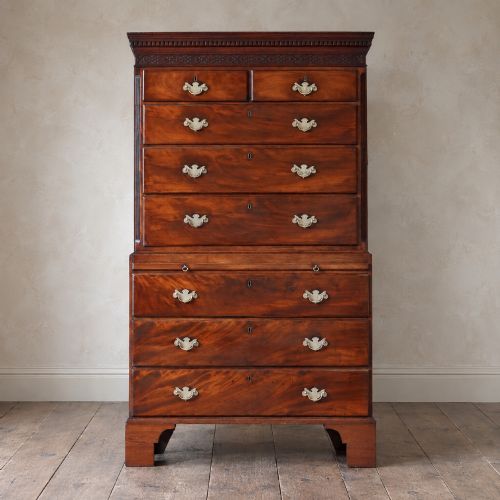
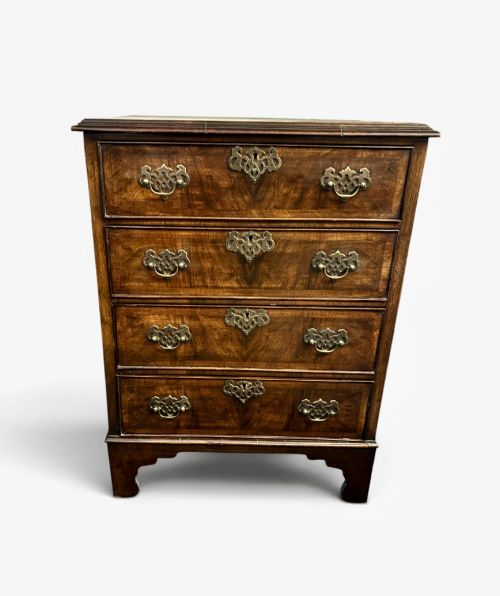
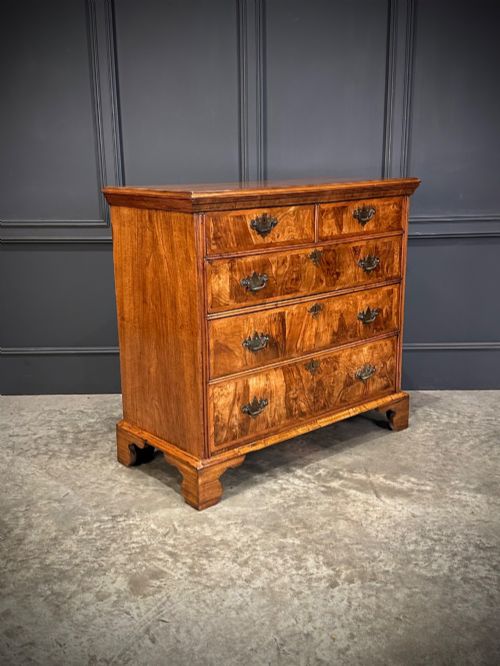
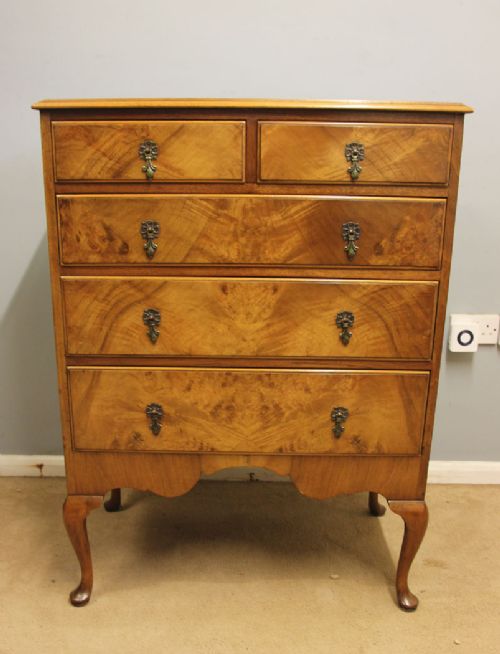
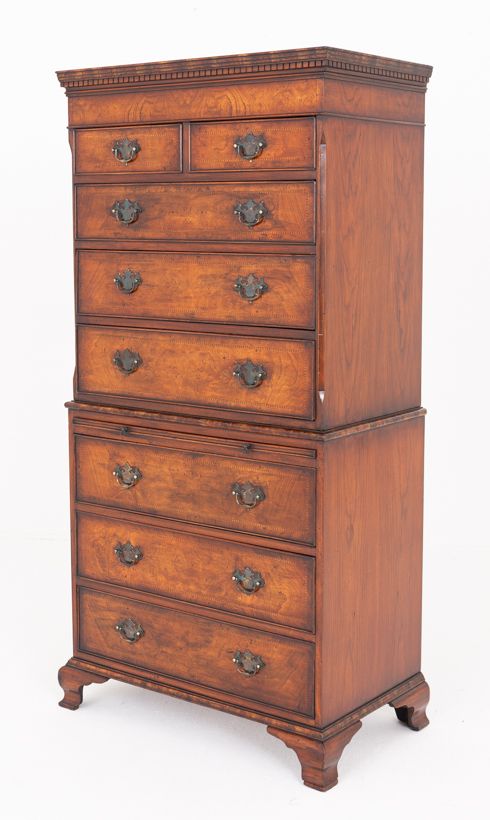
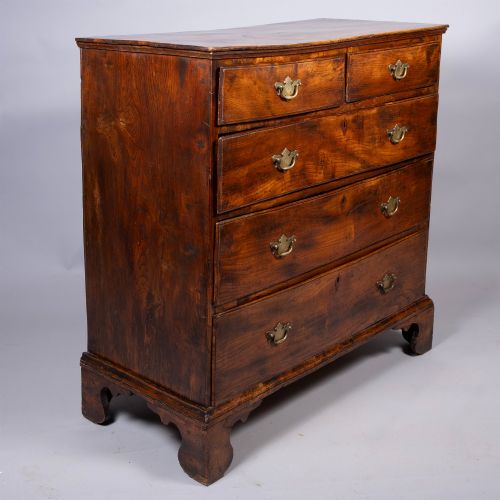
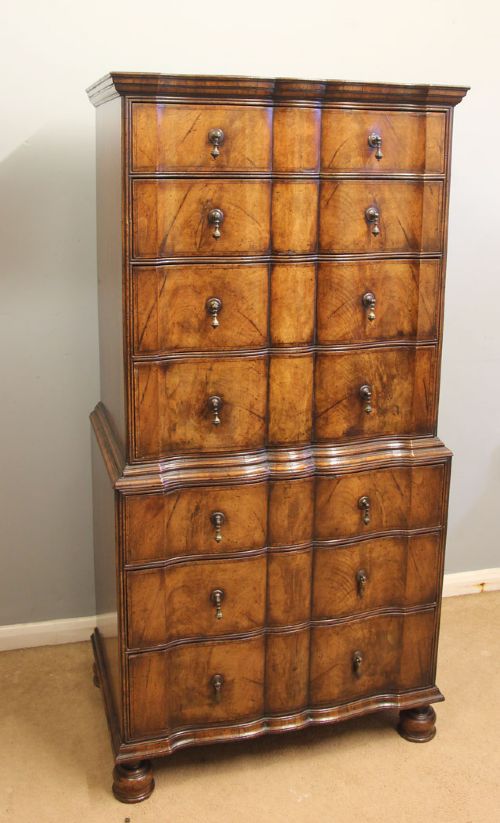
A figured wood chest is primarily represented on this page by chests of drawers, tallboys, and chest on chest forms spanning the eighteenth and nineteenth centuries. These pieces showcase natural timber figuring across practical drawer configurations, ranging from compact proportions to grand serpentine shapes.
Makers and workshops utilised timbers such as mahogany, walnut, and elm to create functional storage furniture that also served as a focal point. Pieces from the Georgian and Victorian eras dominate the selection, alongside Edwardian and later twentieth-century examples.
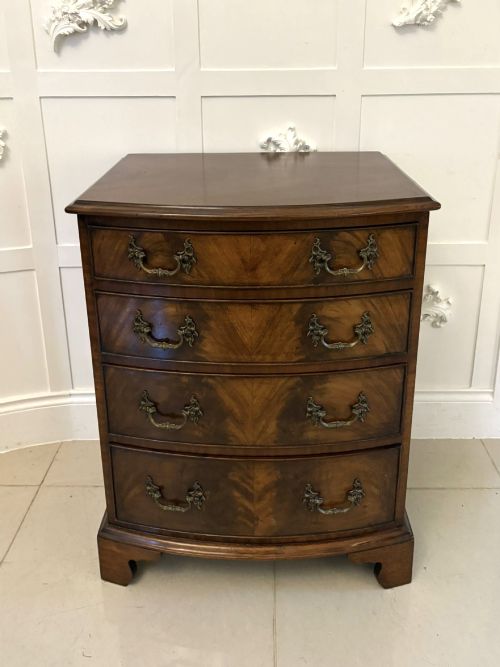
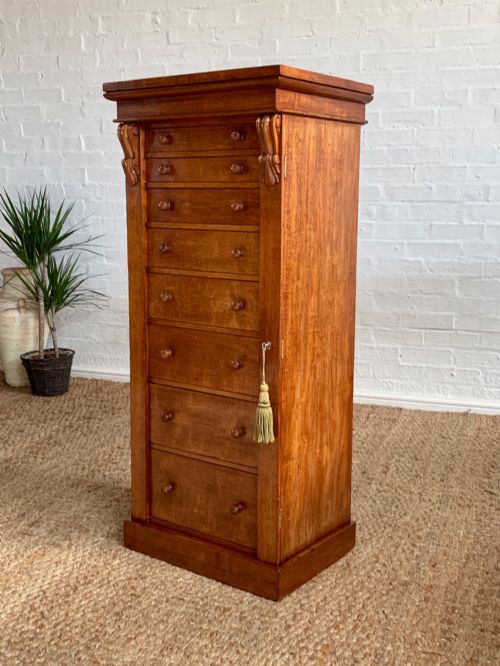
Buyers will encounter various stylistic interpretations, including bow fronts, Wellington chests, and bureau cabinets. Each format highlights the distinctive grain patterns inherent in the selected timber varieties.
Materials and construction
Cabinetmakers selected timbers like mahogany, walnut, and elm for their natural grain patterns, often applying veneers to achieve symmetrical visual effects on drawer fronts. Solid secondary woods such as pine were utilised for internal carcases and drawer linings.
Metal fittings, notably brass handles and keyplates, were incorporated into the construction to complement the dark tones of the polished wood surfaces.
Figured Wood Chest Retail Price Guide 2026
Typical asking prices for figured wood chest among the pieces listed under this phrase on Sellingantiques today, from the lower quarter to the upper quarter. They describe what is for sale here now, not the wider market.
The selection includes specialised regional variations such as Italian commodes alongside traditional British furniture forms.
Assessing quality and execution
Quality in these pieces rests upon the choice of timber and the skill with which the grain is matched across the drawer fronts. Superior examples display bold, uninterrupted figuring that flows symmetrically across multiple drawers.
The sophistication of the silhouette, such as a disciplined serpentine curve or crisp cockbeading around the drawers, separates standard utility items from finer cabinetwork.
Betty Joel·Heal's
The Figured Wood Chest Glossary
- Figured wood
- Timber possessing an attractive, irregular grain pattern caused by abnormal growth, branching, or stress. This characteristic is deliberately displayed on the primary surfaces of fine cabinetry.
- Chest on chest
- A tall storage unit comprising one chest stacked directly upon a slightly larger lower chest, often providing numerous drawer compartments. This form is frequently termed a tallboy in various periods.
- Serpentine
- A front profile characterised by a gentle convex curve flanked by two concave curves, demanding high skill from the cabinetmaker. It creates a dynamic interplay of light across the figured timber.
- Wellington chest
- A tall, slender chest of drawers secured by a hinged locking side stile that fastens over the drawer edges. The design originated in the nineteenth century for efficient security of contents.
- Cockbeading
- A narrow, rounded wooden moulding fitted around the edges of drawer openings to protect the timber and conceal joints. Its presence indicates careful attention to structural detail.
Figured Wood Chest: Frequently Asked Questions
How do I date a figured wood chest?
Dating relies on examining the construction methods of the drawers, the timber species utilised, and the overarching stylistic period of the hardware and feet. Cabinetmakers changed their techniques across the eighteenth and nineteenth centuries, leaving clues in the dovetailing and internal linings.
Secondary woods and backboards also provide physical evidence of age. Comparing the specific silhouette against known regional and period designs helps narrow the manufacturing window.
What is the difference between walnut and mahogany chests?
Walnut chests typically date from earlier periods or revival styles, exhibiting rich, dark brown tones with complex swirling grain patterns. Mahogany became dominant later, offering a reddish-brown hue and straight or highly figured flame patterns.
The density of the timber and the standard finishing methods differed between these eras. Cabinetmakers adapted their veneering techniques to suit the specific physical properties of each wood.
Where should I place a chest in my home?
These chests function well in bedrooms, hallways, or living rooms where their surface grain can be appreciated in natural light. Their robust storage capacity makes them practical for holding linens, clothing, or household items.
Positioning them away from direct sunlight and heat sources protects the polished timber and delicate veneers from drying out or fading over time.
What does figured mean on wood?
Figuring refers to the natural pattern or design created in the grain of timber when it grows in unusual ways, such as burl, flame, or fiddleback formations. Craftsmen prize these anomalies for their visual depth and decorative impact.
Selected veneer leaves are often mirrored during application to create symmetrical patterns across drawer fronts. This enhances the natural beauty of the material.