

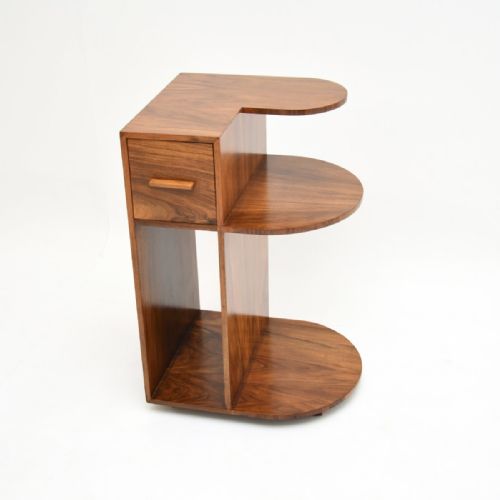
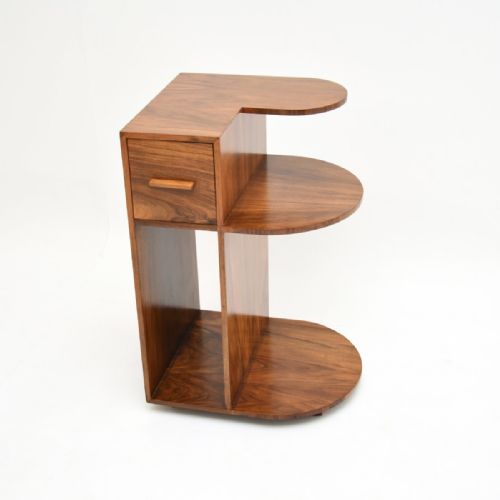
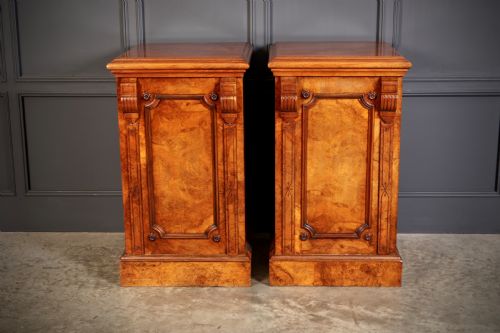


Figured Walnut Bedside Cabinet
These figured walnut bedside cabinets bring warmth and rich grain to a bedroom, combining practical bedside storage with distinctive timber patterns.
Figured Walnut Bedside Cabinet
A figured walnut bedside cabinet provides enclosed or open storage beside a bed, taking the form of cupboards, nightstands, and pedestal cabinets. These pieces span several decades and stylistic revivals, appearing most frequently from the Art Deco period alongside Victorian and early twentieth-century examples.
The selection here includes French and English origins, ranging from compact lamp tables with drawers to large pairs of bedside cupboards. Buyers will frequently encounter Art Deco designs alongside earlier nineteenth-century revival styles such as Louis XV and Queen Anne.
How they were made
Cabinet makers utilised walnut timber and veneer, selecting burr and figured sections to create striking patterns across the surfaces. Brass hardware and marble tops appear on selected French and English examples, adding functional contrast to the wood.
Figured Walnut Bedside Cabinet Retail Price Guide 2026
Typical asking prices for figured walnut bedside cabinet among the pieces listed under this phrase on Sellingantiques today, from the lower quarter to the upper quarter. They describe what is for sale here now, not the wider market.
Cabinets span the nineteenth century up to the nineteen-thirties, incorporating French marble tops and English marquetry.
What varies in quality
The distinction between standard production and superior pieces lies in the choice and symmetry of the veneer grain. Master craftsmen arranged figured walnut sections to mirror one another across drawer fronts and cabinet doors, creating a balanced visual rhythm.
Overall proportions and the integration of secondary timbers such as maple also indicate the standard of manufacture. Finer cabinets show careful attention to internal fittings, drawer construction, and the crispness of any revival detailing.
Maurice Adams
The Figured Walnut Bedside Cabinet Glossary
- Figured walnut
- Timber featuring irregular, attractive grain patterns caused by branch growth or specialised cultivation. This wood is sliced into veneer to ornament cabinet surfaces.
- Burr walnut
- A specific growth deformity on walnut trees that produces dense, swirling cluster patterns in the wood. Cabinet makers prized these sections for high-end furniture fronts.
- Pedestal cabinet
- A tall, freestanding cabinet supported by a single base or plinth structure. These pieces offer vertical storage space next to a bed.
- Marquetry
- The art of applying pieces of veneer to a structure to form decorative patterns and pictures. Floral motifs appear in this technique on nineteenth-century pieces.
- Nightstand
- A small bedside table or cabinet designed to hold a lamp and nighttime essentials. These items match the height of contemporary bed frames.
Figured Walnut Bedside Cabinet: Frequently Asked Questions
What is a figured walnut bedside cabinet?
A figured walnut bedside cabinet is a small piece of bedroom furniture featuring decorative wood grain, designed to hold bedside items.
These pieces function as cupboards, nightstands, or small tables with drawers, originating mainly from the Victorian and Art Deco eras.
How do I date a bedside cabinet?
Dating these cabinets involves examining the overall style, construction methods, and hardware used by the maker. Art Deco pieces display geometric lines from the nineteen-thirties, while Victorian examples show heavier revival characteristics.
Secondary woods inside drawers and the application of veneer also offer clues to the period of manufacture.
Are these cabinets sold as pairs?
Some listings offer matching pairs of pedestal cabinets and nightstands, while others appear as individual side tables. Pairs generally originate from larger bedroom suites of the period.
Matching sets are particularly sought after for balancing the layout of a master bedroom.
How do I care for walnut veneer?
Walnut veneer benefits from placement away from direct sunlight and heat sources to prevent the wood from drying out. Regular dusting with a soft, dry cloth maintains the finish.
Applying occasional specialist wax helps preserve the moisture and natural lustre of the figured grain.